2026-09-21 アルゴンヌ国立研究所(ANL)
<関連情報>
- https://www.anl.gov/article/argonne-develops-realtime-ai-monitoring-for-an-advanced-nuclear-reactor-component
- https://www.nature.com/articles/s41598-025-27112-8
重複する特徴分布を持つ小型溶融塩熱交換器における初期異常検出のための説明可能な機械学習 Explainable machine learning for incipient anomaly detection in compact molten salt heat exchanger with overlapping feature distributions
Konstantinos Prantikos, Taeseung Lee, Thanh Q. Hua, Lefteri H. Tsoukalas & Alexander Heifetz
Scientific Reports Published:06 March 2026
DOI:https://doi.org/10.1038/s41598-025-27112-8
Abstract
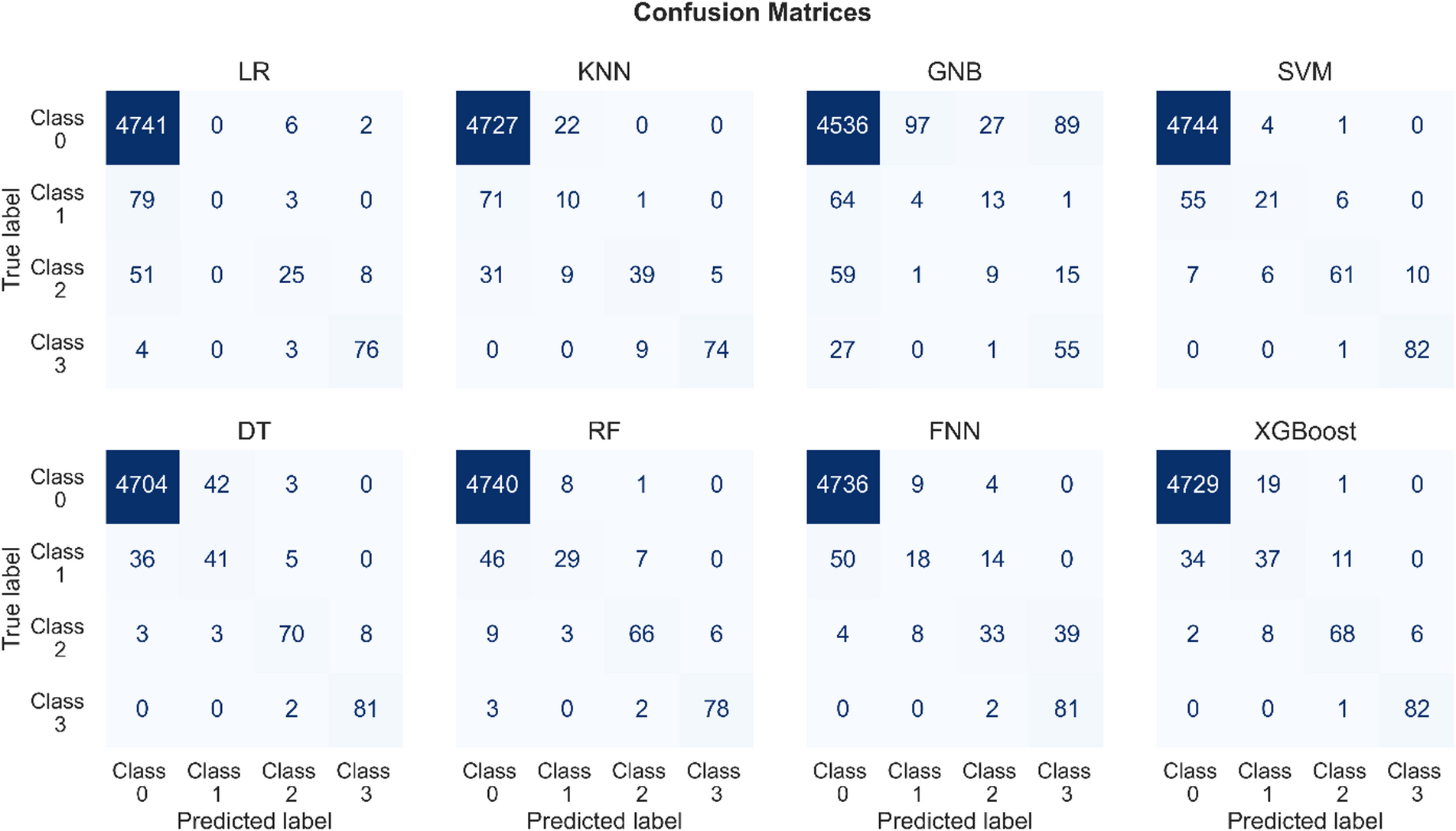
High-temperature molten salt-cooled reactors (MSCRs) are a promising next-generation nuclear technology option, offering efficient power conversion and inherent safety features. However, the reliability of these systems depends on the robust operation of heat exchangers (HXs), which are susceptible to failure due to temperature gradients and channel plugging caused by fluid freezing. Conventional monitoring methods, relying on inlet and outlet measurements, lack the spatial resolution needed to detect early-stage faults. We propose a novel design of a compact salt-to-salt matrix-type HX design consisting of interleaved arrays of parallel tubes, with integrated synthetic fiber optic distributed temperature sensing (DTS) to enable localized detection of incipient faults. To evaluate performance of this design, we generate high-fidelity synthetic data using heat transfer computational modeling to simulate channel plugging, and introduce sensor noise for realistic modeling of measurements. The dataset comprises of 97% normal operation and 3% anomaly cases, with each anomaly class representing 1% of the data. These early anomalies result in overlapping temperature profiles between normal and faulty channels, producing a non-separable dataset that challenges traditional classification techniques. We benchmark eight supervised machine learning (ML) models and demonstrate that XGBoost achieves the highest performance. To improve transparency, we develop an explainability framework combining Shapley values and partially ordered sets (POSETs) to quantify and structurally analyze feature importance. This approach identifies both dominant predictors and ambiguous feature relationships, enhancing trust and interpretability. Our results highlight the potential of combining DTS and explainable ML with intelligent feature selection to improve predictive maintenance and ensure operational resilience in advanced nuclear systems.