2026-11-03 チャルマース工科大学
<関連情報>
- https://news.cision.com/chalmers/r/almost-half-of-all-truck-driven-containers-are-empty,c4417191
- https://onlinelibrary.wiley.com/doi/10.1002/tjo3.70033
- https://www.sciencedirect.com/science/article/pii/S136192092300175X
スウェーデンにおけるコンテナトラックの輸送状況 積載量および空車走行のモデリング Containerized Truck Movements in Sweden Payload and Empty Trip Modeling
Lokesh Kumar Kalahasthi, Juan Pablo Castrellon, Iván Sánchez-Díaz, Violeta Roso
Transportation Journal Published: 11 August 2026
DOI:https://doi.org/10.1002/tjo3.70033
Abstract
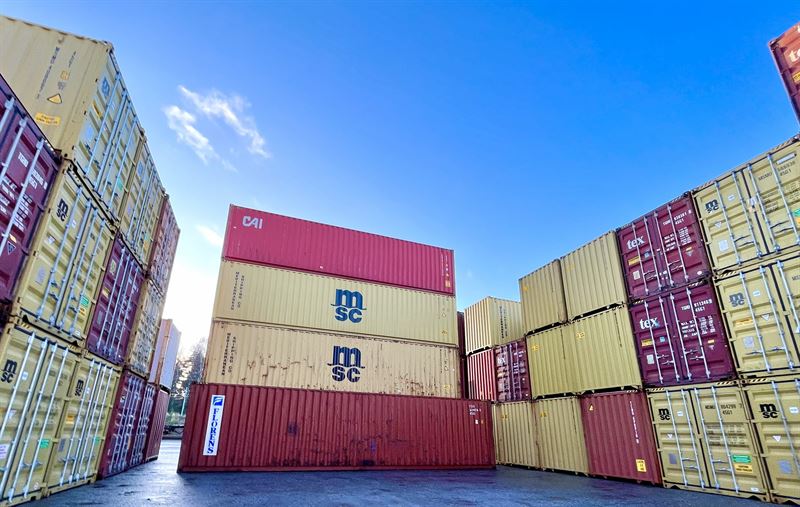
Container flows account for 12% of truck traffic in Sweden. Unlike other freight, container truck movements mostly involve import or export cargo that begins or ends at ports. However, containerized cargo has different payloads and empty trip patterns. Hence, this paper analyses container truck flows in Sweden (2016–2019) using Trafikanalys data, focusing on empty container movements. Two demand models are presented: one estimates truck payloads to convert cargo weight into truck trips, and the other predicts the likelihood of empty container transport. Empty containers made up 44%–46% of vehicle numbers and 32%–33% of vehicle kilometers in the given period. The results show that payload and empty trips are notably affected by factors such as origin, destination, and industry sector. This paper concludes with the presentation of the model application, final observations, and recommendations for future research. Key suggestions for further investigation include applying these models to estimate empty container traffic and conducting case studies to assess various policy impacts on reducing empty container movements.
ドライポートを経由した空コンテナ再配置戦略の環境効率上の利点を評価する Assessing the eco-efficiency benefits of empty container repositioning strategies via dry ports
Juan Pablo Castrellon,Ivan Sanchez-Diaz,Violeta Roso,Ceren Altuntas-Vural,Sara Rogerson,Vendela Santén,Lokesh Kumar Kalahasthi
Transportation Research Part D: Transport and Environment Available online: 1 June 2023
DOI:https://doi.org/10.1016/j.trd.2023.103778
Abstract
Trade imbalances and global disturbances generate mismatches in the supply and demand of empty containers (ECs) that elevate the need for empty container repositioning (ECR). This research investigated dry ports as a potential means to minimize EC movements, and thus reduce costs and emissions. We assessed the environmental and economic effects of two ECR strategies via dry ports—street turns and extended free temporary storage—considering different scenarios of collaboration between shipping lines with different levels of container substitution. A multi-paradigm simulation combined agent-based and discrete-event modelling to represent flows and estimate kilometers travelled, CO2 emissions, and costs resulting from combinations of ECR strategies and scenarios. Full ownership container substitution combined with extended free temporary storage at the dry port (FTDP) most improved ECR metrics, despite implementation challenges. Our results may be instrumental in increasing shipping lines’ collaboration while reducing environmental impacts in up to 32 % of the inland ECR emissions.