2026-06-28 中国科学院(CAS)
中国科学院傘下の華南植物園の研究チームは、パキスタン・インダスデルタのマングローブ地上部バイオマスの2002~2022年の変化を再現し、2050年までの将来予測を行った。現地調査データに加え、衛星リモートセンシング、気候、土地利用データを統合し、4種類の機械学習モデルを比較した結果、勾配ブースティング回帰木(GBRT)が最も高い予測精度(R²=0.65)を示した。解析では、平均地上部バイオマスは2002年の18.13 Mg/haから2022年には25.75 Mg/haへ増加し、植林や地域主体の保全活動による生態系の回復が示唆された。現在の環境・管理条件が維持されれば、2030年に30.31 Mg/ha、2040年に40.12 Mg/ha、2050年には48.60 Mg/haまで増加すると予測された。一方、バイオマスは植生指数と正の相関、地表面温度や土地利用変化とは負の相関を示し、気温上昇や沿岸開発が回復を阻害する可能性が示された。研究はブルーカーボン評価や気候変動適応、沿岸湿地の保全・再生計画を支援する新たな解析基盤を提供している。
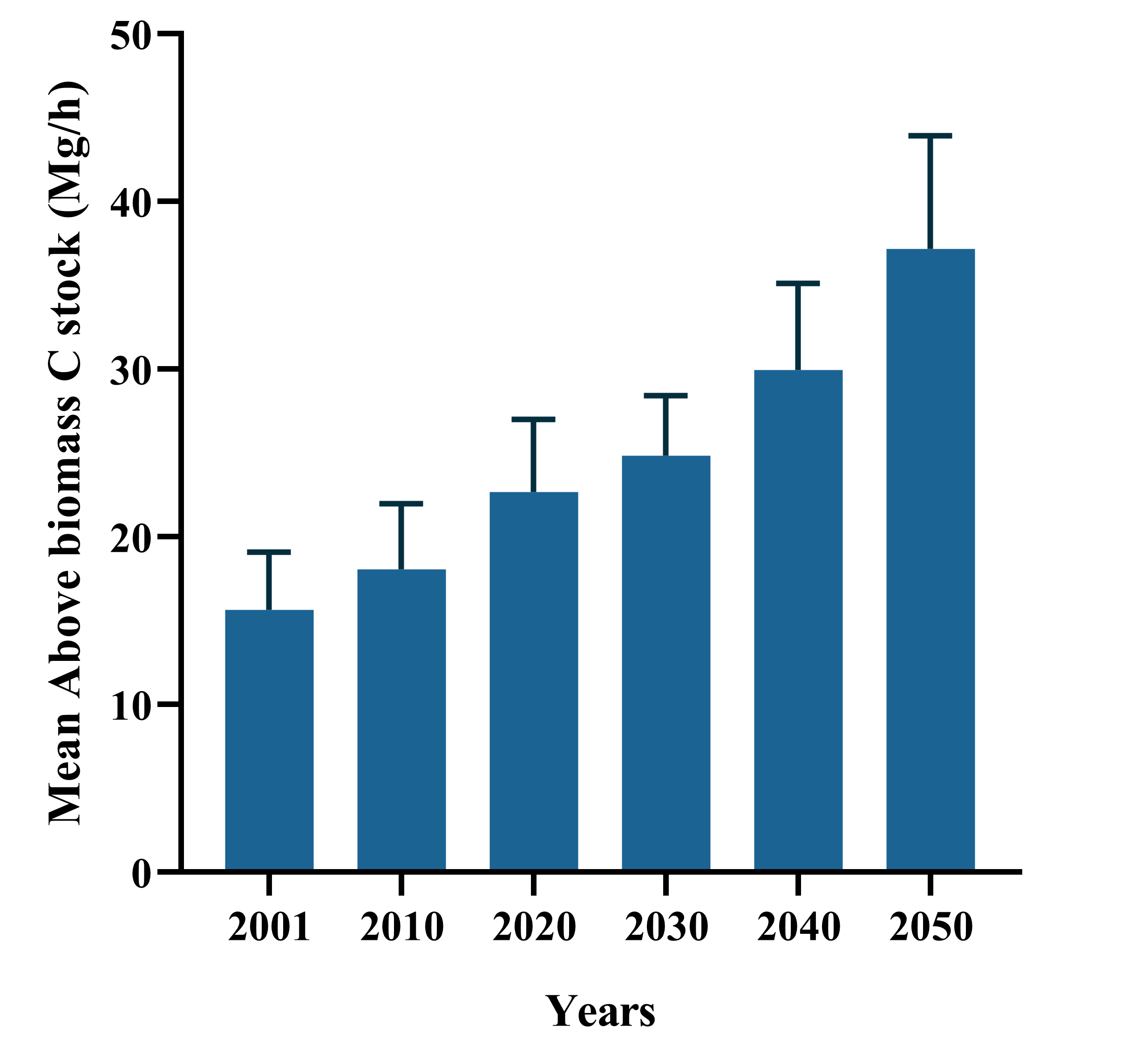
Mangrove Biomass C stocks. (Image by WANG Faming)
<関連情報>
- https://english.cas.cn/newsroom/research-news/202606/t20260629_1174998.shtml
- https://besjournals.onlinelibrary.wiley.com/doi/10.1111/1365-2435.70342
インダスデルタのマングローブにおける地上バイオマスの時空間ダイナミクスと機械学習に基づく予測 Spatiotemporal dynamics and machine learning-based prediction of above-ground biomass in the Indus Delta mangroves
Muhammad Naveed, Zulqarnain Satti, Lang Zhang, Zhe Lu, Xingyun Huang, Jingfan Zhang, Jinge Zhou, Gouming Qin, Jingwei Shi, Evans Asenso, Faming Wang
Functional Ecology Published: 21 April 2026
DOI:https://doi.org/10.1111/1365-2435.70342
Abstract
- Mangrove forests are important blue carbon ecosystems, yet long-term above-ground biomass (AGB) dynamics in arid deltaic systems remain poorly understood.
- Here, we integrated field-derived AGB data with multisource remote sensing and machine learning models (random forest, gradient-boosted regression tree, support vector regression and classification and regression trees) to map historical patterns and predict future AGB dynamics in the Indus Delta mangroves for 2030, 2040 and 2050.
- AGB increased significantly over time, with mean values rising from 18.13 ± 9.1 Mg/ha in 2002 to 25.75 ± 8.32 Mg/ha in 2022, as indicated by Mann–Kendall trend analysis. Among models, GBRT performed best (R2 = 0.65, RMSE = 0.52) and projected continued increases in AGB to 30.31 ± 4.8 Mg/ha in 2030, 40.12 ± 6.4 Mg/ha in 2040 and 48.6 ± 7.9 Mg/ha in 2050. AGB was positively associated with vegetation indices and negatively related to land surface temperature and land-use change.
- Synthesis. Mangrove AGB in the Indus Delta is increasing and is projected to continue rising under current conditions, highlighting substantial carbon sequestration potential in arid coastal systems. The strong performance of machine learning models demonstrates their utility for large-scale biomass prediction, while the observed environmental controls emphasize the importance of sustaining freshwater input, sediment supply and restoration efforts for long-term ecosystem resilience and blue carbon management.