2026-06-29 シンガポール国立大学(NUS)
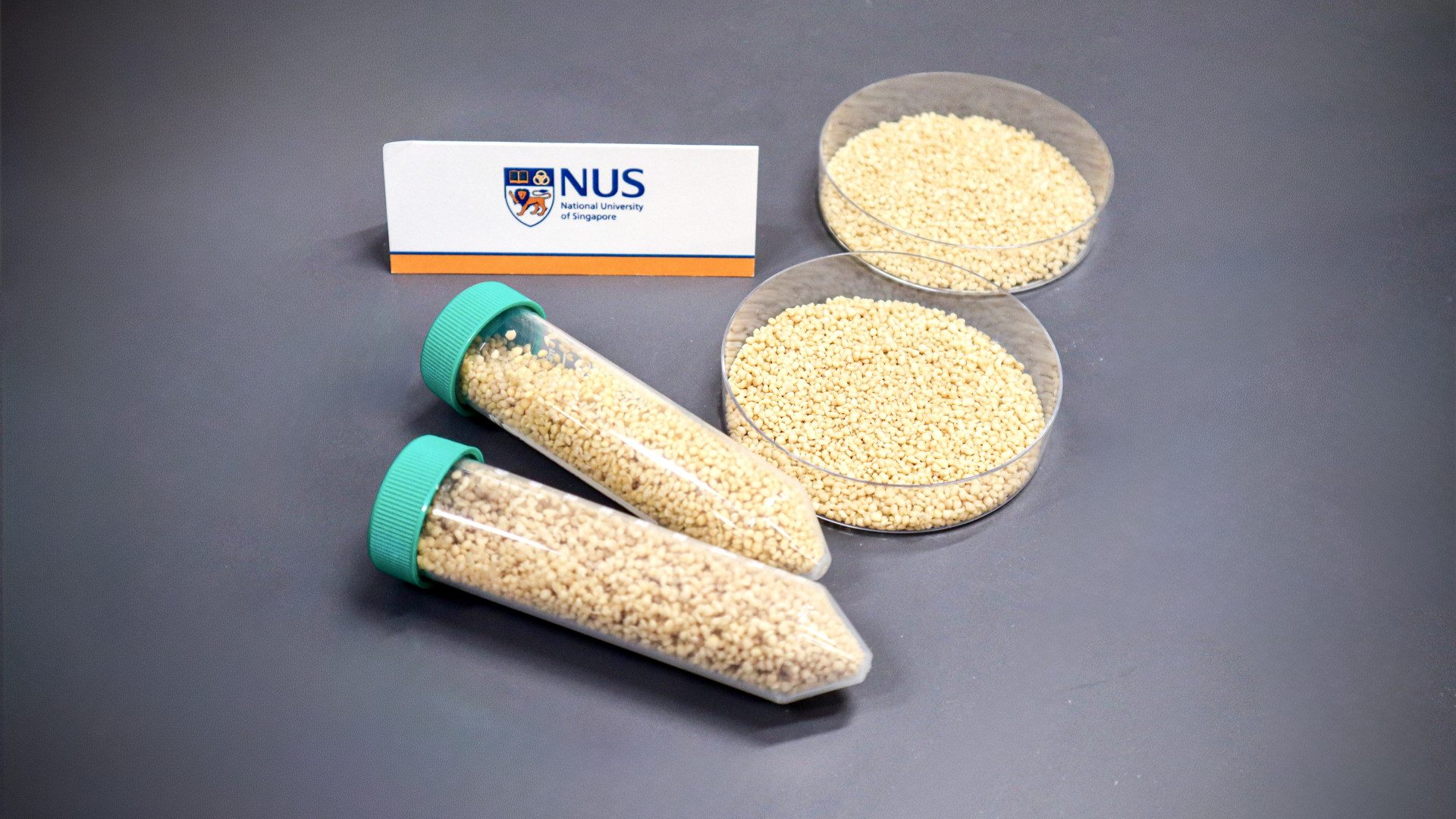
The oral vaccine can be mixed into fish feed, providing an effective and easy-to-administer solution to boost immunity against the nervous necrosis virus.
<関連情報>
- https://news.nus.edu.sg/nus-breakthrough-aquaculture-oral-vaccine-protects-fish/
- https://www.sciencedirect.com/science/article/abs/pii/S1050464825009027
ラクトコッカス・ラクティスにカプセル化されたウイルス様粒子による経口ワクチン接種 Oral vaccination via virus-like particles encapsulated in Lactococcus lactis
Hui Yee Hong, Lee Ching Pei Carmen, Pin Xuan Chee, Lim Xin Ying, Zhi Wei Wong, Janlin Chan, Mookkan Prabakaran, Daiwen Yang
Fish & Shellfish Immunology Available online: 5 January 2026
DOI:https://doi.org/10.1016/j.fsi.2025.111013
Highlights
- NNV capsid VLPs were produced in Lactococcus lactis.
- Injection of purified VLP induced strong antibody responses.
- Live or heat-killed L. lactis-VLPs failed to confer protection.
- Hypochlorite-inactivated L. lactis preserved VLPs and enhanced immunity.
- Oral vaccination with hypochlorite-inactivated cells reduced brain viral load.
Abstract
Nervous necrosis virus (NNV) causes severe disease in marine fish, leading to high mortality and significant economic losses in aquaculture. Effective oral vaccines are urgently needed for large-scale, labour-efficient immunization of farmed fish. In this study, NNV capsid protein was successfully expressed in Lactococcus lactis (L. lactis) and evaluated as a vaccine candidate in Asian seabass (Lates calcarifer) fingerlings. The capsid protein assembled into virus-like particles (VLPs), structurally similar to those produced in E. coli. Intraperitoneal injection of purified VLPs elicited strong humoral immunity, with NNV-specific IgM titers four-fold higher than oral delivery, despite a tenfold lower antigen dose. However, encapsulation of VLPs in live or heat-inactivated L. lactis cells failed to induce protective immunity through oral delivery, likely due to poor antigen release. In contrast, sodium hypochlorite-inactivated L. lactis preserved VLP encapsulation, solubility and structural integrity, and oral vaccination with these cells induced approximately two-fold higher antibody and neutralizing titers than the purified VLPs. Challenge studies demonstrated a significant ∼2.5-log reduction in brain viral load 7 days post-challenge. Overall, these findings highlight hypochlorite-inactivated L. lactis as a promising oral vaccine platform, offering a sustainable strategy for aquaculture immunization against NNV.