2026-04-30 北海道大学,島修道大学

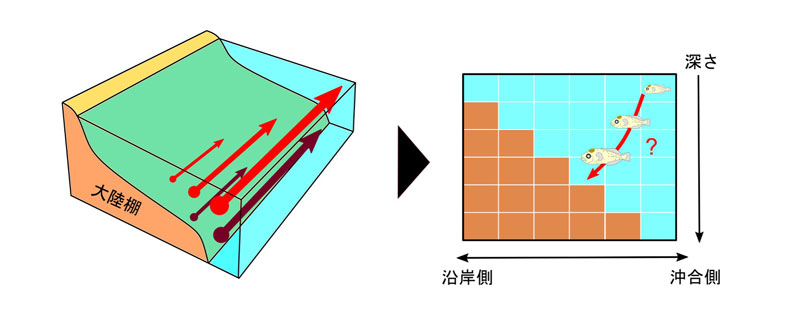
今回、発見されたエゾユキシリアゲの成虫(上)とその生息環境(左下)及び採集地(右下)
<関連情報>
- https://www.hokudai.ac.jp/news/2026/04/30-42.html
- https://onlinelibrary.wiley.com/doi/10.1111/ens.70020
エゾユキシリアゲの遺伝的特徴及び自然史的知見 Molecular identity and natural history notes of Boreus jezoensis (Mecoptera: Boreidae) in the Japanese archipelago
Ibuki Fukuyama, Takuya K. Hosoki, Atsushi Takaki, Kota Kitagawa, Moe N. Hosoki, Hironori Mieda, Masayuki Fukuda, Satoshi Hayakawa, Tomoya Suzuki
Entomological Science Pblished: 21 April 2026
DOI:s://doi.org/10.1111/ens.70020
Abstract
Snow scorpionflies (Boreus; Mecoptera: Boreidae) are cold-adapted insects that are active on snow, yet basic ecological and phylogenetic information remains scarce for species from East Asia and the Russian Far East. In the Japanese archipelago, Boreus jezoensis Hori and Morimoto (1996) is the only recorded species of the genus and has been known solely from its type locality, Mt. Hirayama (Hokkaido), with no subsequent confirmed records. We conducted field surveys in montane areas of Hokkaido, including the type locality; 26 adult Boreus individuals were identified from exposed moss patches adjacent to snow. Morphological examinations confirmed that specimens from both mountains are B. jezoensis, representing the second record of the species and providing a new locality record approximately 170 km from the type locality. We also generated the first mitochondrial cytochrome c oxidase subunit I (COI) sequences for B. jezoensis and reconstructed a preliminary COI phylogeny of Boreus. The B. jezoensis samples formed a strongly supported clade with low genetic divergence between the two populations. Together, these findings extend the known distribution of B. jezoensis, provide foundational DNA barcode resources for East Asian Boreus, and offer basic ecological information for this poorly known species.