2026-07-13 北海道大学
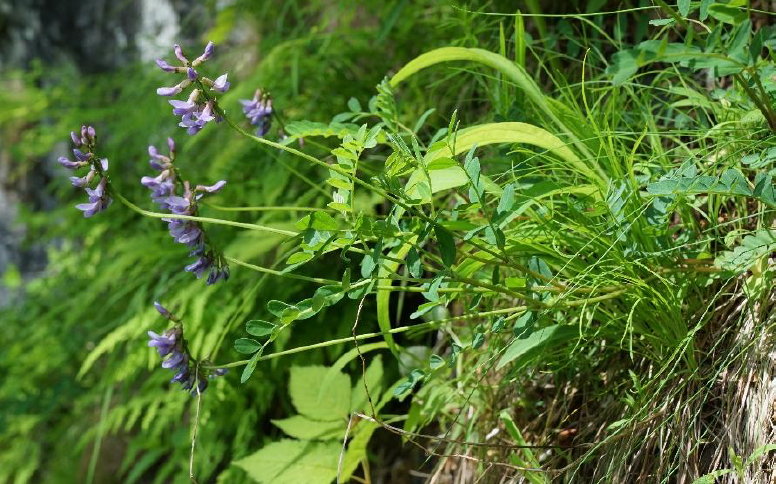
新種ポロシリオウギAstragalus poroshiriensisの写真
<関連情報>
- https://www.hokudai.ac.jp/news/2026/07/post-2353.html
- https://phytotaxa.mapress.com/pt/article/view/phytotaxa.766.2.2
北海道日高山脈の石灰岩露頭から発見された新種ポロシリオウギ Astragalus poroshiriensis (Fabaceae), a new species from limestone outcrops in the Hidaka Mountains, Hokkaido, Japan
OSAMU KIMURA-YOKOYAMA,KOHTAROH SHUTOH
Pytotaxa Published: 2026-07-09
DOI:https://doi.org/10.11646/phytotaxa.766.2.2
Abstract
We describe a new species, Astragalus poroshiriensis, from limestone outcrops on the Hidaka Mountains in Hokkaido, northern Japan. This new species belongs to sect. Oroboidei and is morphologically similar to five congeners distributed in East Asia or the Russian Far East. However, it is readily distinguishable by the following combination of morphological characters: stems with black and white hairs, legumes and upper surface of leaflets glabrous, 8–19 mm long leaflets, 9–15 cm long peduncles, 4.5–6 mm long calyx and 1–1.5 mm long calyx teeth, and pale lilac petals. The new species and four of the five morphologically similar species collectively exhibit fragmented endemism in Japan and Sakhalin Island, consistent with many species in the genus with specialized habitat preferences and restricted distributions. Possibly, the common ancestor may have a wider distribution during cooler glacial periods. Astragalus poroshiriensis is confined to an isolated, subalpine limestone area. Its allopatric speciation may have been promoted by climate change, whereby the limestone outcrops functioned as refugia during the post-glacial warming period. On the basis of its extremely small population size at a single known locality, we recommend classifying A. poroshiriensis as Critically Endangered (CR) according to the IUCN Red List criteria and categories.