20263-08-07 カリフォルニア大学ロサンゼルス校(UCLA)
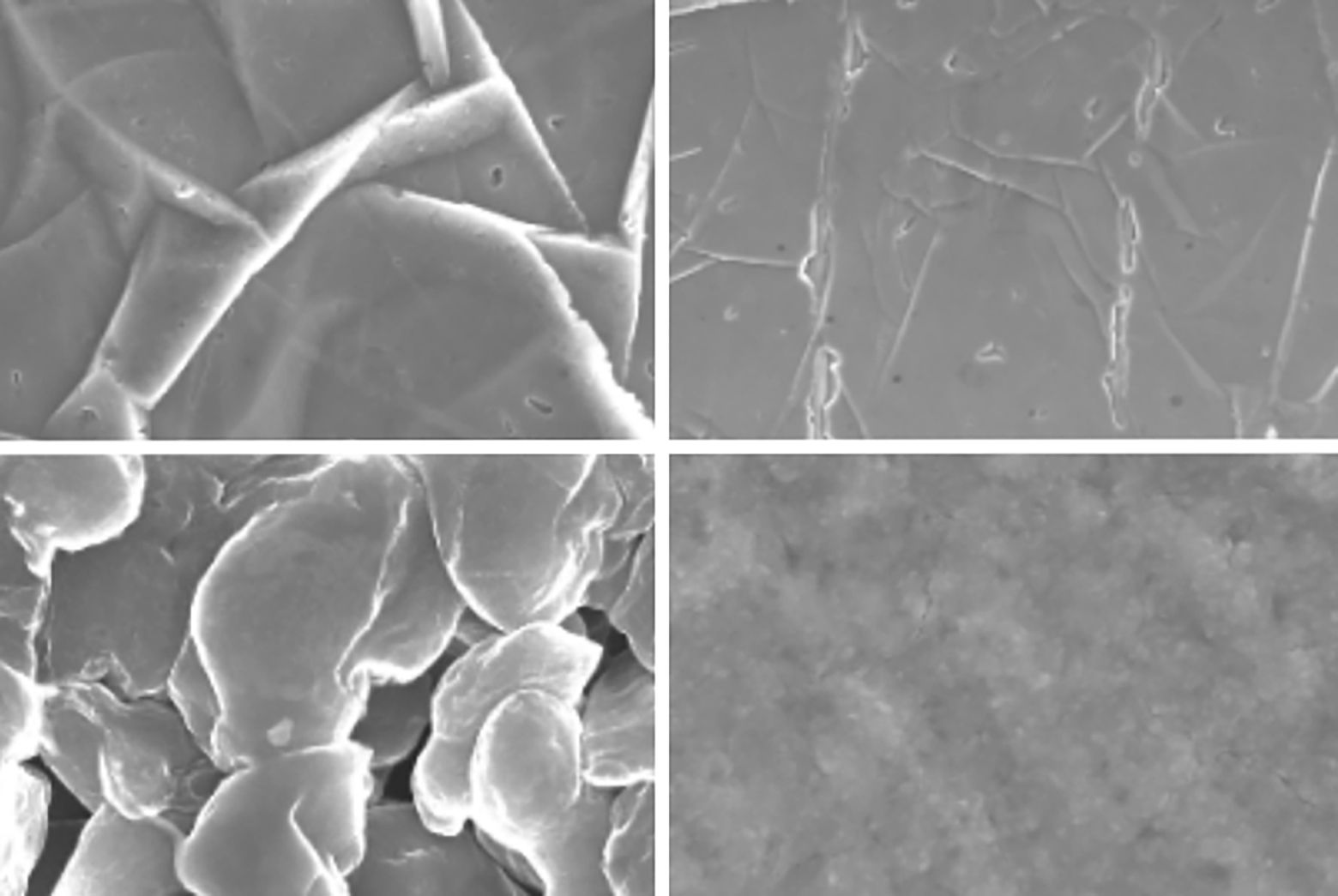
Scanning electron microscope images comparing how (from left to right, clockwise) magnesium, aluminum, sodium and lithium metal anodes degrade after resting. Li Research Group/UCLA
<関連情報>
- https://newsroom.ucla.edu/stories/ucla-engineering-studies-aim-slow-battery-aging-while-idle
- https://www.nature.com/articles/s41467-026-75100-x
水系亜鉛電池における経年劣化および充放電サイクル中の金属アノード腐食を抑制するための希釈電解液 Dilute electrolytes for suppressing metal anode corrosion during calendar aging and cycling in aqueous zinc batteries
Haoyang Wu,Bo Liu,Dingyi Zhao,Dongfang Cheng,Keyue Liang,Xintong Yuan,Kaixi Chen,Min-Ho Kim,Kaiyan Liang,Jung Tae Kim,Jiayi Yu,Tian-Yu Wang,Philippe Sautet & Yuzhang Li
Nature Communications Published:06 August 2026
DOI:https://doi.org/10.1038/s41467-026-75100-x Unedited version
Abstract
While numerous improvements in cycling stability have been demonstrated for next-generation battery chemistries with metallic anodes, their calendar aging (e.g., capacity loss during idle periods of rest) performance painfully lags behind and remains a critical bottleneck hindering their practical deployment. In contrast to their commercial counterparts, metallic anodes exhibit substantial capacity loss during calendar aging. Despite several recent studies exploring the underlying reasons for calendar aging, few solutions have been proposed to mitigate this key issue. Here, we design a low concentration electrolyte (0.1 M ZnSO4) that can reduce calendar aging losses in Zn metal chemistries by more than an order of magnitude (<1.5% capacity fade after 24 hours of aging) while still maintaining improved cycling stability (>3300 cycles at 4 C) with an average Coulombic efficiency of 99.8%. We find that solvated water molecules (rather than unsolvated water molecules) drive Zn corrosion, motivating our effort to minimize these reactive solvated water molecules through a holistic approach centered around concentration reduction, aided by isotopic solvent substitution and targeted additives. This strategy could be applicable to other battery chemistries and provides an approach that can address both calendar aging and cycling stability, both of which are necessary for practical applications.
金属陽極における動的界面を介したカレンダー劣化損失の抑制 Suppressed calendar aging losses via dynamic interfaces in metal anodes
Jin Koo Kim ∙ Min-Ho Kim ∙ John Waugh ∙ … ∙ Kaixi Chen ∙ John Muldoon ∙ Yuzhang Li
Joule Published:May 19, 2026
DOI:https://doi.org/10.1016/j.joule.2026.102480
Highlights
- High efficiency does not correlate with calendar aging stability of metal anodes
- Interfacial resistance buildup during rest acts as a protective mechanism for Mg
- The dynamic interface kinetically blocks corrosion and vanishes during cycling
- Reversible resistance buildup can offer a new design principle for future electrolytes
Summary
Metal anodes promise high energy density for next-generation batteries, yet their long-term stability remains poorly understood. While prior efforts largely focused on cycling reversibility, practical devices spend most of their lifetime idle, where degradation during calendar aging can dominate capacity loss. Here, we systematically investigate the aging of Li, Na, Al, and Mg anodes under electrolytes enabling >98.5% Coulombic efficiency. Despite comparable cycling stability, these metals diverge sharply under aging: Li undergoes continuous solid-electrolyte interphase thickening, and Na and Al suffer localized pitting corrosion. In contrast, Mg uniquely retains its capacity with only ∼0.4% loss after 14 days. We discover that Mg’s stability arises from a reversible interfacial resistance layer that suppresses corrosion during rest but is fully removed upon cycling. This discovery reframes resistance buildup (typically associated with degradation) as a protective mechanism and establishes dynamic interphases as a new design principle for mitigating calendar aging of metal anodes.