2026-10-09 フランス国立科学研究センター(CNRS)
<関連情報>
- https://www.cnrs.fr/en/press/coastal-urbanisation-disrupts-fish-physiology
- https://www.nature.com/articles/s41467-026-77751-2
- https://medibio.tiisys.com/189306/
景観トランスクリプトミクスにより、人為的な沿岸環境の変化下における魚類の生態学的制約が明らかになった Landscape transcriptomics reveals ecological constraints on fish under anthropogenic coastal change
Emma Gairin, Saori Miura, Zoé Chamot, Camille A. Sautereau, Jann Zwahlen, Hiroki Takamiyagi, Yann Gibert, Marcela Herrera & Vincent Laudet
Nature Communications Published:09 October 2026
DOI:https://doi.org/10.1038/s41467-026-77751-2
Abstract
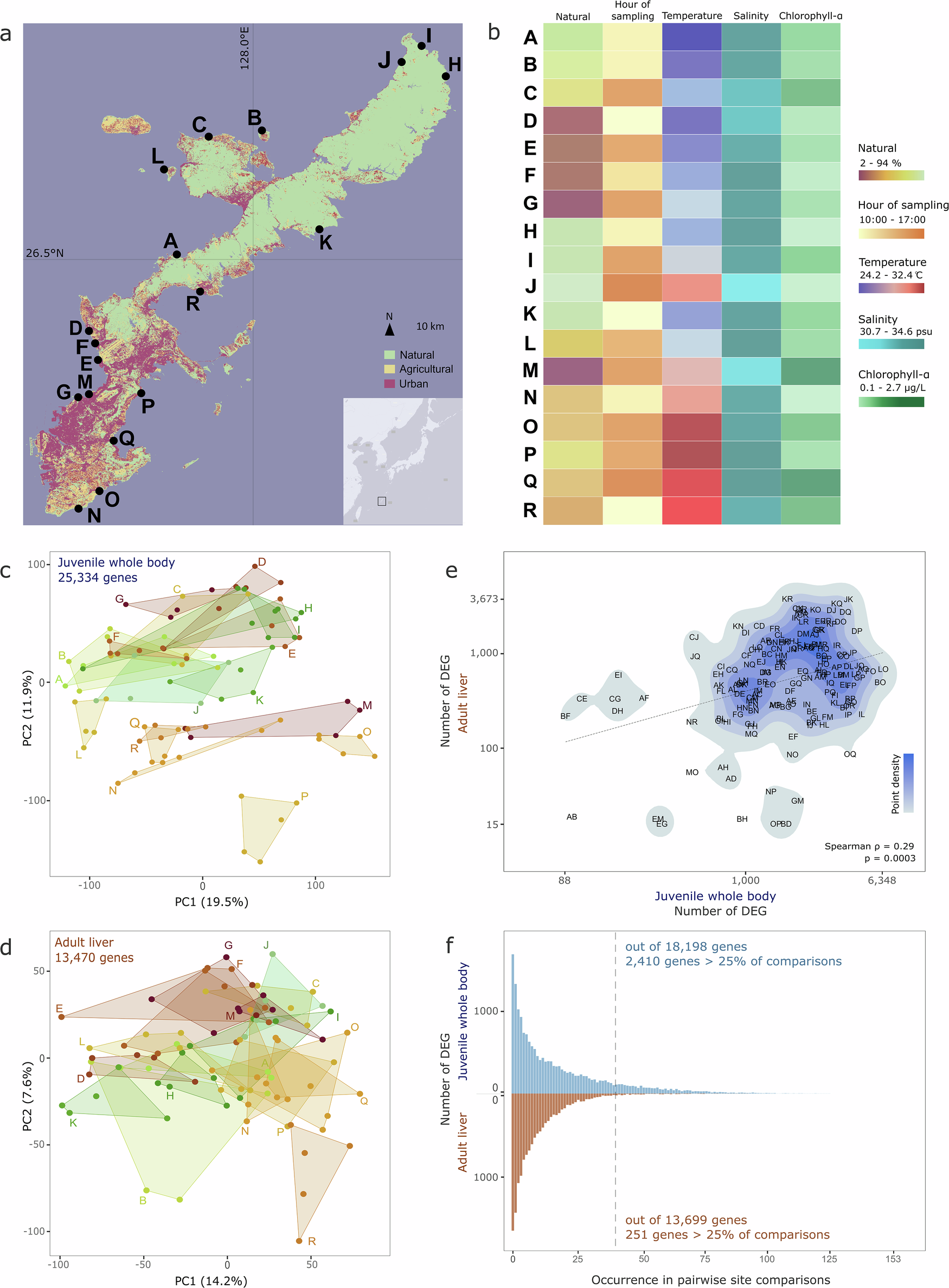
Urban zones are rapidly expanding worldwide, exposing organisms to complex and multidimensional stressors. However, linking organismal responses to environmental change at ecologically relevant scales remains a major challenge. To investigate the constraints imposed on fish living in coastal urban environments, we apply a landscape-scale framework to identify molecular signatures associated with human activities. Using transcriptomes from a common coral reef fish, Chrysiptera cyanea, sampled across 18 coastal sites in Okinawa, Japan, we implement scalable analytical and visualisation tools and identify coordinated shifts in metabolic, immune, and inflammatory pathways. By integrating field data with a fasting-feeding experiment, we find that transcriptomes of adult fish from urbanised sites resemble those of well-fed experimental fish, suggesting that these areas provide an energy-rich diet while imposing chronic stress. Our findings reveal how anthropogenic activities reshape organismal resilience and demonstrate the power of landscape transcriptomics as a link between molecular signatures and ecological outcomes across changing environments.