
2026-06-16 長野大学,岐阜大学,岐阜県
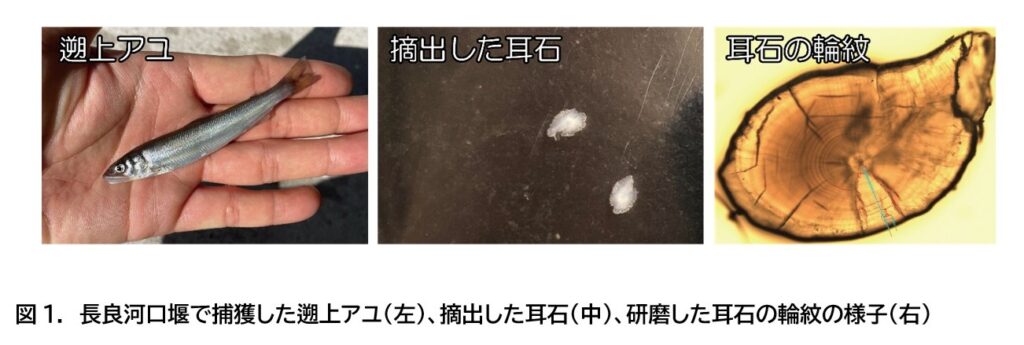
<関連情報>
気候変動によるアユ(Plecoglossus altivelis)の初期生活史の変化:海洋滞在期間の短縮 Climate-driven shifts in early life history via shortened marine residence in amphidromous ayu Plecoglossus altivelis
Shigeya Nagayama, Ryouji Fujii, Morihiro Harada, Kenichi Ohara
Journal of Fish Biology Published: 11 June 2026
DOI:https://doi.org/10.1111/jfb.70533
Abstract
Climate warming is altering thermal regimes across freshwater and marine ecosystems, with important consequences for fish life-history schedules, particularly during early life stages that span connected habitats. We characterized long-term variation in multiple early life-history traits and examined how thermal factors relate to shifts in the early life-history schedule of amphidromous ayu Plecoglossus altivelis. Individuals initiating spring upstream migration earlier were hatched earlier and were larger in body size across brood years, consistent with established patterns. In contrast, age at migration showed no consistent relationship with migration timing, indicating that variation in marine residence duration is not solely determined by migration phenology but is influenced by conditions experienced during the marine phase. Over the past three decades, age at spring migration declined significantly, indicating progressive shortening of the marine residence period. This decline was closely associated with elevated winter seawater temperature, whereas riverine thermal indicators representing the onset and termination of marine residence showed no comparable relationship. Although delayed autumn reproduction has been reported under warming river conditions, enhanced winter growth in the marine environment may offset these effects, resulting in little long-term change in migration timing. Overall, this study provides evidence that climate-driven changes in coastal marine thermal conditions are associated with shifts in marine residence duration and early life-history schedules in amphidromous fishes, highlighting the importance of integrated freshwater–marine thermal regimes under ongoing climate warming.
