2026-06-04 ペンシルベニア州立大学(Penn State)
◆研究では、米国在住の291人を対象に、FactDeckと呼ばれる実験用SNS環境でニュース見出しを提示し、AIまたは人間が検証したというラベルと説明を付与して反応を調査した。その結果、AIは大量の情報を高速に分析し、文章中の不自然な表現や「怪しい兆候」を見つける能力が高いと認識されていた。一方、人間のファクトチェッカーは、複数の情報源を照合し、文脈や背景を考慮して総合的に判断する能力が優れていると評価された。研究者らは、AIと人間のどちらが優れているかという単純な結論ではなく、それぞれ異なる強みを持つことが重要だと指摘している。
◆今後は、AIによる大規模な一次スクリーニングと、人間による高度な検証を組み合わせることで、偽情報対策の効果向上が期待される。研究成果は学術誌『Media Psychology』に掲載された。
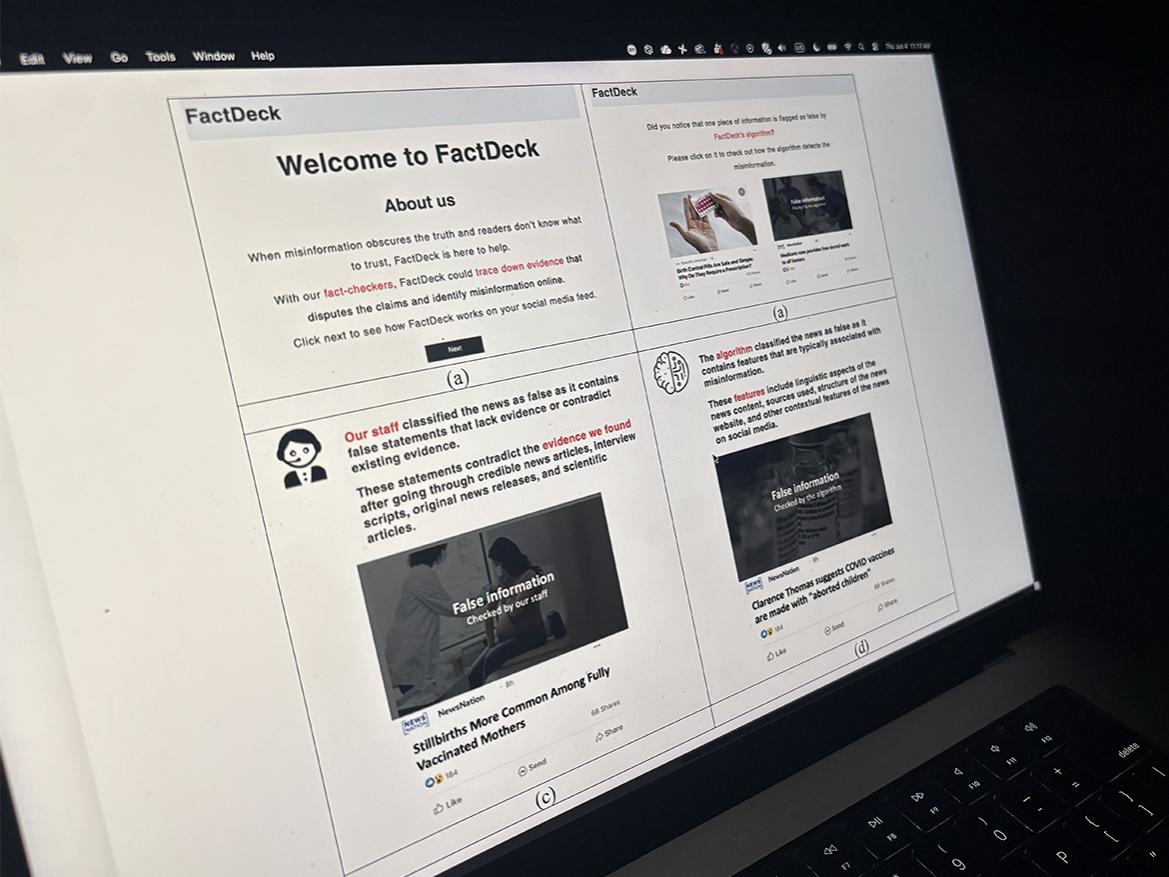
Two hundred and ninety-one participants residing in the United States were shown headlines in simulated social media posts via an application created for this study called FactDeck. Some posts were labeled as fact-checked by an AI system and others by human fact-checkers. Participants saw one of three types of explanations. Credit: Jonathan F. McVerry. All Rights Reserved.
<関連情報>
- https://www.psu.edu/news/bellisario-college-communications/story/users-trust-ai-and-human-fact-checkers-equally-different
- https://www.tandfonline.com/doi/full/10.1080/15213269.2026.2659876
AIが「誤り」と判断した場合:自動ファクトチェッカーと人間によるファクトチェッカーによる誤情報フラグ付けに対するユーザーの反応 When an AI Says It Is False: User Responses to Misinformation Flagging by Automated vs. Human Fact-Checkers
Mengqi Liao,Sian Lee,Annie Dooley,Aiping Xiong & S. Shyam Sundar
Media Phycology Published:11 May 2026
DOI:https://doi.org/10.1080/15213269.2026.2659876
ABSTRACT
To combat misinformation at scale, automated fact-checkers are being deployed, but we do not know if lay users trust them. Are AI fact-checkers trusted more than human fact-checkers because of their accuracy in identifying tell-tale features of fake news? Or are they trusted less because they are seen as lacking the subjectivity necessary for corroborating evidence? A pre-registered 2 (Fact-checking source: Human vs. AI) × 3 (Fact-checking approach: Evidence-based vs. Feature-based vs. Black-box) between-subjects experiment among 291 US adults recruited from Cloud Research revealed that users’ trust was predicted by the extent to which the interface triggered the positive machine heuristic (the algorithm is more objective and precise than human) and the negative machine heuristic (the algorithm lacks human subjective judgment). The latter was more likely when the system used an evidence-based determination of misinformation, which was better understood by users than a feature-based approach. Theoretical and practical implications for individuals’ trust of automated fact-checkers are discussed.