2026-10-22 スタンフォード大学
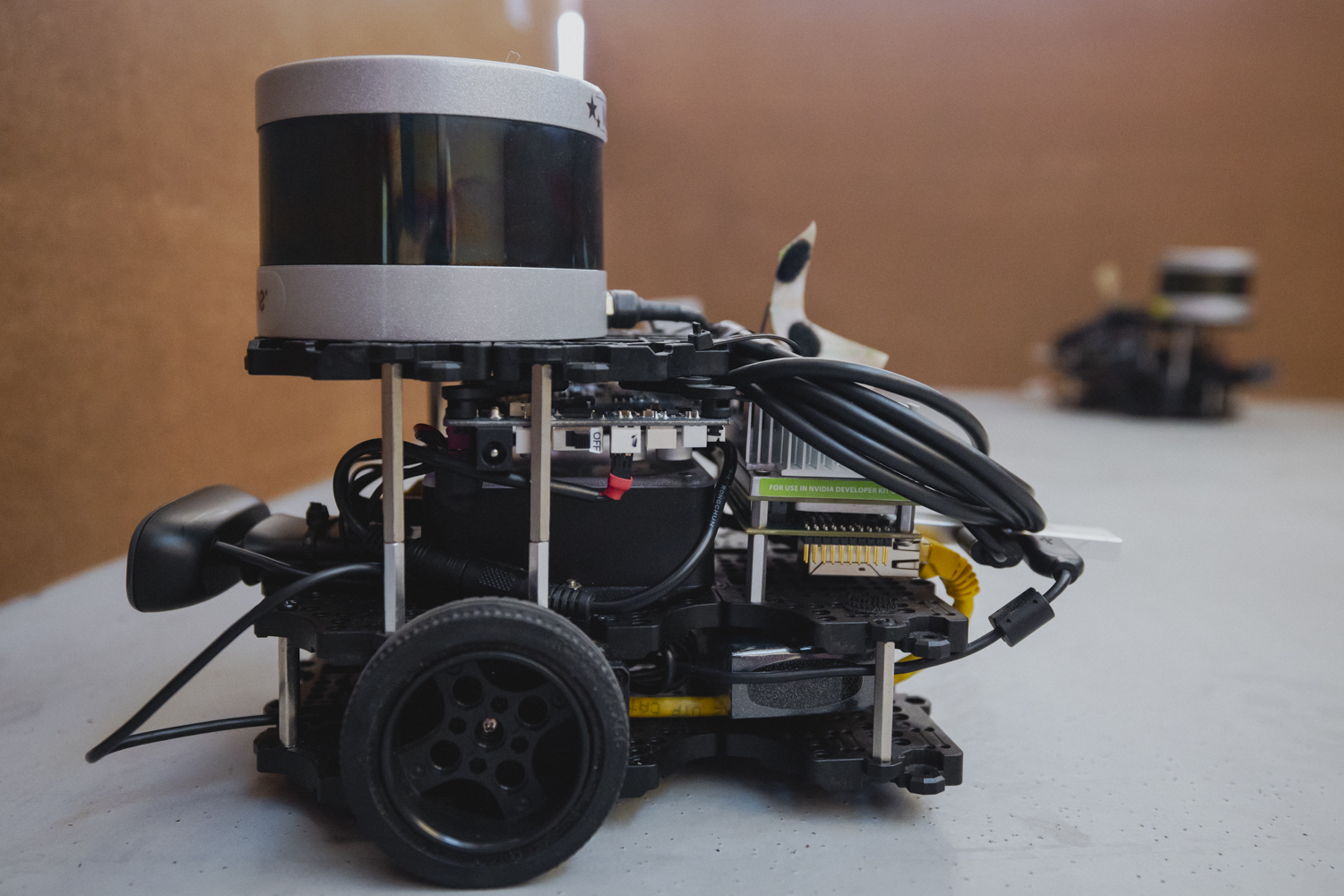
A robot used in a hands-on Stanford course for the U.S. Air Force Test Pilot School | Andrew Brodhead
<関連情報>
- https://news.stanford.edu/stories/2026/10/autonomous-robotics-education-curriculum-textbook
- https://arxiv.org/abs/2608.03496
ロボット自律性の原理
Principles of Robot Autonomy
Daniele Gammelli, Joseph Lorenzetti, Katie Luo, Gioele Zardini, Marco Pavone
arXiv last revised 21 Oct 2026 (this version, v2)
DOI:https://doi.org/10.48550/arXiv.2608.03496
Autonomous robots are moving rapidly from research labs into everyday life – on roads, in the air, in warehouses, and in space. Robot autonomy is no longer solely an academic pursuit, but a collection of mature, field-tested methods and tools that practitioners rely on in real-world deployments. This book offers a clear, unified introduction to the methods that make this possible. Built on decades of teaching at Stanford, the text develops the core elements of modern autonomy stacks within a single conceptual framework, bridging classical robotics and modern physical AI. Every major topic is paired with hands-on Jupyter notebooks and implementation-driven exercises, so readers build practical intuition alongside theoretical understanding. The result is a principled, accessible, and deployment-aware foundation for anyone seeking to design, analyze, or contribute to the next generation of autonomous systems. This is a comprehensive resource for students, engineers, and researchers entering one of today’s fastest-growing fields.