2026-08-27 韓国基礎科学研究院(IBS)
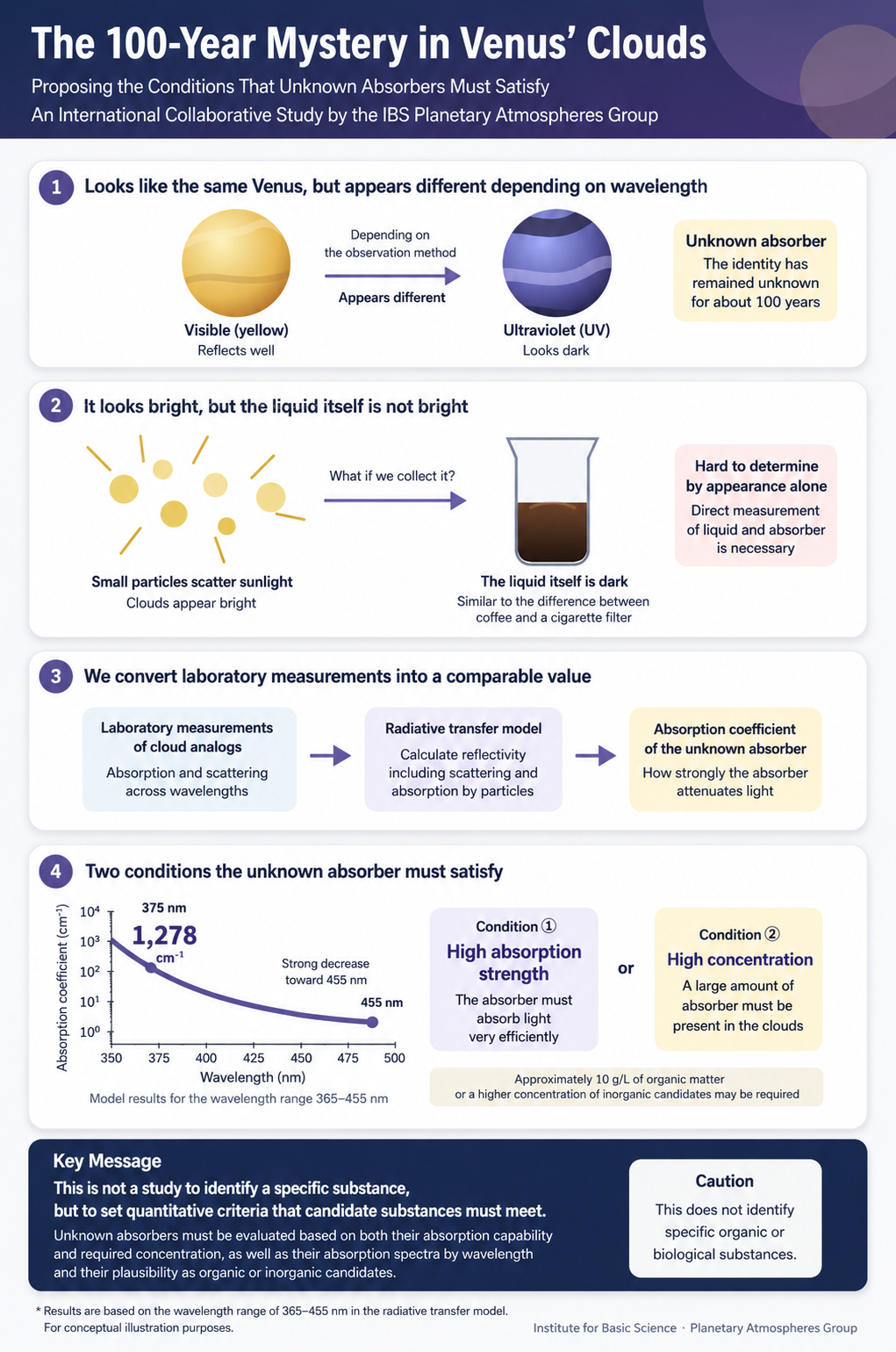
Figure 1. Description of Venus’ unknown absorber
<関連情報>
- https://www.ibs.re.kr/cop/bbs/BBSMSTR_000000000738/selectBoardArticle.do?nttId=26989&pageIndex=1&searchCnd=&searchWrd=
- https://journals.sagepub.com/doi/10.1177/15311074261477502
金星雲エアロゾルのバルク液体における紫外線-青色吸収のモデルは、高濃度における効率的な有機吸収体と一致する A Model of UV–Blue Absorbance in Bulk Liquid of Venusian Cloud Aerosols Is Consistent with Efficient Organic Absorbers at High Concentrations
Jan Spacek, Paul B. Rimmer, […], and Yeon Joo Lee
Astrobiology Published:August 25, 2026
DOI:https://doi.org/10.1177/15311074261477502
Abstract
At visible wavelengths, Venus appears serene and pale yellow. But since the 1920s, observers have noted high-contrast features in the ultraviolet. These features track the ∼4-day superrotation of the upper cloud deck and vary widely over time and space. The identity of the UV absorber(s)—active between at least 280 and 500 nm—remains unknown, as no proposed candidate fully matches all observational data. From remote observations of Venus, and accounting for light scattering by cloud droplets, we modeled the 365–455 nm decadic absorption coefficient,aλ , of the bulk liquid that forms Venus’s clouds. Assuming a uniform distribution in mode 1 and mode 2 particles across a 6 km layer below the cloud top at 65 km, we constrained the decadic absorption coefficient within the modeled range to a peak at a375= 1278 cm−1, equivalent to a decadic absorbance of A375 = 1278 for a 1 cm path length. This extremely high absorption coefficient implies the presence of a highly efficient absorber, for example, conjugated organics, at relatively high concentrations—for example, ∼12 g/L for porphyrin-type pigments with a representative peak molar absorption coefficient of ∼105 M−1cm−1. Inorganic absorbers, typically below 104 M−1cm−1, would either need to constitute a large portion of the aerosols or still not be sufficiently light-absorbing, even in pure form. We emphasize that all candidate absorbers must be evaluated against Venus’s reflectance curve using (1) known molar absorption coefficients, (2) realistic atmospheric distributions, and (3) appropriate particle size distributions. The planned Rocket Lab mission will test the hypothesis of organics in Venus’s clouds.