2026-07-24 国立極地研究所

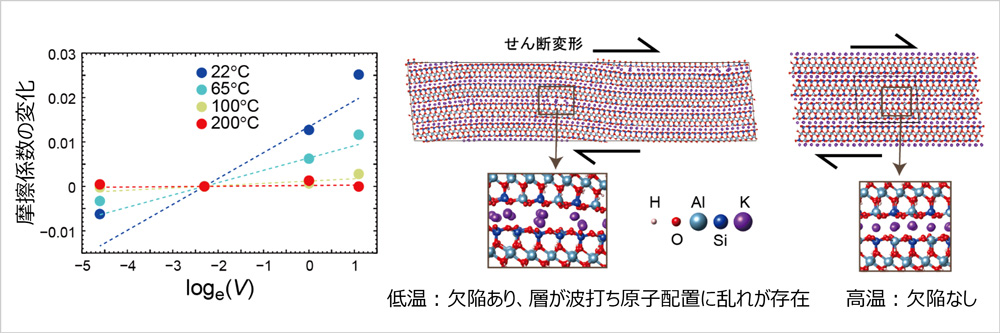
図1:本研究の成果概要
<関連情報>
- https://www.nipr.ac.jp/info2026/20260724.html
- https://agupubs.onlinelibrary.wiley.com/doi/10.1029/2025JD045296
南極ドーム富士基地における降水現象の年々変動 Interannual Variations of Precipitation Events at Dome Fuji Station, Antarctica
Kyohei Yamada, Jun Inoue, Naohiko Hirasawa, Kazutoshi Sato
Journal of Geophysical Research: Atmospheres Published: 13 May 2026
DOI:https://doi.org/10.1029/2025JD045296
Abstract
Precipitation is key to the water budget of inland Antarctica, with extreme precipitation events strongly influencing snowfall and surface climatology. To investigate the contribution and trends of such events at Dome Fuji station (DF) in inland Antarctica, this study analyzed precipitation variability using the ERA5 product validated against observational data from February 2003 to January 2004. ERA5 more accurately reproduces surface temperature, downward radiation, wind speed, surface pressure, and cloudiness throughout the year compared with the previous reanalysis, ERA-Interim. Although precipitation in ERA5 is slightly underestimated (by approximately 14%), the peak precipitation amount and rapid temperature increase observed during an extreme precipitation event in early November 2003, caused by high-pressure blocking with a strong ridge near 45°E, is greatly improved compared with the previous reanalysis. Over a 46-year period (1979–2024), bias-corrected ERA5 data show a statistically significant increase in the annual precipitation amount at DF at the 99% confidence level, primarily because of an increase in the number of precipitation event days. Application of k-means clustering analysis to the 46-year precipitation distribution revealed that the frequency of occurrence of a blocking ridge near 45°E, which favors precipitation over Dronning Maud Land, increased and deepened southward. The change in blocking was not uniform but exhibited periodic variability. Interannual variability of precipitation at DF shows a strong correlation with that of sea surface temperature in the subtropical South Atlantic Ocean. Therefore, it is suggested that periodic changes in sea surface temperature might affect the synchronized blocking high that brings precipitation to the DF.