2026-06-08 スイス連邦工科大学ローザンヌ校(EPFL)
◆EPFLの研究チームは、この考えを詳細に分析し、AI同士の内部表現には確かに共通性が見られるものの、完全に同一の世界モデルへ収束するわけではないことを示した。モデルのアーキテクチャや学習データ、学習目的の違いによって概念間の関係性や表現空間の構造には依然として差異が残ることが確認された。研究は、AIがどのように知識を表現し理解しているのかを探る基礎的課題に新たな知見を与え、人工知能の一般化能力や解釈可能性、さらには知能そのものの本質に関する議論に重要な示唆を提供している。
<関連情報>
- https://actu.epfl.ch/news/do-ai-systems-learn-the-same-view-of-the-world/
- https://arxiv.org/abs/2602.14486
- https://arxiv.org/pdf/2602.14486
プラトン的表象仮説の再検討:アリストテレス的視点 Revisiting the Platonic Representation Hypothesis: An Aristotelian View
Fabian Gröger, Shuo Wen, Maria Brbić
arXiv Submitted on 16 Feb 2026
DOI:https://doi.org/10.48550/arXiv.2602.14486
Abstract
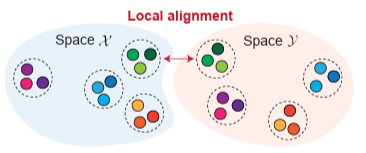
The Platonic Representation Hypothesis suggests that representations from neural networks are converging to a common statistical model of reality. We show that the existing metrics used to measure representational similarity are confounded by network scale: increasing model depth or width can systematically inflate representational similarity scores. To correct these effects, we introduce a permutation-based null-calibration framework that transforms any representational similarity metric into a calibrated score with statistical guarantees. We revisit the Platonic Representation Hypothesis with our calibration framework, which reveals a nuanced picture: the apparent convergence reported by global spectral measures largely disappears after calibration, while local neighborhood similarity, but not local distances, retains significant agreement across different modalities. Based on these findings, we propose the Aristotelian Representation Hypothesis: representations in neural networks are converging to shared local neighborhood relationships.