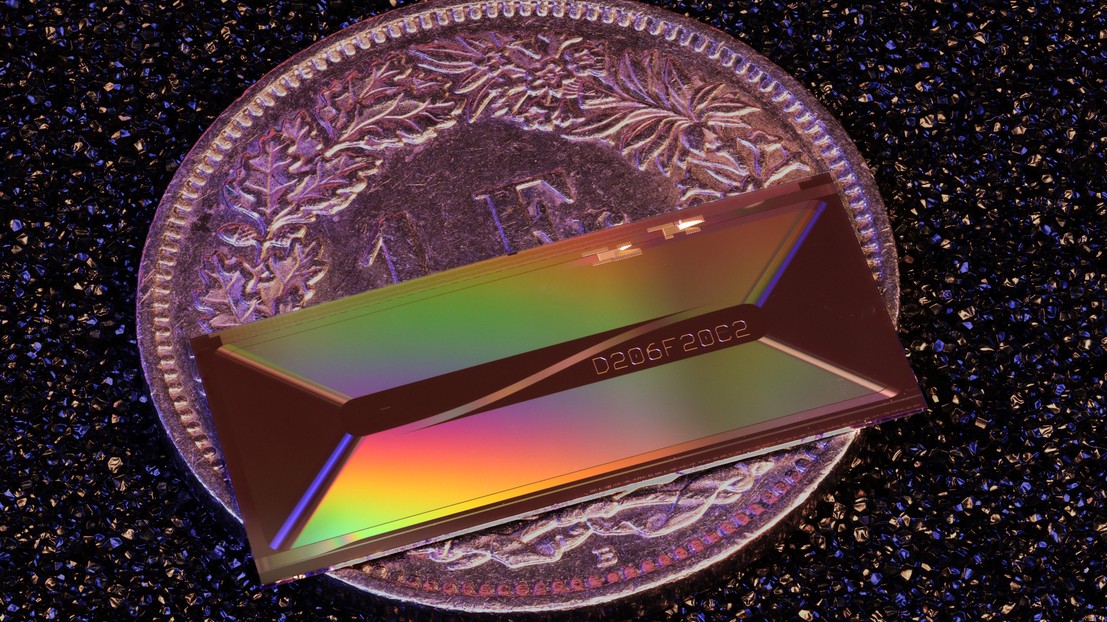
2026-06-04 チャルマース工科大学
研究では、ニューラルネットワークに材料科学や流体力学などの既知の物理法則を組み込み、AIが単なる統計的相関ではなく物理的因果関係を学習できるようにした。その結果、複雑な工学システムや新材料の設計において、シミュレーションや実験回数を大幅に削減しながら性能予測の精度を向上させることに成功した。
研究チームは、この手法を用いて設計空間の探索を高速化し、開発期間やコストを削減できることを示した。こうした物理情報を活用するAIは、材料開発、エネルギー技術、製造プロセス最適化など幅広い分野で応用が期待されている。研究者らは、この技術が従来の試行錯誤型研究開発を大きく変革し、新技術の実用化を加速する基盤になると考えている。
<関連情報>
- https://news.cision.com/chalmers/r/physics-trained-digital–super-brain–speeds-up-technology-development,c4355202
- https://onlinelibrary.wiley.com/doi/10.1002/lpor.202502769
準正規モードを用いた電磁散乱における機械学習のための知識統合に関する一般的なフレームワーク A General Framework for Knowledge Integration in Machine Learning for Electromagnetic Scattering Using Quasinormal Modes
Viktor A. Lilja, Albin J. Svärdsby, Timo Gahlmann, Philippe Tassin
Laser Photonics Reviews Published: 17 March 2026
DOI:https://doi.org/10.1002/lpor.20250276

ABSTRACT
Neural networks have been demonstrated to be able to accelerate the modeling and inverse design of optical and electromagnetic devices by serving as fast surrogates for electromagnetic solvers. Nevertheless, such neural networks can be unreliable and normally require extreme amounts of data to train. Here it is shown that these limitations can be alleviated by constraining neural-network models using prior knowledge about the governing physics. We propose a universal physics-informed neural network framework for electromagnetic scattering based on the quasinormal mode expansion of the scattering matrix. The neural networks learn the resonant structure underlying the scattering spectrum, are guaranteed to obey energy conservation and causality, and are shown to have significantly improved data efficiency for photonic-crystal slabs and all-dielectric free-form metasurfaces. Furthermore, the framework allows additional problem-specific constraints, such as losslessness, symmetries, and number of modes, to be imposed manually when they are available. The method can be applied to a wide range of optical and electromagnetic devices owing to the generality of the quasinormal mode formalism.