
2026-10-09 中国科学院(CAS)
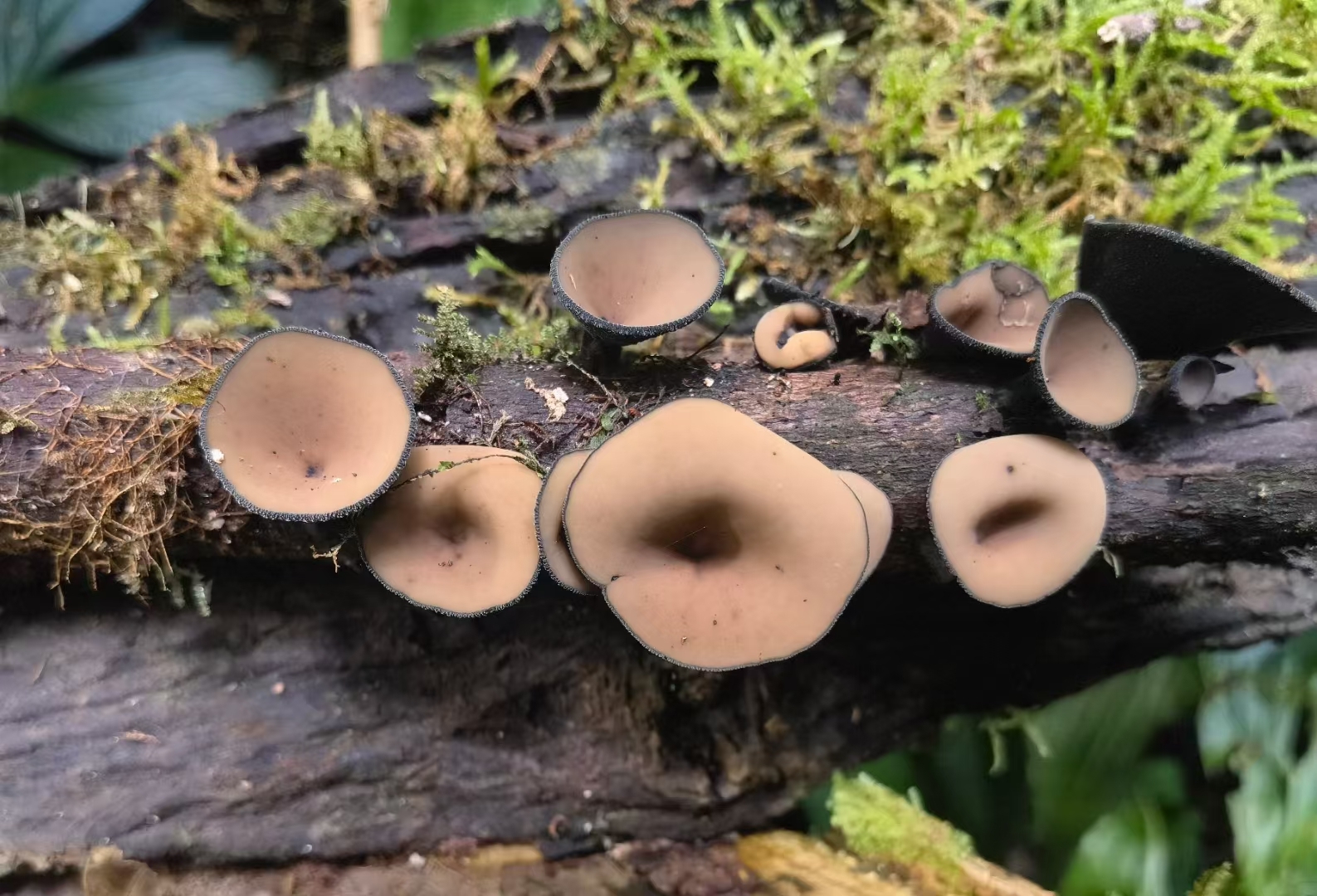
Fungal community on tropical dead wood. (Image by Gbadamassi G.O. Dossa)
<関連情報>
- https://english.cas.cn/newsroom/research-news/202610/t20261010_1201859.shtml
- https://academic.oup.com/ismecommun/article/6/1/ycag258/8786359
樹皮の存在は熱帯林における菌類群集の構成を変化させ、菌類の多様性とバイオマスに様々な影響を与える Bark presence shifts fungal guild composition with varying effects on fungal diversity and biomass in a tropical forest
Jean Evans Israel Codjia, Busayo Joshua Babalola, Weiming Hu, Yun-Qiang Yang, Sewanou H Honfo, Ekananda Paudel, Douglas Schaefer, Kun-Fang Cao, Jian-Chu Xu, Yong-Ping Yang,…
ISME Communications Published:06 September 2026
DOI:https://doi.org/10.1093/ismeco/ycag258
Abstract
Bark influences wood decomposition, but the mechanisms are unclear. We investigated fungal community composition, microbial biomass, and wood physicochemical condition during a wood decomposition experiment. We carried out a 2-year common garden experiment in a tropical seasonal rainforest, China, with logs from five tree species, comparing intact-bark versus bark-removed treatments over 0, 18, and 24 months of field exposure. We sequenced wood-inhabiting fungi, measured microbial biomass, and assessed wood chemical properties over time. We anticipated bark presence would alter fungal community composition and increase diversity, decay types, and microbial biomass. Wood with bark-removed had a higher relative abundance of Ascomycota, whereas bark presence fostered Basidiomycota. Soft rot fungi showed the highest relative abundance, followed by white rot fungi and brown rot fungi. However, bark presence was associated with higher relative abundance of white rot fungi, during early decay. Wood chemical properties and moisture (water content) availability, were correlated with the dominance of saprotrophs, rather than bark status. Despite compositional shifts, bark status did not influence fungal alpha diversity at the bark effects level. Bark status also did not directly influence fungal and bacterial biomass. Microbial biomass dynamics were instead linked to changes in wood physicochemical properties as decomposition progressed. Fungal community turnover dominated over time in bark-removed treatments, while bark presence redirected community assembly toward nestedness at the advanced decay stages. Overall, bark presence was linked with a shift toward more deterministic, habitat-filtered microbial community assembly, suggesting a multi-guild, multi-factor framework to predict bark effects on wood decay in forests.

