2026-10-06 アルゴンヌ国立研究所(ANL)

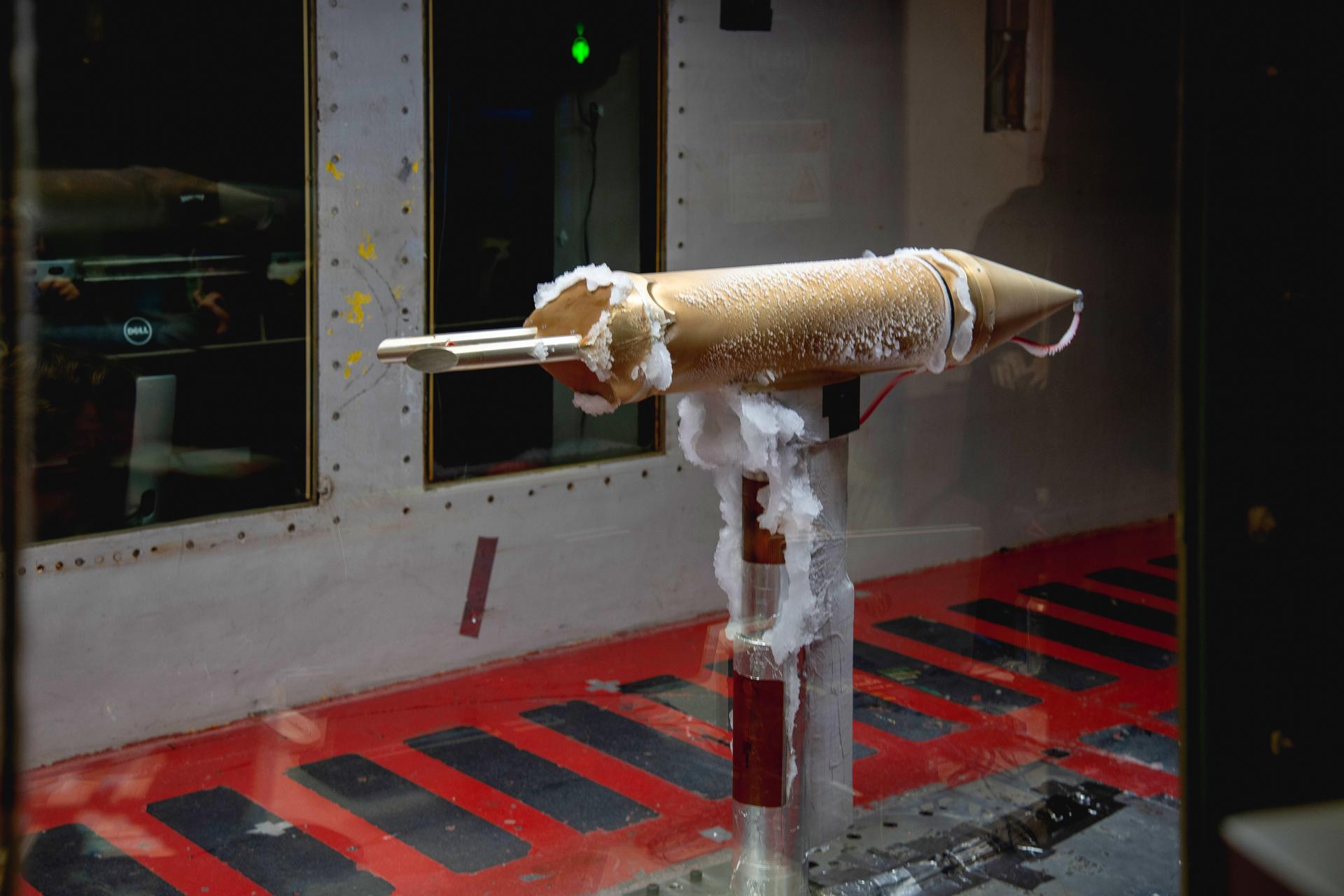
In a new technique developed at Argonne, an X-ray beam is directed at silicon carbide at a controlled time after the material is struck by a pulse of laser light. The X-ray acts like a camera, letting scientists see in real time how the material responds to the laser. (Image: Haidan Wen/Argonne National Laboratory)
<関連情報>
- https://www.anl.gov/article/scientists-develop-new-xray-technique-to-watch-quantum-materials-respond-to-laser-pulses
- https://pubs.acs.org/ancac3/article-abstract/20/17/12850/5140910/Depth-Resolved-X-Ray-Nanoimaging-of-Coherent-and
炭化ケイ素におけるコヒーレントおよびインコヒーレントエネルギー輸送の深さ分解X線ナノイメージング Depth-Resolved X‑Ray Nanoimaging of Coherent and Incoherent Energy Transport in Silicon Carbide
Kumar Neeraj;Matthew J. Highland;Tao Zhou;Burak Guzelturk;Donald A. Walko;Nathan C. Flanders;Nazar Delegan;F. Joseph Heremans;Martin V. Holt;Stephan O. Hruszkewycz;Haidan Wen
ACS Nano Published:April 20, 2026
DOI:https://doi.org/10.1021/acsnano.5c20241
Abstract
Understanding lattice dynamics is crucial for optimizing the process of creating functional structures, such as laser writing of color-center defects. However, existing structural probes have difficulty measuring structural dynamics with submicrometer depth sensitivity. Here, a depth-resolved ultrafast X-ray nanodiffraction technique is developed to track the lattice dynamics of silicon carbide (SiC) in three dimensions. Upon laser excitation of an aluminum layer that acts as a heat and strain transducer, a specular Bragg peak of SiC shows an overall increase in the X-ray diffraction intensity rather than a peak shift. The relaxation dynamics of the increased intensity are significantly different when probed on and off the Bragg peak. The fast subnanosecond relaxation probed at the maximum of the Bragg peak is a result of the propagation of a coherent strain wave along the depth direction, while a slow relaxation probed at the wings of the Bragg peak reflects a localized incoherent lattice heating. To further visualize these processes, spatiotemporal maps were obtained by scanning the relative position and delay between the laser pump and X-ray probe beams, which capture the propagation of the strain wave, as well as a stationary structural distortion close to the aluminum/SiC interface. These depth-resolved structural measurements disentangle energy dissipation mechanisms in laser-excited SiC, and they open opportunities for finer control of, for example, the formation of optically addressable defect complexes central to quantum information applications.