2026-08-06 インペリアル・カレッジ・ロンドン(ICL)
<関連情報>
- https://www.imperial.ac.uk/news/articles/natural-sciences/life-sciences/2026/lettuce-and-tobacco-plants-engineered-to-produce-muscle-protein-for-meat-alternatives/
- https://www.frontiersin.org/journals/plant-science/articles/10.3389/fpls.2026.1876707/full
植物葉緑体を用いたミオグロビン肉タンパク質の持続可能な生産 Sustainable production of myoglobin meat protein in plant chloroplasts
Alexia Groff ,Yuhan Lu,,Mistianne Feeney,,Julian P. Whitelegge ,Shengxi Shao,Kyoko Morimoto,Peter Julian Nixon
Frontiers in Plant Science Published:06 August 2026
DOI:https://doi.org/10.3389/fpls.2026.1876707
Abstract
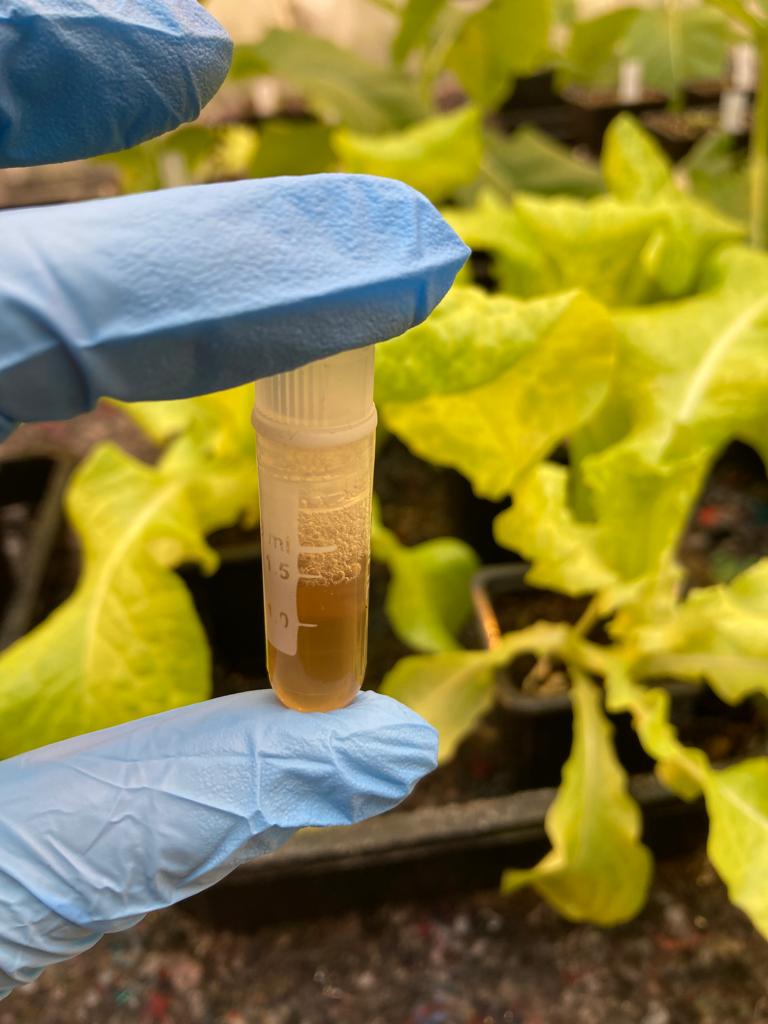
Alternative routes for producing animal proteins are crucial for reducing the reliance on traditional livestock farming, which contributes significantly to greenhouse gas emissions, deforestation, and water consumption. Myoglobin (Mb) is an important oxygen-binding hemoprotein found in vertebrate muscle which enhances the nutritional and sensorial properties of meat. Due to its unique functionality, Mb has been heterologously expressed in a variety of organisms, although only transient expression in Nicotiana benthamiana has been reported for higher plants. In this study, we used chloroplast transformation technology to express porcine Mb in higher plants (tobacco, a non-edible model plant, and lettuce, an edible host) and bovine Mb in the green alga Chlamydomonas reinhardtii. Mb accumulation was estimated by immunoblotting and found to be much higher in tobacco (2.7% total soluble protein (TSP)) and lettuce (1.5% TSP) than Chlamydomonas reinhardtii (<0.25% TSP). The expression in tobacco chloroplasts is also superior to tobacco nuclear expression (using either the cauliflower mosaic virus 35S promoter or the Arabidopsis thaliana ubiquitin promoter). Total heme levels were elevated in myoglobin-producing mutants compared with control plants, although porcine Mb purified from tobacco leaves exhibited approximately 35% heme-binding (compared with 80% heme-binding in E. coli-expressed Mb), despite being correctly folded, suggesting that heme availability might be a bottleneck. Overall, our work describes the first report of stable Mb production in higher plants and its effect on photosynthesis and heme levels. This provides a foundation for future plant-made animal proteins for food applications.