2026-08-04 ペンシルベニア州立大学(Penn State)
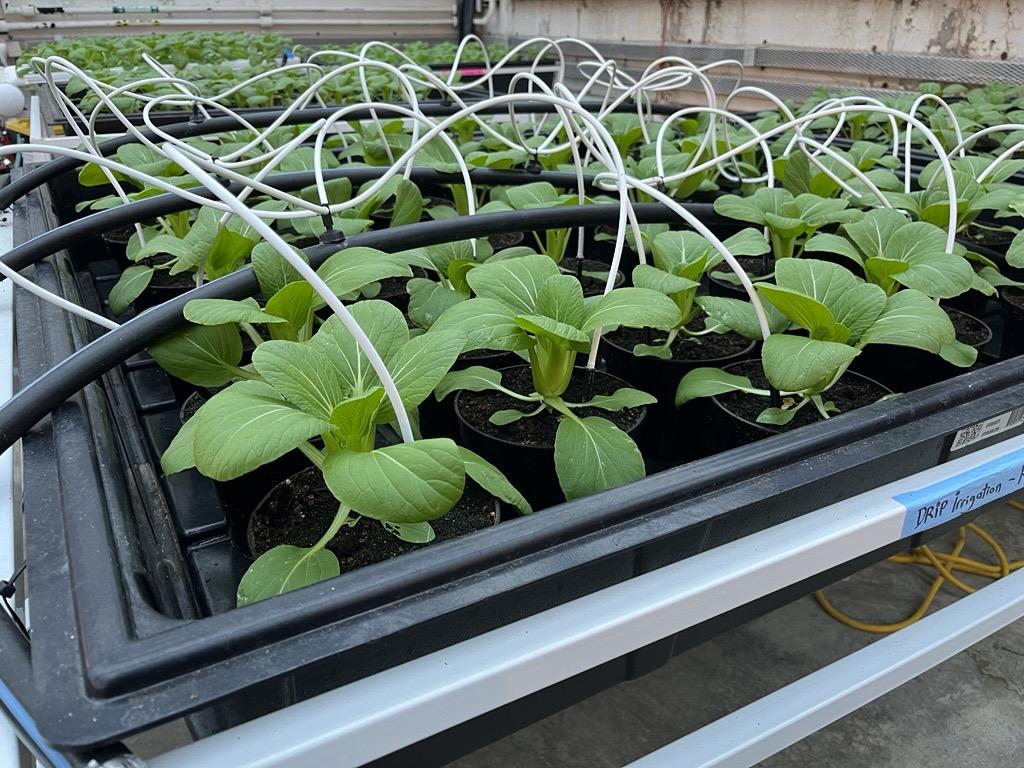
Researchers conducted a study of bacteria in five soilless farming systems. They experimentally grew the leafy vegetable bok choy to test if and how the different soilless farming system designs affect microbial growth. Credit: Penn State. Creative Commons
<関連情報>
- https://www.psu.edu/news/research/story/soilless-farming-system-design-can-determine-microbial-growth-impact-crops
- https://journals.asm.org/doi/10.1128/aem.01167-26
土壌を用いない農業システムの設計は、微生物叢の多様性と構成に影響を与える Soilless farming system design impacts the diversity and composition of microbiota
Auja Bywater, Aline Novaski Seffrin, Jordan E. Bisanz, Francesco Di Gioia, Jasna Kovac
Applied and Environmental Microbiology Published:4 August 2026
DOI:https://doi.org/10.1128/aem.01167-26
ABSTRACT
Controlled environment agriculture (CEA), including soilless farming systems, is expanding to improve food security and resource efficiency. However, little is known about how different soilless farming system designs influence microbial populations that may be relevant to plant health and food safety. This study investigated the effects of soilless system type on microbial load and bacterial community composition in nutrient solution and on bok choy leaves over two growing cycles. Soilless systems, including deep water culture (DWC), Kratky (KR), nutrient film technique (NFT), ebb and flow (EF), and drip irrigation (DI), were evaluated. Significant differences in aerobic plate count (APC) in nutrient solution were observed among system types, with the DI system exhibiting the highest counts across both cycles. Increased nutrient solution pH was negatively associated with APC, whereas temperature did not significantly affect microbial concentrations. APC on bok choy leaves at harvesting was not significantly different by system type. Bacterial community composition in nutrient solution significantly varied by system type, temperature, growing cycles, and sampling day. Microbial alpha diversity also varied significantly by system type. Core microbiota analysis identified Acidovorax, Legionella, and Caulobacter as both core and hub taxa, with Acidovorax being the only genus detected across all samples. These findings indicate that microbial dynamics differ among soilless system designs and across growing cycles, suggesting that factors not monitored in this study strongly influence microbial community composition. Furthermore, we identified core and hub bacterial genera warranting further investigation of their function in CEA and their impact on plant health and food safety.