2026-05-25 東北大学

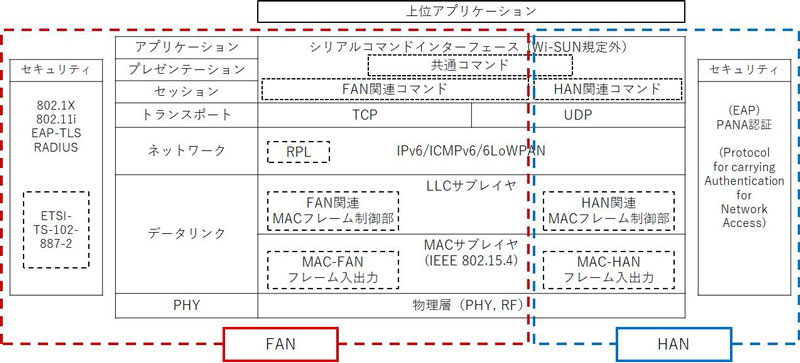
図1. D3h対称性を有する六座の有機分子HFPTPと二座の有機分子ODAおよびASDの網目構造化により、π共役二次元COF(TUS-621、TUS-622)構造が形成される模式図。
<関連情報>
- https://www.tohoku.ac.jp/japanese/2026/05/press20260525-01-cof.html
- https://pubs.acs.org/doi/10.1021/jacs.5c23169
ヘテロ原子を組み込んだ共有結合性有機骨格が、混合マトリックス膜におけるCO2分離のトレードオフを打破する Heteroatom-Engineered Covalent Organic Frameworks Break the CO2 Separation Trade-Off in Mixed Matrix Membranes
Tsukasa Irie,Liting Yu,Sourav Ghosh,Mika Nozaki,Kohki Sasaki,Tokuhisa Kawawaki,Ranjit Thapa,Yu Zhao,Saikat Das,Zixi Kang,and Yuichi Negishi
Journal of the American Chemical Society Published: May 21, 2026
DOI:https://doi.org/10.1021/jacs.5c23169
Abstract
Breaking the long-standing permeability–selectivity trade-off remains a central challenge in membrane-based carbon dioxide separations. Here we report a heteroatom-engineering strategy that leverages structurally precise covalent organic frameworks (COFs) to transcend this limitation in mixed matrix membranes (MMMs). Two isostructural, π-conjugated two-dimensional COFs, TUS-621 and TUS-622, were rationally designed through symmetry-guided reticulation of a hexatopic triphenylene node with oxygen- and sulfur-containing diamine linkers, respectively, enabling systematic modulation of pore surface chemistry without altering topology. When incorporated into a Pebax polymer matrix, these COFs function as CO2-philic, molecularly defined transport domains that synergistically couple preferential CO2 sorption with ordered and fast diffusion channels. The optimized TUS-621/Pebax-10% membrane exhibits a CO2 permeability of 433 Barrer with a CO2/CH4 selectivity of 55.3 under mixed-gas conditions, decisively surpassing the 2008 Robeson upper bound for CO2/CH4 separation while simultaneously achieving high CO2/H2 separation performance (CO2 permeability of 407 Barrer and selectivity of 25.2). Comprehensive pressure- and temperature-dependent permeation studies reveal that selectivity remains remarkably stable over 2–10 bar and 25–100 °C, underscoring the robustness of the COF-enabled transport pathways. Long-term operation over 30 days shows negligible performance decay, highlighting excellent resistance to physical aging and interfacial degradation. Comparative analysis establishes that oxygen-rich pore environments in TUS-621 impart stronger CO2 affinity and higher accessible surface area than the sulfur-containing analogue, directly translating molecular-level design into macroscopic separation performance. This work demonstrates that heteroatom-engineered COFs provide a powerful platform for overcoming fundamental transport trade-offs and advancing MMMs toward practical, high-efficiency CO2 separations.