2026-10-28 カンザス大学(KU)
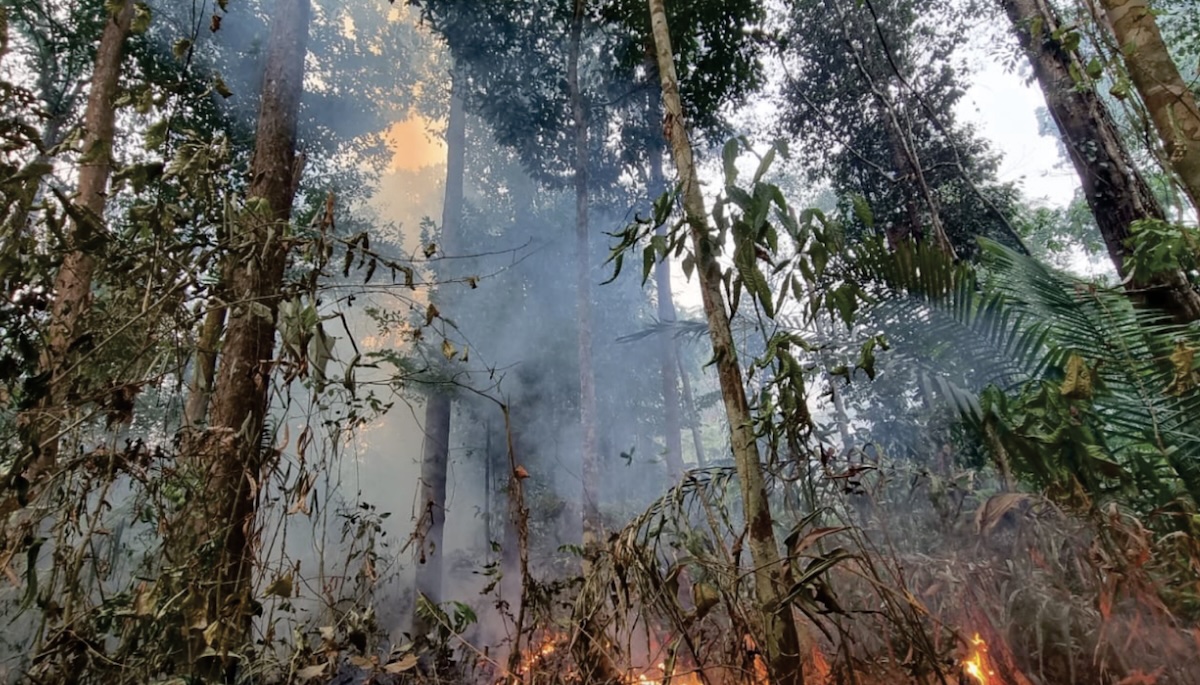
Fires burning in the Amazon rainforest. Credit: Gatti et al.
<関連情報>
- https://news.ku.edu/news/article/study-finds-amazon-rainforest-now-releases-more-carbon-than-it-absorbs
- https://www.nature.com/articles/s41586-026-11168-1
アマゾンの二酸化炭素排出量は、人間の活動によって引き起こされ、干ばつによってさらに増加している。 Amazon carbon emissions driven by human actions amplified by droughts
Luciana V. Gatti, Camilla L. Cunha, Juan C. G. Blas, A. Scott Denning, Mariane S. Reis, Luciano Marani, Egidio Arai, Cassiano Gustavo Messias, Dhemerson E. Conciani, John B. Miller, Vanúcia Schumacher, Kleber P. Naccarato, Jose Marengo, Ane A. C. Alencar, Luciana Soler, Claudio Almeida, Lucas Gatti Domingues, Caio S. C. Correia, Raiane A. L. Neves, Carlos Nobre, Sergio M. Corrêa, Elliott Campbell, Jennifer E. Johnson, Joseph A. Berry, …Guilherme B. M. Machado
Nature Published:21 October 2026
DOI:https://doi.org/10.1038/s41586-026-11168-1
Abstract
The Amazon carbon sink is weakening as deforestation1,2,3,4,5, rising tree mortality6,7,8 and climate change disrupt the climatic conditions that sustain a humid tropical forest9,10,11. Forest loss reduces precipitation, increases temperatures and lengthens the dry season, driving higher carbon emissions1,2,3,4,11,12. Climate stress is stronger in more deforested regions, rendering forests progressively more flammable1,9,13. Large-scale climate events, such as El Niño, further amplify regional climate impacts9,14,15,16,17. Here we present an analysis of 15 years of Amazonian carbon fluxes derived from atmospheric CO2 measurements. We determine a carbon balance of 0.32 ± 0.08 PgC yr−1, with fires acting as the dominant source (0.40 ± 0.07 PgC yr−1) and forest uptake becoming increasingly unable to offset emissions. Furthermore, we investigate key drivers of the carbon emissions of Amazonia and identify three distinct year groups. Group 1 (2011–2014, 2017 and 2018) represents the role of the Amazon in the global carbon balance (0.11 ± 0.08 PgC yr−1) during wetter years with low human activity, such as deforestation, biomass burning and degradation. Group 2 (2019–2022) represents Amazon carbon emissions (0.43 ± 0.13 PgC yr−1) from human activities (mainly deforestation and degradation) during years with low climatic stress. Group 3 (2010, 2015, 2016, 2023 and 2024) has the highest carbon emissions (0.49 ± 0.07 PgC yr−1) and comprises warm and dry years (high climate stress), such as El Niño and the warming of the Tropical North Atlantic Ocean, associated with biomass burning.