2026-07-10 カリフォルニア大学ロサンゼルス校(UCLA)
Cal Fire
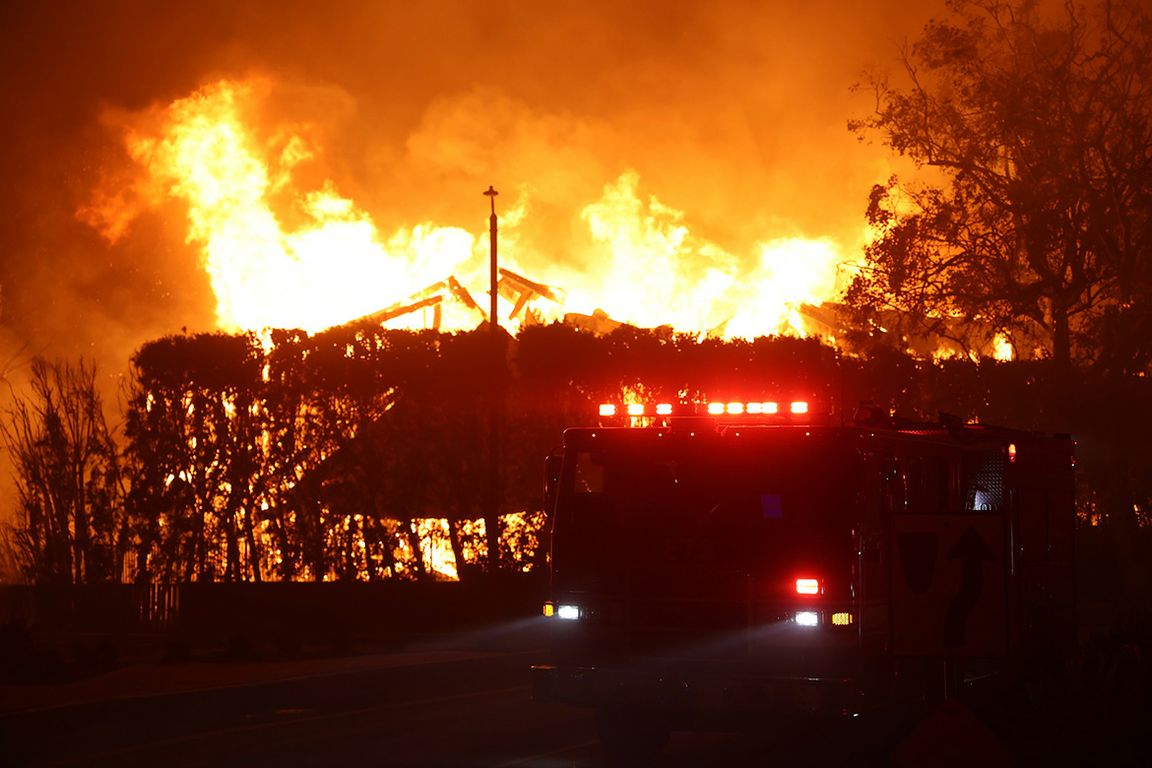
A scene from the Palisades Fire that started in the City of Los Angeles, January 2025.
<関連情報>
- https://newsroom.ucla.edu/stories/why-are-wildfires-getting-worse
- https://www.pnas.org/doi/abs/10.1073/pnas.2532829123
カリフォルニアの森林では現在、大規模な山火事が蔓延している High-severity fire now dominant in California forests
Mitchell J. Hung and A. Park Williams
Proceedings of the National Academy of Sciences Published:June 22, 2026
DOI:https://doi.org/10.1073/pnas.2532829123
Abstract
Fire severity exerts crucial ecological controls in many forests globally. In California, where annual forest-fire area has increased dramatically in recent decades, understanding how burn severity is changing is essential for informing environmental policy and management. We developed remotely sensed high-resolution maps of severity for 4,391 forest fires to assess trends and drivers of burn severity across California’s forests from 1985–2024. We observed that historically dominant low-severity and ecologically restorative fire was increasingly replaced by high-severity stand-replacing fire, which became the most common severity class beginning in 2012. This regime shift indicates that forested areas are increasingly burning at severity levels they are unlikely to survive. Redistribution toward high-severity fire was strongest in high-biomass forests, implicating heavy fuel loads due to fire exclusion as an amplifier of tree mortality. Importantly, California’s forests provide a vast array of ecosystem services, including the regulation of climate and the water cycle, biodiversity support, and timber and recreation revenue. Thus, the growing dominance of high-severity forest fire is likely to impose significant socioeconomic costs on California.