2026-06-15 愛媛大学
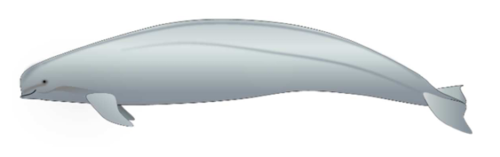
スナメリ(海棲哺乳類)のイメージ図 (イラスト: 中根 快)。
<関連情報>
- https://www.ehime-u.ac.jp/data_relese/pr_20260615_cmes/
- https://www.sciencedirect.com/science/article/pii/S0025326X2600682X
堆積物中のDNAを用いて過去100年間の海洋哺乳類の動態を評価する新たな試み:スナメリの事例 Novel attempt to assess marine mammal dynamics over the past 100 years using sedimentary DNA: An example in finless porpoise
Kai Nakane, Michinobu Kuwae, Hideyuki Doi, Mari Ochiai, Tomohiko Isobe, Tatsuya Kunisue, Narumi Tsugeki
Marine Pollution Bulletin Available online 29 May 2026
DOI:https://doi.org/10.1016/j.marpolbul.2026.119895
Highlights
- Long-term eDNA of marine mammal were recovered from sediment cores.
- The sedimentary eDNA increased around the1950s, but rapidly declined in the 1960s.
- sedDNA negatively correlated with polychlorinated biphenyls (PCBs) and Cd.
- sedDNA positively correlated with temperature, prey abundance, and microplastics.
- Decline of marine population around 1960 might be due to elevated chemical exposure.
Abstract
Marine mammal populations are suspected to have declined over the past century, with the adverse effects of chemical pollutants considered to be one of the major causes. However, field surveys of marine mammal populations are challenging because of technical issues, resulting in limited in situ data and unresolved questions regarding the historical impacts of chemical exposure. Here, we aimed to elucidate the long-term population dynamics of finless porpoise (Neophocaena asiaeorientalis), a sedentary species inhabiting coastal areas. To reconstruct population trends, we analyzed environmental DNA (eDNA) preserved in sediment cores collected from the Beppu Bay, Seto Inland Sea, Japan. eDNA concentrations in the sediment layers were determined using quantitative PCR. Temporal trends showed a distinct increase from the 1940s to the 1950s, followed by rapid decline in the early 1960s and then a recovery around 2000. Further analysis identified a significant negative correlation between the concentrations of sedimentary eDNA (sedDNA) and chemicals such as polychlorinated biphenyls (PCBs) and cadmium. Positive correlations were observed with temperature, prey abundance, and microplastics. Consistent with historical PCB production trends, the PCB concentrations in finless porpoise individuals collected from the Seto Inland Sea during the 1960–1970s were apparently higher than those during the 2000s. These findings suggest that the finless porpoise population in the region experienced a significant decline around 1960 owing to elevated chemical exposure. This study highlights the potential of sedDNA-based approaches to enhance our understanding of anthropogenic disturbances on marine animals over the long term.