2026-05-26 中国科学院(CAS)
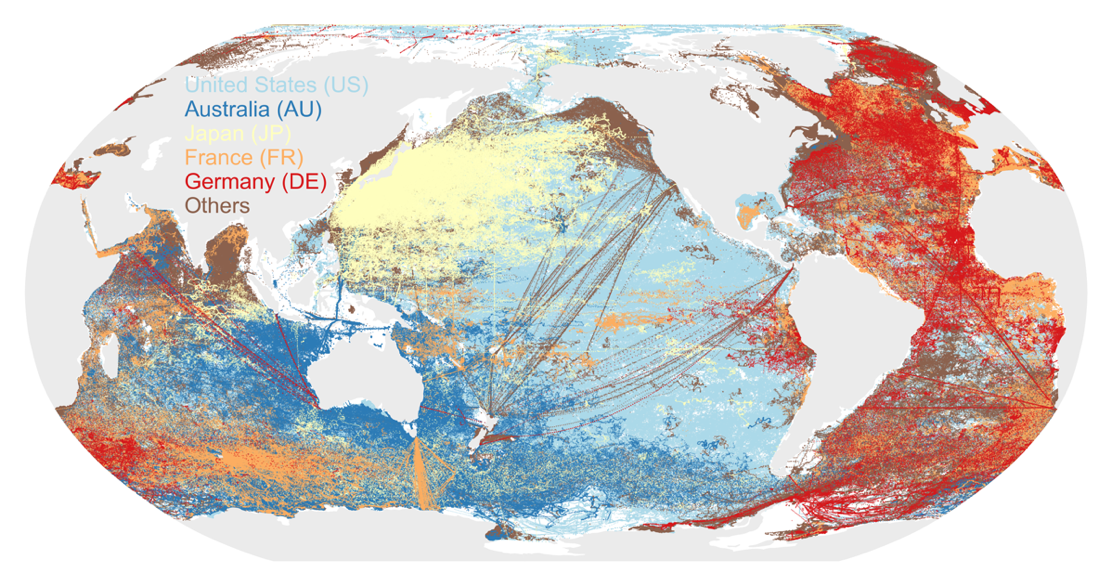
Geographical distribution of ocean temperature profile data from different nations from 2005 to 2023. (Image by Prof. CHENG et al.)
<関連情報>
- https://english.cas.cn/newsroom/research-news/202605/t20260525_1159846.shtml
- https://www.nature.com/articles/s41558-026-02661-6
地球規模の海洋熱モニタリングは海洋観測システムに極めて依存している Critical dependence of global ocean heat monitoring on the ocean observing system
Yujing Zhu,Lijing Cheng,Kevin E. Trenberth,John P. Abraham,Sabrina Speich & Jiang Zhu
Nature Climate Change Published:22 May 2026
DOI:https://doi.org/10.1038/s41558-026-02661-6
Abstract
Ocean monitoring critically depends on the Global Ocean Observing System, which has provided upper-2,000-m temperatures with near-global coverage since around 2005 but is increasingly vulnerable to policy and economic pressures. Here we show that data reduction in the Global Ocean Observing System would substantially degrade its capability to monitor ocean heat content changes. We further highlight the shared responsibility of nations, through sustained international coordination and long-term national commitments, to maintain an adequate observing system.