2026-10-14 パシフィック・ノースウェスト国立研究所(PNNL)

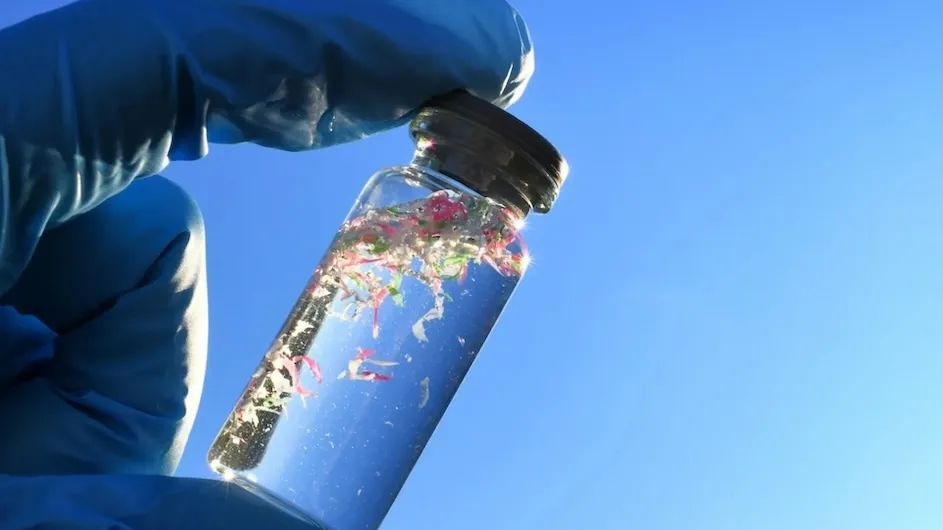
Designed peptoid assemblies as metal-free enzyme mimics to catalytically hydrate CO2 to bicarbonate and accelerate the conversion of bicarbonate into carbonate mineral crystals. (Image by Nathan Johnson | Pacific Northwest National Laboratory)
<関連情報>
- https://www.pnnl.gov/publications/peptoid-nanomaterials-promote-carbon-dioxide-dissolution-and-precipitation
- https://advanced.onlinelibrary.wiley.com/doi/10.1002/adfm.78375
自己組織化結晶性ペプトイドナノ材料を金属フリー酵素模倣体として用いた二酸化炭素の水和および沈殿促進 Self-Assembled Crystalline Peptoid Nanomaterials as Metal-Free Enzyme Mimics for Enhanced Carbon Dioxide Hydration and Precipitation
Progyateg Chakma, Ying Chen, Thi Kim Hoang Trinh, Anthony R. Perez, Jonathan Gil, Maria Casco Hidalgo, Botao Hao, Kyle Whitaker, Chun-Long Chen
Advanced Functional Materials Published: 12 September 2026
DOI:https://doi.org/10.1002/adfm.78375
ABSTRACT
Inspired by recently discovered metal-free carbonic anhydrases (CAs) and other natural enzymes that achieve efficient catalysis without metal cofactors, we herein report a sequence-defined supramolecular peptoid platform that mimics metal-free CAs and exhibits hydrolytic activity via a supramolecular assembly-mediated proton-transfer mechanism. This rational peptoid design employs a spatially distributed histidine-inspired functionality within a cyclen-based macrocyclic scaffold embedded in an amphiphilic peptoid system, enabling self-assembly into highly crystalline nanosheets and nanotubes. These peptoid assemblies exhibit efficient hydrolysis of 4-nitrophenyl acetate (4-NPA) under physiological conditions, with catalytic activity strongly correlated with the spatial organization of imidazole groups and the assembly morphology. Extensive mechanistic studies suggest that the catalysis relies on assembly-confined proton transfer within the H-bonding network of peptoid assemblies, thereby promoting general acid-base catalysis. Additionally, peptoid catalysts enhance CO2 hydration and precipitation, providing sequence-defined nanomaterials as a flexible, metal-free artificial enzyme platform for hydrolytic catalysis and biomimetic mineralization.