

2026-10-12 カリフォルニア大学ロサンゼルス校(UCLA)
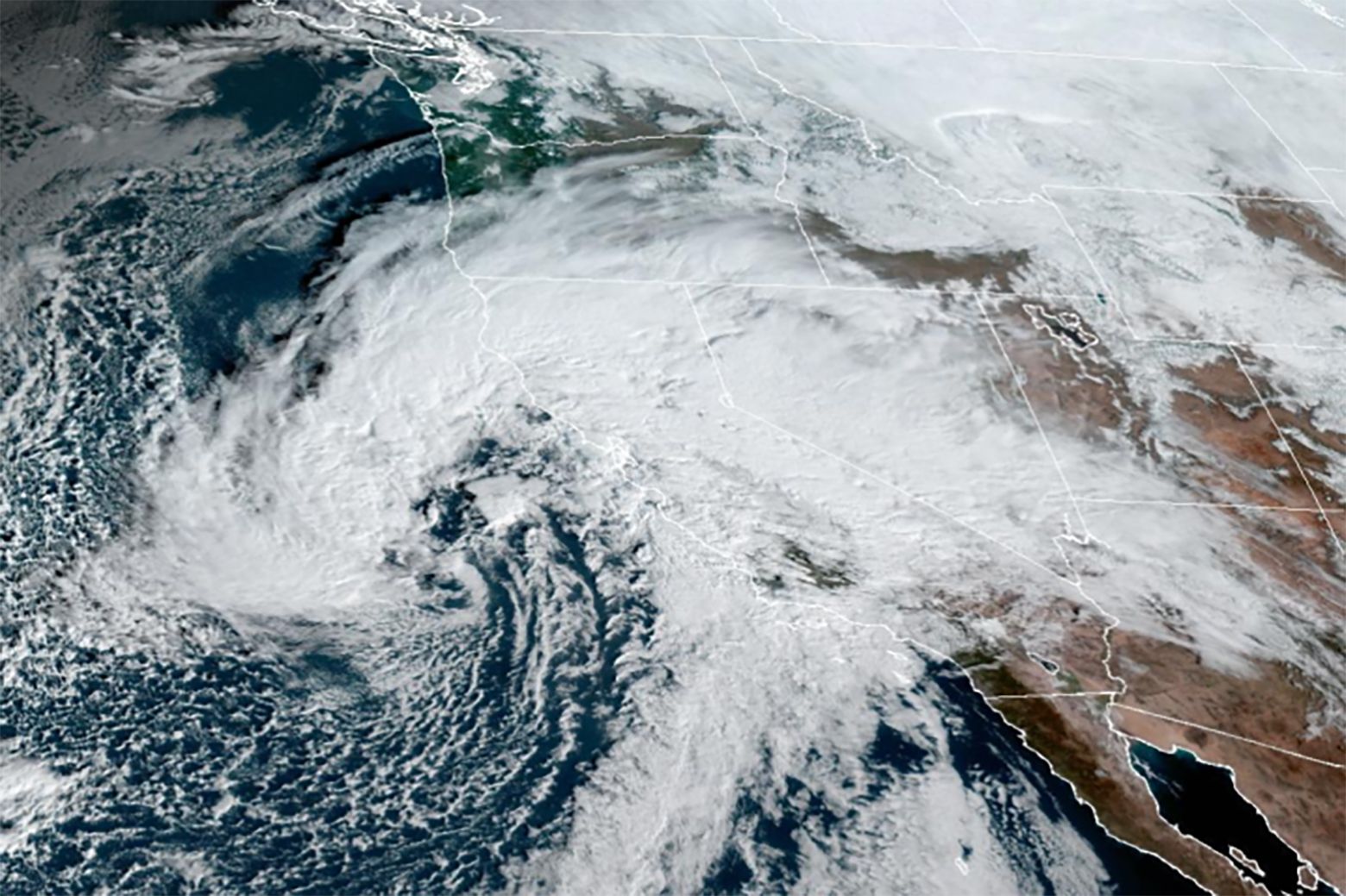
GOES-west satellite by NOAA
Satellite view during the 2024 El Niño of an atmospheric river over the western U.S.
<関連情報>
- https://newsroom.ucla.edu/releases/what-2024s-record-breaking-rainfall-says-about-next-el-nino
- https://www.science.org/doi/10.1126/sciadv.aeb1692
2024年は記録的な豪雨 Record-setting heavy precipitation occurrence in 2024
Chad W. Thackeray, Jesse Norris, Alex Hall, Mark D. Zelinka, and Stephen Po-Chedley
Science Advances Published:9 Oct 2026
DOI:https://doi.org/10.1126/sciadv.aeb1692
Abstract
Precipitation extremes have increased globally in recent decades, consistent with a warming climate. We find that 2024 experienced a record-high frequency of heavy (≥99th percentile; FP≥99) precipitation events globally based on MSWEP (Multi-Source Weighted-Ensemble Precipitation) observations from 1979 to 2025. This extends a long-term trend of ∼0.03%/decade in FP≥99, with similar but more uncertain increases for the 99.9th percentile. Unlike prior high FP≥99 years, 2024’s record was more globally distributed and emerged from a distinct seasonal evolution. El Niño and rare concurrent multi-basin tropical ocean warmth drove elevated extremes early in the year, before lagged global tropospheric responses and long-term warming sustained and amplified extremes through boreal summer. Climate models indicate that years with 2024-level FP≥99 typically require either stronger El Niño forcing or concurrent multi-basin sea surface temperature (SST) anomalies. Diagnostic projections within constrained ensemble members suggest that ∼40% of the 2024 anomaly aligns with global mean temperatures and ∼20% with El Niño variability, with some of the remainder linked to basin-scale SST structure.

