

2026-10-14 コロンビア大学
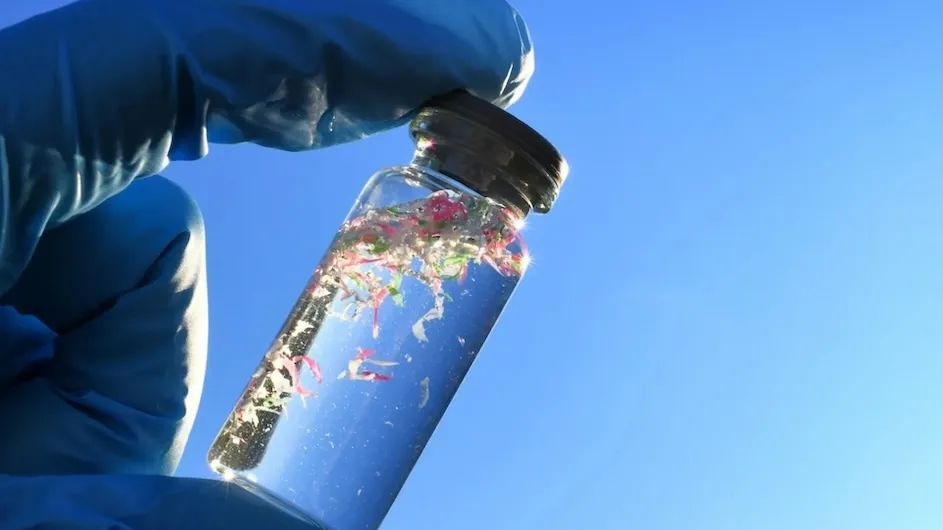
<関連情報>
- https://news.columbia.edu/news/microplastics-are-chemically-active-and-could-cause-biological-harm
- https://www.nature.com/articles/s41586-026-11141-y
マイクロプラスチックと水の界面における固有の物理化学的活性 Intrinsic physicochemical activity at microplastic–water interfaces
Naixin Qian, Ruoqi Zhao, Kwing Yeung Chan, Vinh Gia Vuong, Xin Gao, Zhilun Zhao, R. Allen LaCour, Yifan Dai, Phoebe A. Stapleton, Beizhan Yan, Teresa Head-Gordon & Wei Min
Nature Published:14 October 2026
DOI:https://doi.org/10.1038/s41586-026-11141-y
Abstract
Plastics have become an integral part of our modern society, largely because they are generally regarded as chemically inert under normal circumstances. However, plastics fragmented into microplastics (less than 5 mm in size) have recently raised significant public concerns, and have been detected widely across ecosystems and human tissues with increasing environmental and health risks1,2,3,4,5. Here we show that commodity microplastics exhibit intrinsic physicochemical activity in water, manifested by the spontaneous generation of reactive oxygen species that increases with interfacial hydrophobicity and strongly correlates with interfacial electrostatics. Ab initio calculations support these observations and reveal that hydroxide oxidation becomes energetically more favourable at increasingly hydrophobic microplastic–water interfaces through the combined effects of partial solvation and electrostatics. These interfacial properties and the resulting oxidative chemistry have direct implications for biomolecular adsorption, protein aggregation, and even cellular damage. Together, our findings challenge the prevailing paradigm of plastic inertness, identify a possibly overlooked mechanism for the detrimental effects of microplastics on health and the environment, and contribute to a fundamental understanding of the structure–activity relationship of interfacial water, which may inform the design of safer and more sustainable plastic materials.

