2026-07-14 東北大学
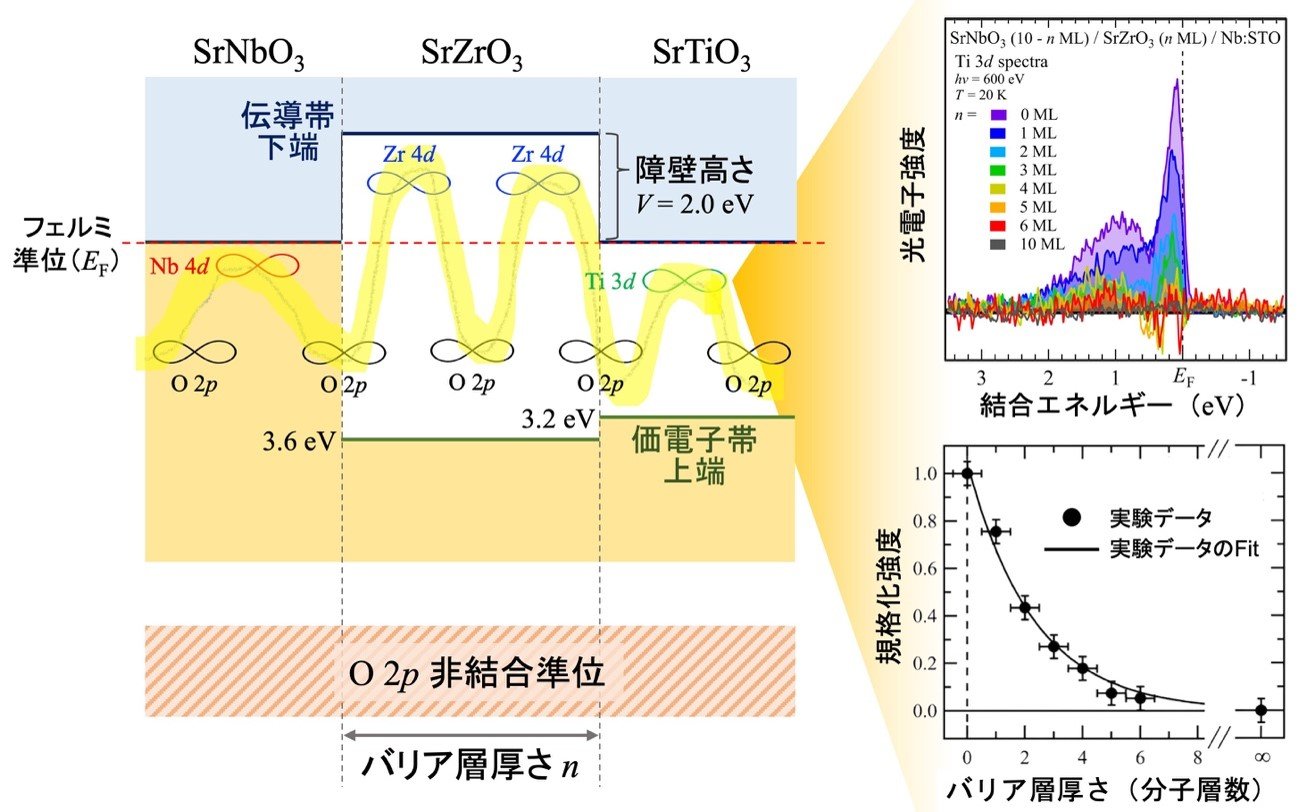
図1.酸化物界面における化学結合ネットワーク(p-d-p混成ネットワーク)の概念図
<関連情報>
- https://www.tohoku.ac.jp/japanese/2026/07/press20260714-03-oxide.html
- https://pubs.aip.org/aip/apm/article/14/7/071101/3397032/Role-of-barrier-layer-to-prevent-inherent-charge
酸化物ヘテロ構造における固有の電荷移動を防止するための障壁層の役割
Role of barrier layer to prevent inherent charge transfer in oxide heterostructures
Ryotaro Hayasaka;Yuuki Masutake;Seitaro Inoue;Daisuke Shiga;Kenichi Ozawa;Hiroshi Kumigashira
APL Materials Published:July 01 2026
DOI:https://doi.org/10.1063/5.0336589
The insertion of a barrier layer between two different materials is an essential technique used to maintain the properties of those materials at the interface and achieve the desired device performance. Advances in the design of multifunctional devices based on oxides require an improved understanding of how charges transfer across a barrier layer. We investigate the change in the inherent charge transfer between the SrNbO3 and SrTiO3 by inserting a SrZrO3 barrier layer with controlled layer thickness. Ti 2p–3d resonant photoemission was used to observe the Ti 3d states near the Fermi level. Taking advantage of its elemental selectivity, we directly visualize the change in charge transfer from SrNbO3 to SrTiO3 depending on the barrier layer thickness of SrZrO3. It is found that the amount of charge transfer decays with a decay length of 1.0–1.2 nm with increasing barrier layer thickness. This value is much longer than the estimated value of 0.2 nm based on the electron tunneling model, suggesting that the extended d–p–d hybridization network formed at the interface plays an important role for the interfacial charge transfer. Our findings offer useful guidelines for the design and control of functionalities in oxide-based heterostructures.