2026-06-25 ミシガン大学
<関連情報>
- https://news.umich.edu/cmon-and-join-the-convoy-batteries-fuel-cells-would-overhaul-emissions-from-semis-other-heavy-vehicles/
- https://www.nature.com/articles/s41560-026-02095-6
- https://tiisys.com/blog/2025/08/27/post-174226/
中型・大型車両の脱炭素化におけるバッテリーと燃料電池の比較(用途別) Batteries versus fuel cells for decarbonizing medium- and heavy-duty vehicles across applications
Maxwell Woody,Spencer Checkoway,Gregory A. Keoleian,Robert De Kleine,Hyung Chul Kim & James E. Anderson
Nature Energy Published:25 June 2026
DOI:https://doi.org/10.1038/s41560-026-02095-6
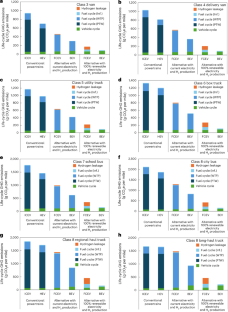
Fig. 1: Life-cycle GHG emissions of conventional and alternative powertrains.
Abstract
Medium- and heavy-duty vehicles are a major source of greenhouse gas (GHG) emissions in the United States and globally. Batteries and fuel cells can play a critical role in decarbonizing this sector. Here we conduct a life-cycle GHG assessment of class 3–8 internal combustion engine vehicles, hybrid electric vehicles (HEVs), fuel cell electric vehicles (FCEVs) and battery electric vehicles (BEVs) in the United States. Compared with conventional diesel-fuelled options, alternative powertrains reduce emissions across vehicle types: HEVs by 1–26%, FCEVs using hydrogen produced from steam methane reforming by 12–51%, BEVs powered by the grid by 44–68%, FCEVs using hydrogen produced from electrolysis powered by renewable electricity by 72–82% and BEVs powered by renewable electricity by 87–92%. The ordering of these powertrains holds across cargo weights, drive cycles, regional electricity grids and grid projections. We also assess renewable electricity consumption and hydrogen leakage, two factors that must be considered when evaluating the suitability of different powertrains for decarbonization.