2026-06-17 ロイヤルメルボルン工科大学(RMIT)
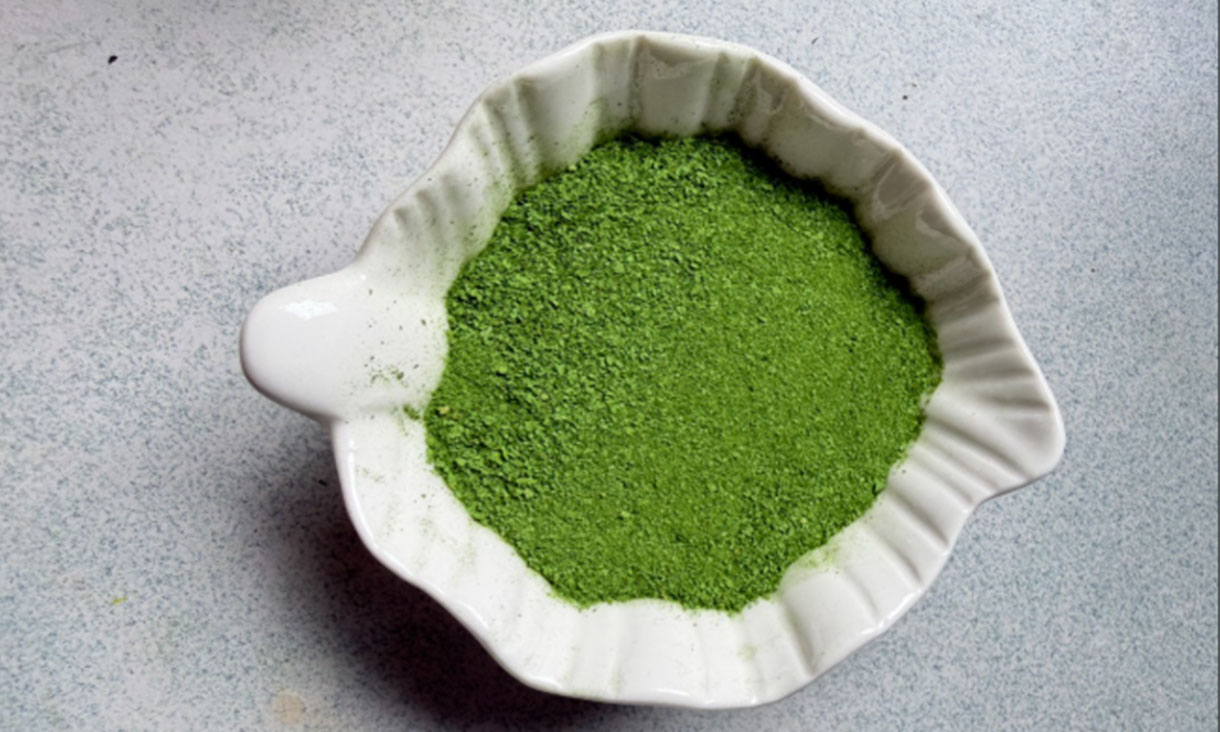
Cauliflower leaf protein. Image: supplied
<関連情報>
- https://www.rmit.edu.au/news/all-news/2026/jun/cauliflower-protein
- https://link.springer.com/article/10.1007/s11947-026-04225-0
超音波抽出とふるいろ過によるカリフラワー葉からの持続可能な葉タンパク質濃縮物 Sustainable Leaf Protein Concentrate from Cauliflower Leaves via Ultrasonication-Assisted Extraction and Sieve Filtration
Kinjal A. Furia,Peter J. Torley,Mahsa Majzoobi & Asgar Farahnaky
Food and Bioprocess Technology Published:30 January 2026
DOI:https://doi.org/10.1007/s11947-026-04225-0
Abstract
The extraction of plant-based proteins is gaining prominence amid rising global demand for sustainable, eco-friendly protein sources. Cauliflower leaves, often discarded as agricultural waste, present a promising opportunity to utilise as a nutrient-rich by-product for protein extraction. This study investigated the combined effect of ultrasound time (0 [NS], 5 [5S] and 10 [10S] min) and sieve size (non-filtered [NF], 124 µm [F124] and 48 µm [F48]) on the recovery and structure-functional properties of cauliflower leaf protein concentrates (LPC). The combination of ultrasonication and finer sieve filtration (F48) significantly reduced the particle size of cauliflower leaf juice. LPC colour measurements showed that 10S-F48 produced a darker colour than the other LPCs. Increasing the sonication time from 0 to 10 min significantly increased yield (12.24% to 18.32%) and protein recovery (36.32% to 47.32%), but reduced protein content (59.06% to 46.95%). Finer filtration reduced protein extraction yield and recovery but increased protein content. Zeta potential decreased with pH, reaching -8.15 to -5.64 mV near pI (pH 3.5-4.5). The highest protein solubility, 32%, was observed at pH 9 for 10S-NF LPC. Thermal analysis shows denaturation peaks at 61.50-63°C. FTIR and SEM revealed sonication-induced structural changes, resulting in uniform, well-dispersed particles in the filtered samples. This research highlights how pre-treatment parameters impact the LPC properties, offering a potential avenue for scalable industrial protein production from agricultural by-products.