2026-08-17 ジョージア大学
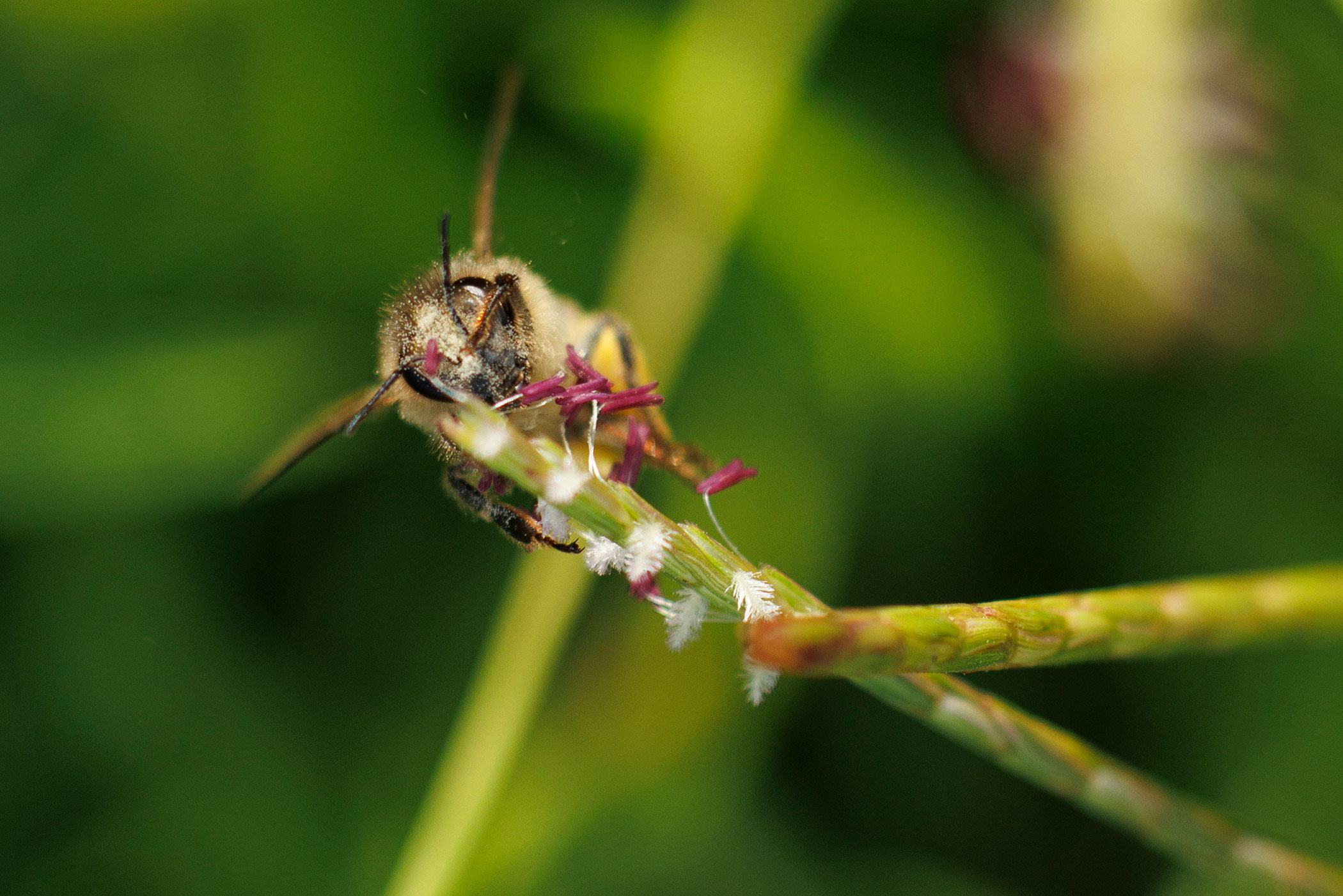
Mowing less frequently allows the grass to flower, providing a food source for bees. (Photo by Andrew Davis Tucker/UGA)
<関連情報>
ミツバチはセンチピードグラスの花粉を採集して利用する Bees forage and utilize centipedegrass pollen
Oluwatomi D. Ibiyemi,Karen Harris-Shultz,David Jespersen,Michael D. Ulyshen,Brian M. Schwartz & Shimat V. Joseph
Journal of Insect Conservation Published:18 July 2026
DOI:https://doi.org/10.1007/s10841-026-00793-w
Abstract
Bees are crucial for pollination, producing 35% of the world’s fruits, nuts, and vegetables. However, the decline in bee populations due to habitat loss, monoculture farming, pesticide use, and urbanization threatens biodiversity and agricultural sustainability. Thus, it is critical to identify additional resources for pollinators. Centipedegrass (Eremochloa ophiuroides) is a common turfgrass in the southeastern United States, which can provide pollen resources to foraging bees. The objectives of this study were to determine (1) pollen load composition of bees foraging on centipedegrass spikes, and (2) the utilization of centipedegrass pollen for larval development. In 2021 and 2022, foraging bees were collected from five centipedegrass lawns at 10–12 d and 14–16 d post-mowing (early and late flowering phases), and pollen loads were examined. Bees collected significantly more Poaceae than non-Poaceae pollen, and their pollen counts were significantly greater during early than late flowering in 2021 and 2022. Bombus spp. foraged more in September than in other months from centipedegrass. Pollen metabarcoding revealed that bees foraging on centipedegrass frequently collected pollen from other grasses (Zoysia and Paspalum) as well as non-grasses (Hedera, Lagerstroemia, Solanum, and Ulmus). The no-choice experiment showed that similar numbers of Bombus impatiens Cresson larvae developed feeding on centipedegrass pollen compared to those developed on butterfly bush. Thus, the data show that bees collect centipedegrass pollen, and that the pollen is of sufficient quality to support larval and pupal development.