2026-06-05 ペンシルベニア州立大学(Penn State)
◆研究では、AIに業務をほぼ全面的に任せ、自らの判断や創造的関与が少ない「受動的利用」と、AIを補助ツールとして活用しながら主体的に意思決定する「能動的利用」を比較した。その結果、受動的利用者は仕事に対する意味や達成感を感じにくく、「仕事の無意味感」が高まる傾向が確認された。一方、AIを支援ツールとして活用し、自身の専門知識や判断を組み合わせる利用者では、そのような影響は小さかった。研究者らは、AIの普及に伴い生産性向上が期待される一方で、人間の主体性や仕事への関与を維持することが重要であると指摘している。
◆本研究は、AI活用が従業員のウェルビーイングや職務満足度に及ぼす影響を示し、今後の職場設計や人材マネジメントのあり方に重要な示唆を与えるものである。
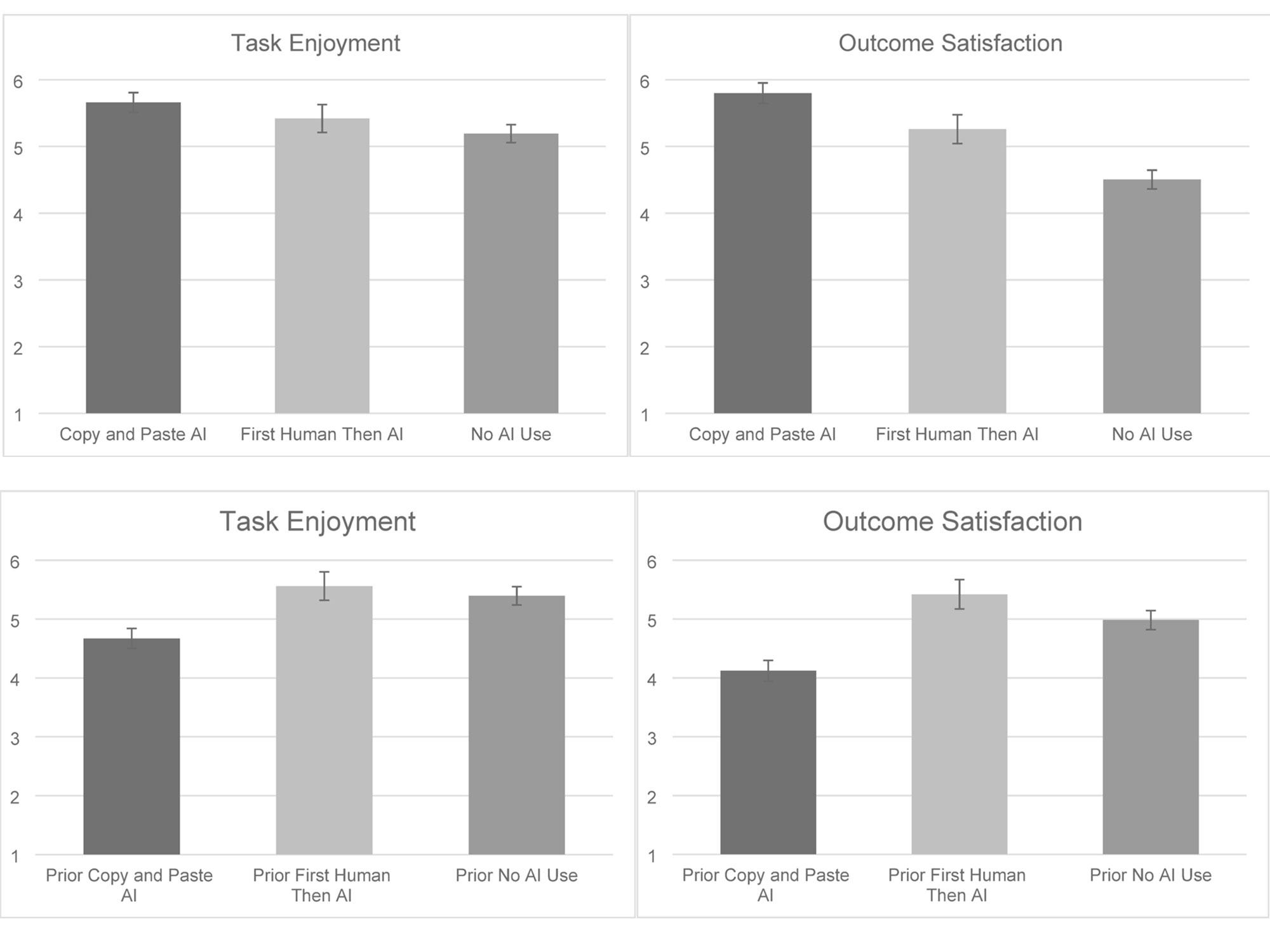
Participants recorded their responses using a seven-point Likert-type response scale, which ranged from one, meaning strongly disagree, to seven, meaning strongly agree. The visual above compares the measurements of task enjoyment and outcome satisfaction taken during both phases of the experiment, and showcases the substantial role prior passive AI use played in participants’ reported scores. Credit: Provided by Yidan Yin. All Rights Reserved.
<関連情報>
- https://www.psu.edu/news/research/story/passive-ai-use-work-increases-feelings-work-meaninglessness-study-finds
- https://www.nature.com/articles/s41598-026-42312-6
職場でAIに依存すると、自己効力感、主体性、意義が低下するが、積極的な協働はこれらの影響を軽減する Relying on AI at work reduces self-efficacy, ownership, and meaning while active collaboration mitigates the effects
Elena Hayoung Lee,Yidan Yin,Nan Jia & Cheryl J. Wakslak
Scientific Reports Published:15 March 2026
DOI:https://doi.org/10.1038/s41598-026-42312-6
Abstract
Artificial intelligence (AI) promises major productivity gains, but it also raises fundamental questions about how technology can reshape people’s relationship to their work. Historical debates over industrialization warned that technological change could undermine people’s connection to work and sense of meaning. Similar concerns now surround AI, where the key issue may not be whether AI is used, but how it is used. Across a pre-registered experiment (N = 269) and a follow-up survey (N = 270), we examine how different modes of AI use affect the confidence individuals have in completing work without AI assistance (self-efficacy), their sense of ownership over task output, and the meaning they perceive in their work. Participants completed occupation-specific writing tasks under one of three conditions: no AI use, passive AI use (copying AI-generated content), or active collaboration (drafting first and then using AI to refin). We find that passive use undermined self-efficacy, psychological ownership, and work meaningfulness, with declines in efficacy and meaningfulness persisting even when participants returned to manual work. In contrast, collaborative AI use preserved psychological connection to the task, producing outcomes comparable to independent work. Although passive use initially boosted enjoyment and satisfaction, these benefits reversed once participants resumed manual work. A complementary real-world survey mirrored these patterns across tasks beyond writing. Together, these findings show that the psychological consequences of AI use hinge on how it is integrated into human workflows, underscoring that strategies promoting active, collaborative use may help capture AI’s productivity benefits while preserving human workers’ agency, competence, and connection to their work.