2026-04-08 ヒューストン大学(UH)
<関連情報>
- https://www.uh.edu/news-events/stories/2026/april/04092026-math-behind-healthy-competition.php
- https://www.nature.com/articles/s44260-026-00078-y
競争的な活動における人間のパフォーマンスの本質について On the nature of human performance in competitive endeavors
Vitalii Zhukov,Panagiotis Tsiamyrtzis & Ioannis Pavlidis
npj Complexity Published:16 March 2026
DOI:https://doi.org/10.1038/s44260-026-00078-y
Abstract
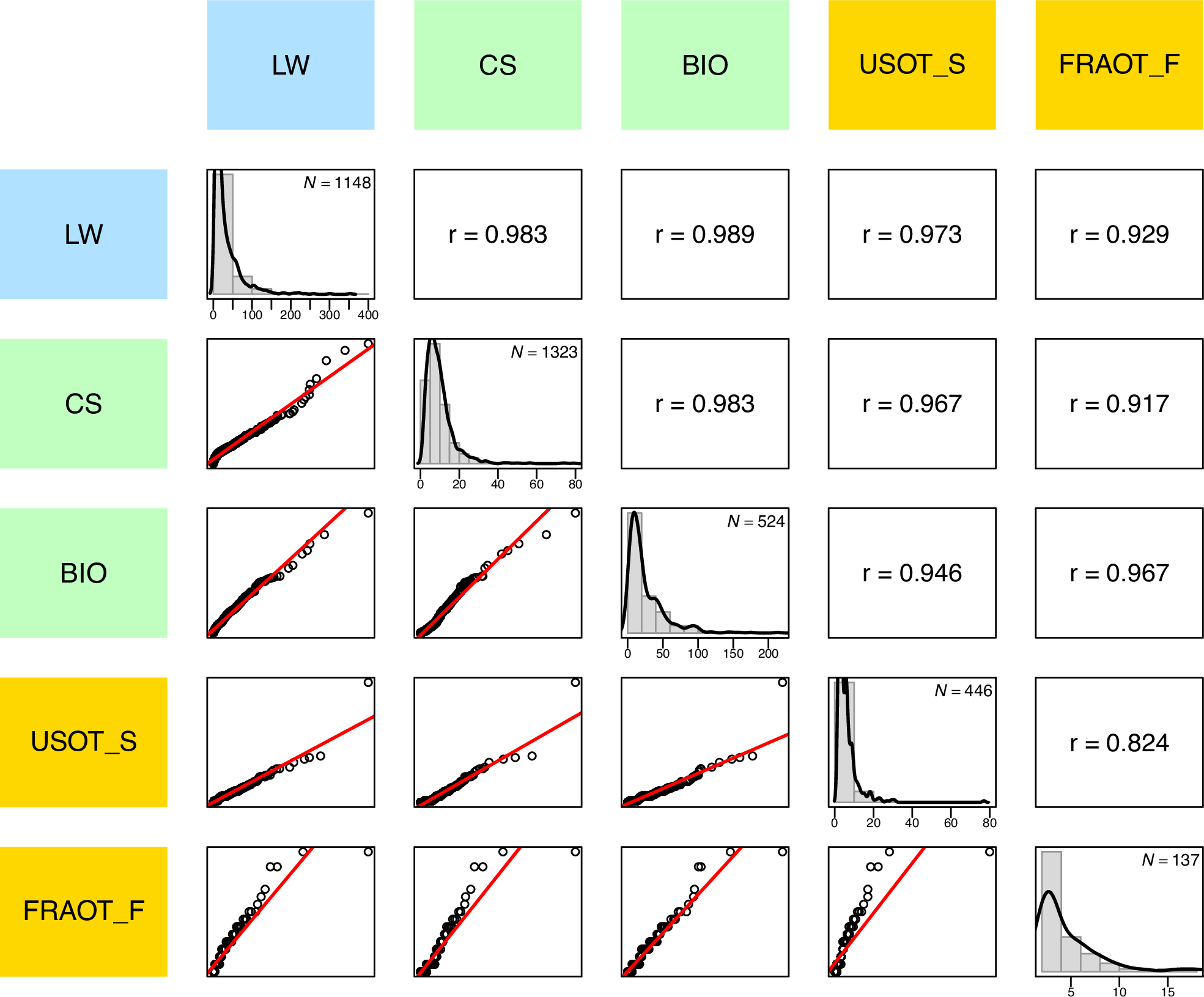
Heavy-tailed success is common in human competition, but it is unclear when it signals runaway dominance versus fair opportunity for skill to accumulate. We study outcome distributions in three arenas: World War II Luftwaffe fighter aces (victories), U.S. biology and computer science faculty competing for NIH/NSF awards, and U.S. Olympic swimmers and French Olympic fencers (medal totals). For each domain we analyze system-total distributions over the full record, then partition the same data into periods aligned with institutional eras to test whether tail shape is stable or shifts over time. Using a common tail-frontier scan, we fit three discrete upper-tail models—discrete lognormal (dLN), Zipf, and shifted geometric—over varying retained fractions. Where rules are stable and participants enjoy sustained chances to compete, upper tails consistently concentrate around a dLN regime: heavy but sub-power-law, consistent with repeated multiplicative gains under what we term Relative-Fairness, where skill has a fighting chance to accumulate. Time-partitioned analyses probe falsifiability: relaxing selectivity or temporarily doubling resources shifts tails toward a thinner, geometric-like regime, while episodic dominance yields localized Zipf episodes. Stress tests that vary roster size and competition tier under fixed rules show that tail shape distinguishes chance-dominated, relatively fair, and dominance-driven regimes.