2026-04-02 中国科学院(CAS)
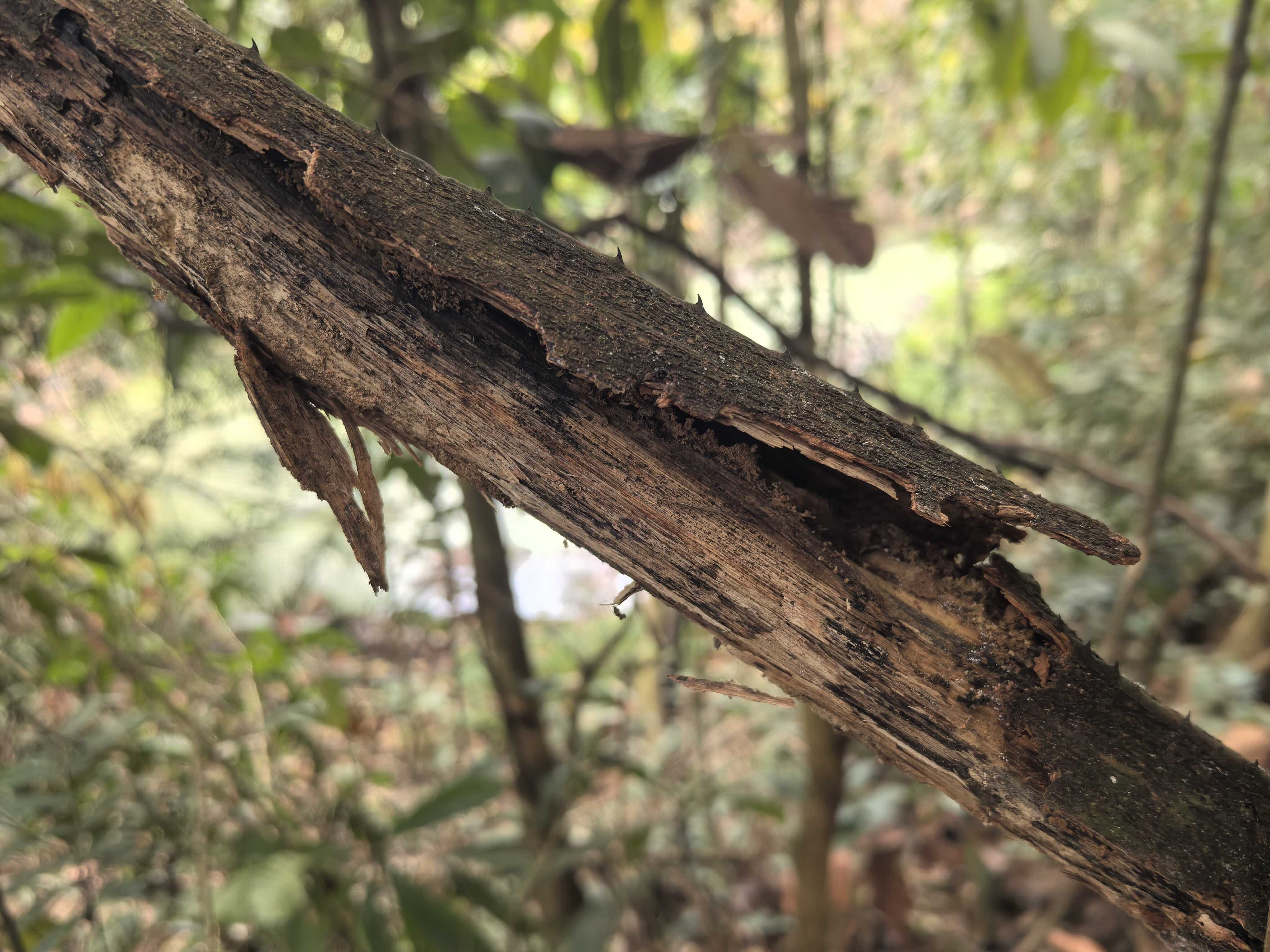
Dead liana decomposes. (Image by Gbadamassi G. O. Dossa)
<関連情報>
- https://english.cas.cn/newsroom/research-news/202604/t20260402_1155007.shtml
- https://royalsocietypublishing.org/rspb/article/293/2068/20252799/481170/A-double-edged-sword-Liana-wood-decomposes-faster
諸刃の剣?つる植物の木材は木の木材よりも早く分解する A double-edged sword? Liana wood decomposes faster than tree wood
Denis Mburu Njoroge;Aphrodis Munyaneza;Juan Zuo ;Gbadamassi G. O. Dossa ;Douglas Schaefer;Rhett D. Harrison;Stefan A. Schnitzer;Johannes H. C. Cornelissen
Proceedings of the Royal Society B: Biological Sciences Published:01 Apr 2026
DOI:https://doi.org/10.1098/rspb.2025.2799
Abstract
Lianas are increasing in many forests and show higher stem turnover rates and different chemical profiles compared with trees. However, liana deadwood decomposition dynamics have been overlooked. We redress this omission and hypothesize that liana wood decomposes faster than tree wood due to its larger vessels and higher nutrient content than trees, resulting in greater activity of both microbial and invertebrate decomposers. We tested this hypothesis in a common-garden decomposition experiment with deadwood of two size classes (2.5 and 4 cm diameter) belonging to 12 liana and 12 tree species in tropical China. Liana wood decomposed 28.6% faster than tree wood in the presence of invertebrates for large diameter but showed no significant difference for the smaller diameter. Initial contents of nitrogen, calcium, potassium and hemicellulose were higher for liana than tree wood. Likewise, liana bark had higher potassium and lignin contents than tree bark. The microbial contribution to decomposition based on mesh size exclusion of invertebrates, across lianas and trees, was similar. The presence of invertebrates more than doubled the decomposition rates for both lianas and trees. Overall, lianas decompose faster than trees, at least for larger diameter deadwood, and therefore may promote forest carbon and nutrient turnover rates.