2026-03-27 中国科学院(CAS)
<関連情報>
- https://english.cas.cn/newsroom/research-news/202603/t20260331_1154306.shtml
- https://iopscience.iop.org/article/10.3847/1538-4357/ae3bcf
風の制動下におけるマグネターSwift J1834.9–0846の自転および磁気傾斜角の進化に関する研究 Studies on the Spin and Magnetic Inclination Evolution of Magnetars Swift J1834.9–0846 under Wind Braking
B. P. Li (李彪鹏), Z. F. Gao (高志福), W. Q. Ma (马文琦), W. F. Zhang (张伟丰), and Q. Cheng (程泉)
The Astrophysical Journal Published: 2026 March 9
DOI:10.3847/1538-4357/ae3bcf
Abstract
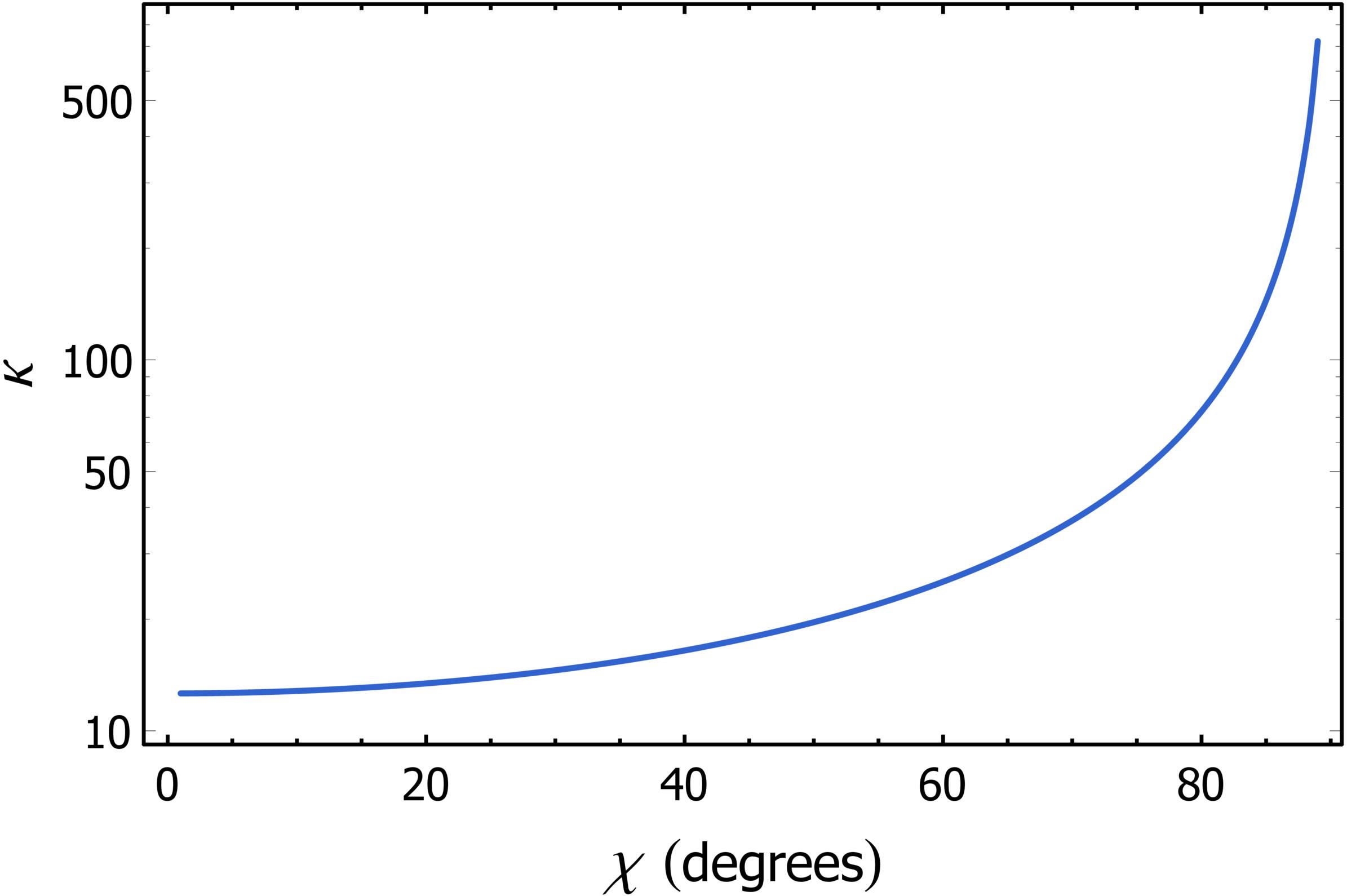
The magnetar Swift J1834.9–0846 presents a significant challenge to neutron-star spin-down models. It exhibits two key anomalies: an insufficient rotational energy-loss rate to power its observed X-ray luminosity and a braking index of =1.08 ± 0.04, which starkly contradicts the canonical magnetic-dipole value of n = 3. To explain these anomalies, we develop a unified spin-evolution model that self-consistently integrates magnetic-dipole radiation, gravitational-wave emission, and wind braking. Within this framework, we constrain the wind-braking parameter to κ ∈ [13, 37] from the nebular properties, finding it contributes substantially (17%–51%) to the current spin-down torque. Bayesian inference reveals that the birth period is poorly constrained by present data and is prior dependent, indicating a millisecond birth is allowed but not required. Furthermore, we constrain the number of precession cycles to ξ ∼ 104–105, and our analysis favors a toroidally dominated internal magnetic-field configuration as the most self-consistent explanation for the low braking index. Finally, we assess the continuous gravitational-wave detectability. The present-day signal is undetectable. However, the early time signal might have reached the projected sensitivity of next-generation gravitational-wave observatories, such as the Advanced Laser Interferometer Gravitational-Wave Observatory and the Einstein Telescope, although a confident detection would require exceptionally stable rotation, an assumption considered highly optimistic for a young magnetar. This work establishes a unified framework that links magnetar spin-down with their interior physics and multimessenger observables, providing a physically consistent interpretation for Swift J1834.9–0846 and a new tool for understanding similar extreme neutron stars.