2026-08-28 中国科学院(CAS)
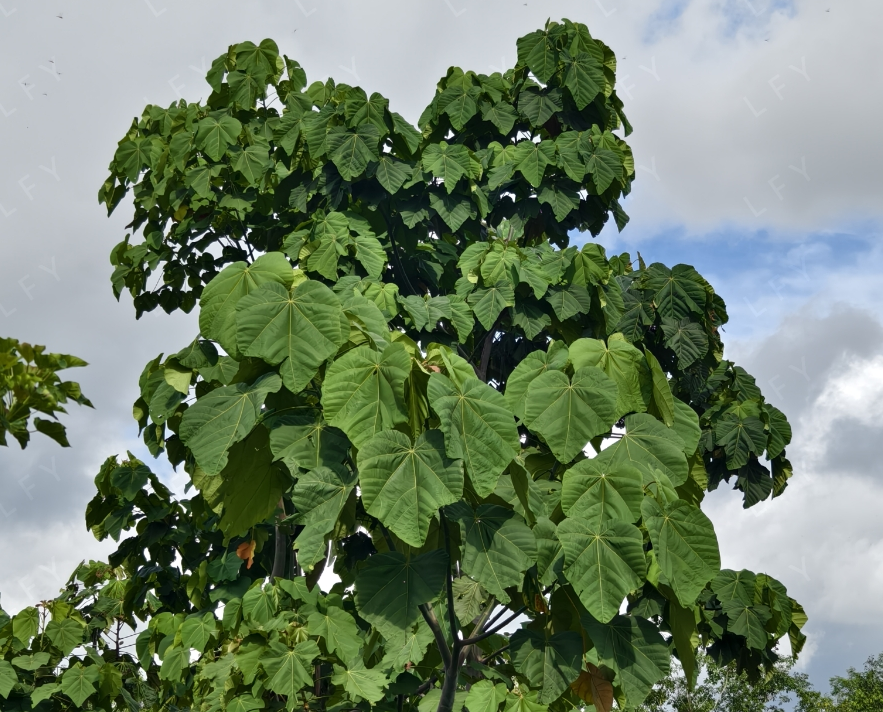
Balsa tree (Image by XTBG)
<関連情報>
- https://english.cas.cn/newsroom/research-news/202608/t20260831_1189497.shtml
- https://www.sciencedirect.com/science/article/pii/S0926669026014524
9つのバルサ( Ochroma lagopus)品種における生育性能の特性に基づく評価と予測 Trait-based assessment and prediction of growth performance across nine balsa (Ochroma lagopus) cultivars
Mingyi Li, Gaojuan Zhao, Huipeng Xi, Zhiming Zhang, Jianping Wu, Yike Zou, Yanru Hou, Qianzhang Yang, Changchao Fu, Han Liang, Jingchao Li, Phisamai Manpuen, Yang Wei, Amy Ny Aina Aritsara, Zhubiao Duan, Shubin Zhang, Yajun Chen
Industrial Crops and Products Available online: 21 August 2026
DOI:https://doi.org/10.1016/j.indcrop.2026.124064
Highlights
- 22 key functional traits were evaluated across nine hybrid balsa cultivars in this study.
- Faster-growing balsa cultivars exhibited more acquisitive functional traits and leaf water-retention capacity.
- Slower-growing balsa cultivars displayed more conservative and higher-safety strategies.
- Functional traits provide valuable guidance for targeted balsa breeding practice and cultivation management.
Abstract
Balsa (Ochroma lagopus Swartz) is a fast-growing tropical timber species of high economic value, yet different balsa cultivars often exhibit considerable variation in growth performance. Hybridization using elite parental cultivars, combined with trait‑based screening, provides a promising route for accelerating breeding; however, the predictive power of functional traits in timber species such as balsa has rarely been tested. In this study, we quantified 22 leaf and stem functional traits that related to photosynthesis, structure, biomechanics, and hydraulics across nine balsa cultivars derived from hybrid parents of different origins, and monitored growth performance over two years. The results revealed significant inter-cultivar variation in both growth rates and functional traits. Overall, structural traits exhibited trade-offs with traits enhancing photosynthetic capacity, while hydraulic efficiency was negatively related to structural investment, mechanic resistance, and drought tolerance. Variations in growth performance among cultivars were well explained by coordinated trait syndromes, with explanatory power ranging from 53% to 86%. Specifically, faster-growing cultivars exhibited an “acquisitive” strategy, characterized by higher photosynthetic rate (Am), photosynthetic phosphorus-use efficiency (PPUE), and leaf N concentration. In contrast, slower-growing cultivars displayed a “conservative” strategy with greater structural investment (leaf mass per unit area, LMA; leaf thickness, LT), higher leaf water-retention capacity (T70), and stronger leaf (Fp) and stem mechanic strength (MOE). Our findings establish a robust trait-based framework for early screening and provide practical guidance for targeted hybridization, thereby facilitating more efficient balsa breeding practice.