2026-08-26 スタンフォード大学
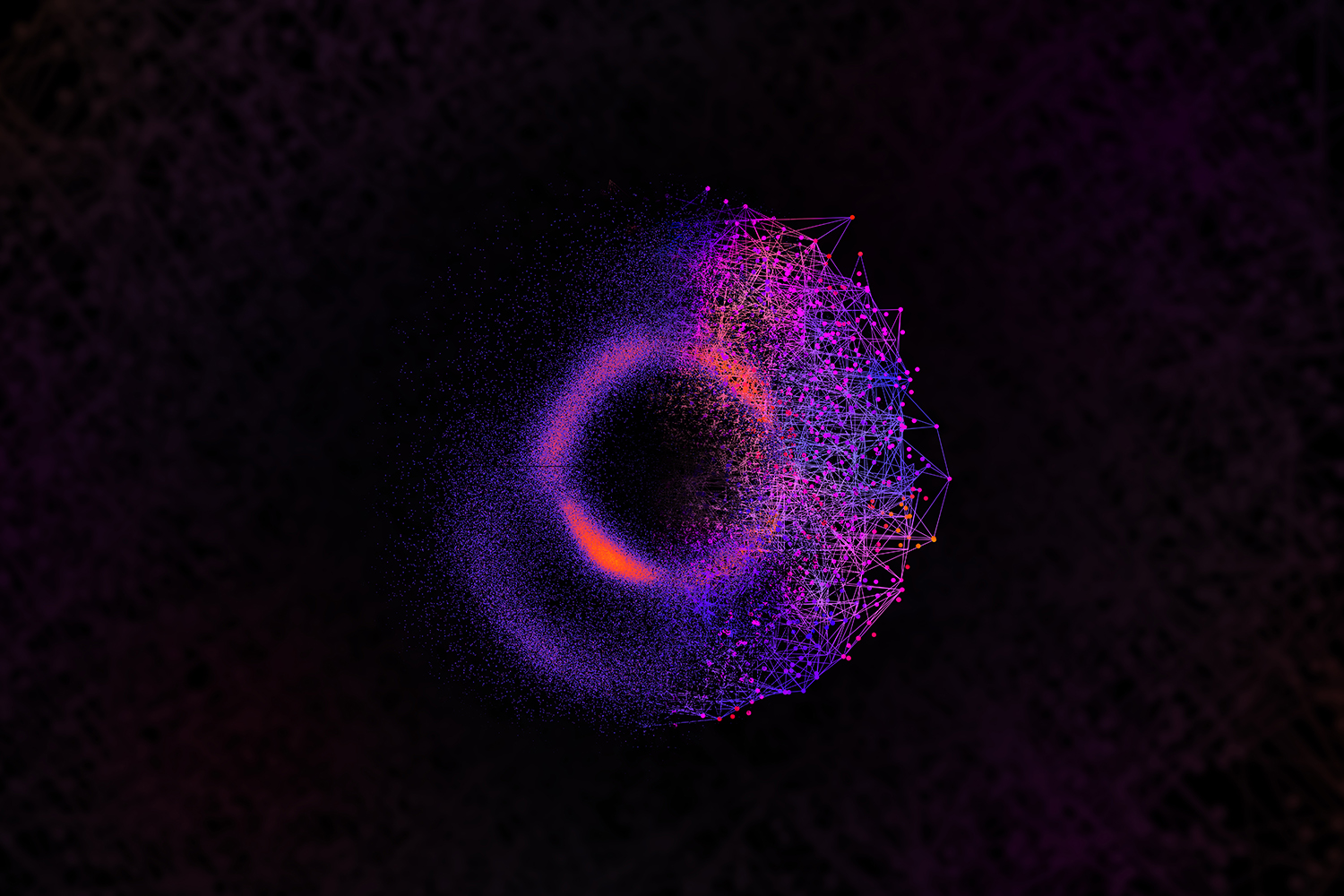
Researchers at SLAC National Accelerator Laboratory have built an AI-powered method for compressing the vast amounts of data generated by large-scale science experiments in ways that allow retrieval of fine details crucial to discovery. | Yuan Ni and Greg Stewart/SLAC National Laboratory
<関連情報>
- https://news.stanford.edu/stories/2026/08/ai-tool-data-compression-scientific-discovery
- https://www.nature.com/articles/s42256-026-01287-9
全スペクトル神経表現のためのマルチ解像度強化 Multi-resolution enhancement for full-spectrum neural representations
Yuan Ni,Zhantao Chen,Shizhou Xu,Cheng Peng,Rajan Plumley,Chun Hong Yoon,Jana B. Thayer & Joshua J. Turner
Nature Machine Intelligence Published:24 August 2026
DOI:https://doi.org/10.1038/s42256-026-01287-9
Abstract
Scientific data acquisition continues to outpace storage and analysis capabilities, making voxel-based representations increasingly intractable. Implicit neural representations (INRs) offer a promising solution by encoding signals through coordinate-based neural networks, serving as surrogates of data, with computational and storage requirements scaling with network complexity rather than data dimensionality. However, smaller INRs struggle to faithfully represent multiscale structures, high-frequency information and fine textures that constitute a large proportion of scientific measurements. We propose WIEN-INR, a theoretically guided hierarchical INR framework that distributes modelling across resolution scales and enables improved representation capacity through a novel enhancement network to recover subtle details. This multiscale architecture allows smaller networks to retain the full spatial-frequency content of the signal as well as preserve training efficiency and lower storage cost. Evaluated on distinct raw experimental measurements across scales and complexities, WIEN-INR represents a practical step towards a broader adoption of neural representations in scientific workflows, delivering compact, robust and high-fidelity representations.