2026-08-10 イリノイ大学アーバナ・シャンペーン校
<関連情報>
- https://aces.illinois.edu/news/illinois-study-reveals-major-genetic-weakness-future-corn-breeding
- https://academic.oup.com/g3journal/advance-article/doi/10.1093/g3journal/jkag163/8723840
硬い茎と硬い茎を持たないトウモロコシのヘテロシス群から派生した単交雑ハイブリッドの遺伝的変異構造の解析とゲノム予測モデルの評価 Dissecting genetic variance structure and evaluating genomic prediction models for single-cross hybrids derived from Stiff Stalk and Non-Stiff Stalk maize heterotic groups
Jenifer Camila Godoy dos Santos,Jode Edwards,Elizabeth Lee,Mark A Mikel,Samuel B Fernandes,Candice N Hirsch,Sydney P Berry,Alexander E Lipka,Martin O Bohn
G3 Genes|Genomes|Genetics Published:03 July 2026
DOI:https://doi.org/10.1093/g3journal/jkag163
Abstract
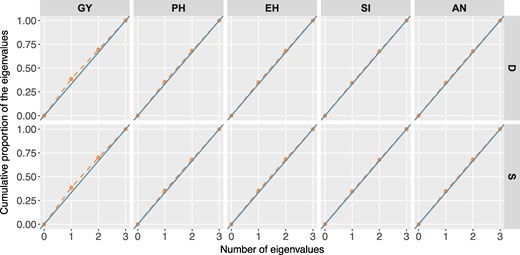
The early 20th-century discovery of heterosis and the establishment of heterotic groups transformed maize (Zea mays L.) into a keystone of global agriculture. However, maize breeding faces two significant challenges: the gradual decline of general combining ability (GCA) variance within heterotic groups and the impracticality of testing all possible single crosses in the early stages of a breeding program. Here, we developed genomic best linear unbiased prediction (GBLUP)-based multikernel models, using additive and two alternative nonadditive genomic relationship matrices, to estimate the variance components associated with the general combining ability of Stiff Stalk (SS) and Non-Stiff Stalk (NSS) heterotic groups and the specific combining ability arising from their crosses. We further applied these models to predict the performance of untested single-cross combinations under varying levels of parental information. We showed that the SS and NSS groups retained significant GCA variance across traits in both early- and late-maturity groups. The SS group, in contrast, exhibited no detectable GCA variance in grain yield for the intermediate-flowering subset of hybrids, highlighting a limitation for future genetic improvement. Furthermore, our results showed that GBLUP-based multikernel models effectively identified superior hybrids when parental information was available. In the absence of this information, however, these models underperformed compared to covariance-based approaches. Both nonadditive matrices yielded similar results, indicating that they capture comparable genetic relationship patterns despite their distinct formulations. Overall, this study sheds light on the future use of US maize commercial germplasm and demonstrates how GBLUP-based multikernel models can improve the efficiency of hybrid breeding programs.