2026-07-10 中国科学院(CAS)
中国科学院西双版納熱帯植物園(XTBG)の研究チームは、気候変動による干ばつの増加に伴い、森林生態系におけるヤドリギの耐乾燥性が宿主樹木の水輸送能力(ハイドロリック特性)に強く制約されることを明らかにした。研究では、中国熱帯域の41組のヤドリギと宿主樹木を対象に、木部の塞栓(気泡による水輸送阻害)への耐性、水輸送組織の解剖学的構造、水利用特性を比較解析した。その結果、ヤドリギ自体は宿主よりも塞栓に強い耐性を持つ一方、水輸送効率は低く、宿主の水輸送能力が低下するとヤドリギも同時に乾燥ストレスを受けやすくなることが判明した。特に宿主のP50(導水能力が50%失われる水ポテンシャル)はヤドリギの耐乾燥性を直接左右し、ヤドリギ自身の構造的特性の影響は限定的であった。本研究は、宿主と寄生植物が一体となった「水輸送連続体」として機能することを初めて広範囲の種で実証し、気候変動下での森林衰退や樹木枯死、寄生植物の分布予測に重要な知見を提供した。
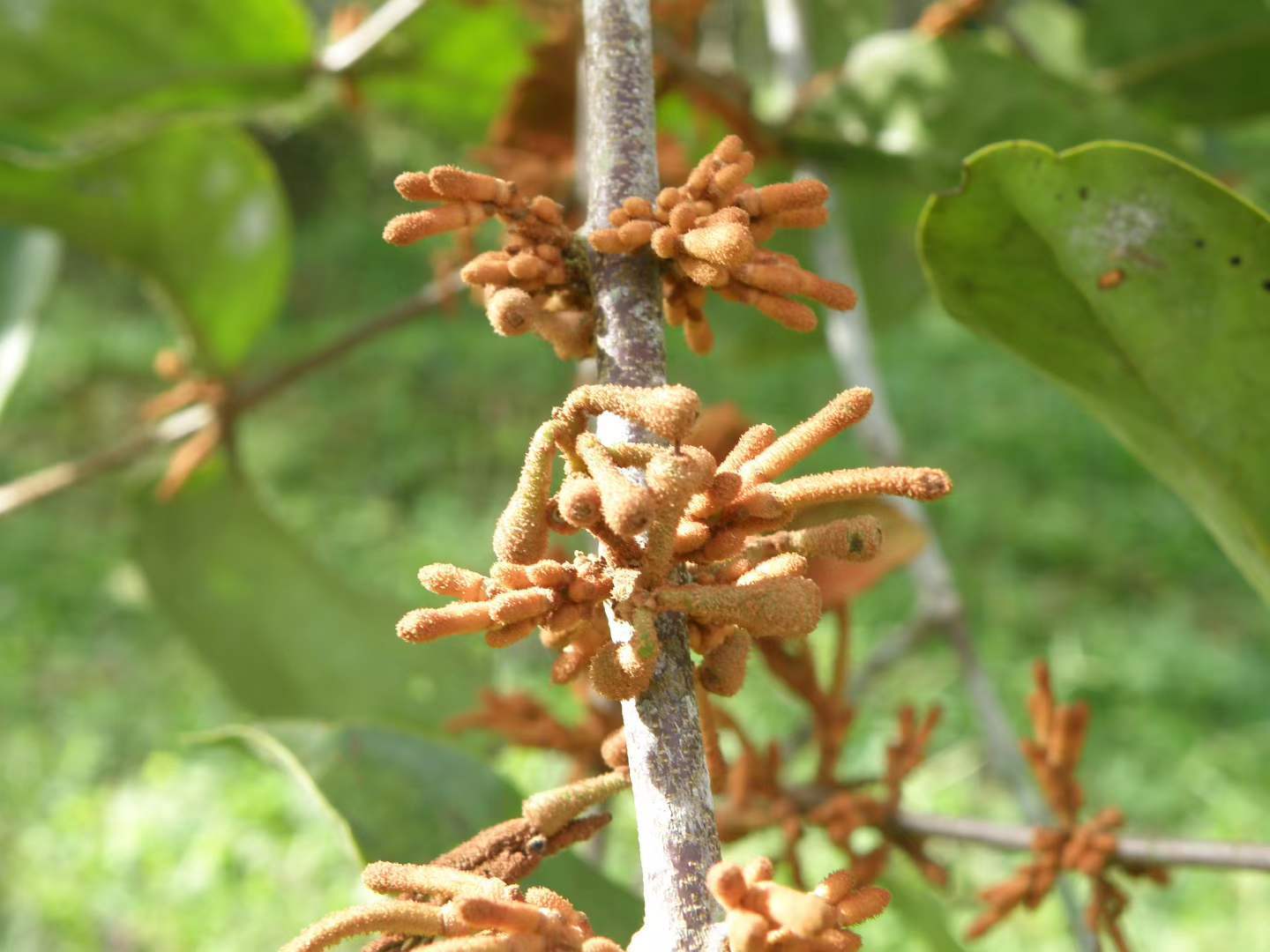
A kind of mistletoes. (Image by HUANG Xianyan)
<関連情報>
- https://english.cas.cn/newsroom/research-news/202607/t20260713_1177121.shtml
- https://nph.onlinelibrary.wiley.com/doi/10.1111/nph.71412
宿主植物の水分特性が、ヤドリギの干ばつ誘発性塞栓症に対する抵抗性を制限する Host hydraulics constrain mistletoe resistance to drought-induced embolism
Xian-Yan Huang, Yan Ke, Marina Corrêa Scalon, Wen-Hua Li, Feng-Jiao Liu, You Miao, Yong-Jiang Zhang, Jiao-Lin Zhang, Yun-Bing Zhang
New Phytologist Published: 09 July 2026
DOI:https://doi.org/10.1111/nph.71412
Summary
- Increasing drought frequency and intensity under climate change are intensifying forest mortality world-wide, yet how biotic interactions modulate plant hydraulic vulnerability remains poorly understood. Mistletoes are obligate stem hemiparasites that operate at low leaf water potentials and sustain high transpiration while relying on host xylem water supply, raising questions about how their hydraulic safety is achieved and constrained.
- Here, we employed xylem vulnerability curves, vessel and pit anatomy, water-use indicators, and phylogenetically informed models to examine embolism resistance across 41 mistletoe–host species pairs in tropical China.
- Mistletoes exhibited greater resistance to drought-induced xylem embolism (more negative P50, the water potentials at 50% loss of hydraulic conductivity) but lower hydraulic efficiency than their hosts. Embolism resistance in hosts was associated with vessel and pit traits, whereas these relationships were weaker in mistletoes and became evident mainly after accounting for species-level variation. Notably, host P50 exerted a dominant direct effect on mistletoe P50, whereas mistletoe anatomical traits played a secondary role.
- These results indicate that mistletoes operate within a shared mistletoe–host hydraulic continuum in which host traits constrain parasite hydraulic safety. By sustaining high transpiration near host-defined limits, mistletoes may amplify host water stress and forest hydraulic vulnerability.