2026-07-14 ブラウン大学
◆研究では、アポロ計画で採取された月試料の詳細な分析と実験・モデル解析を組み合わせ、微小隕石衝突や太陽風による風化作用が鉱物表面を変質させ、レゴリスの形成・進化に継続的に寄与していることを示した。この成果は、月面表層の形成過程や宇宙風化の理解を深めるだけでなく、月面資源利用(ISRU)や将来の有人月探査における資源評価、表面環境の予測にも重要な知見を提供する。また、他の大気を持たない天体の表面進化を理解する手掛かりにもなる。
<関連情報>
- https://www.brown.edu/news/2026-07-14/moon-regolith
- https://iopscience.iop.org/article/10.3847/PSJ/ae7a6f#fnref-psjae7a6fbib14
月面レゴリスの空間的・時間的進化に関する新たな制約 New Constraints on the Spatial and Temporal Evolution of the Lunar Surface Regolith
Andrea Rajšić, Ingrid J. Daubar, Sierra Khan and Matthew J. Jones
The Planetary science Journal Published: 2026 July 8
DOI:10.3847/PSJ/ae7a6f
Abstract
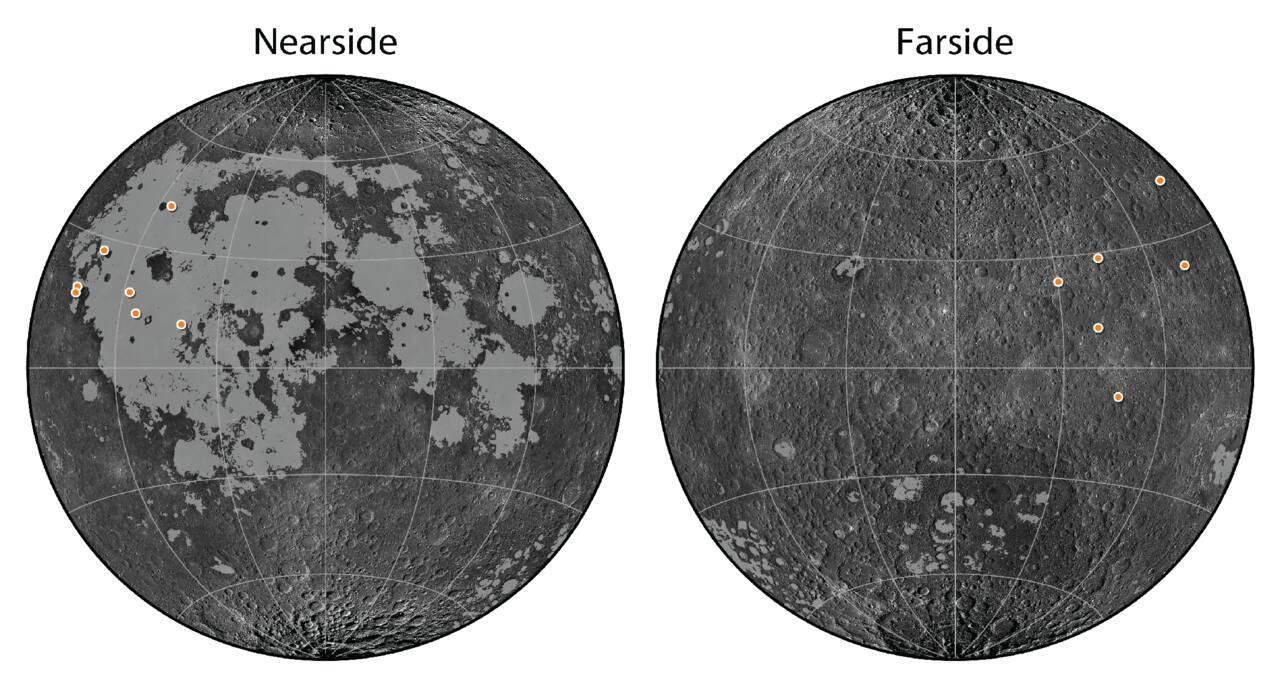
The thickness of the lunar regolith is fundamental for interpreting surface processes, impact chronology, and the thermal and volatile evolution of the Moon, yet its global distribution and long-term history remain debated. Here we present new constraints from a systematic analysis of 346 fresh craters spanning the maria and highlands. Using the presence or absence of rocky ejecta (REC versus nREC) and scaling of excavation depths, we model the onset of rock excavation using logistic regression and quantify uncertainty via stratified bootstrap resampling. We find that the surface regolith is 33.3% thinner in mare (∼4 m) than in the highlands (∼6 m), with nonoverlapping confidence intervals indicating statistically distinct terrain-scale thicknesses. When combined with previous measurements, our results support a first-order depth–age pattern, with thicker surface regolith in older highland terrains and thinner surface regolith in younger mare terrains, despite substantial local geological variability. To place these results in context, we compile previous measurements and generate a first-order global surface regolith thickness map, highlighting both broad-scale patterns and regions where additional constraints are needed. Together, these results provide the most comprehensive assessment of lunar regolith thickness to date, bridging observations across methods and timescales. The dataset, synthesis, and open-source interpolation tools offer a resource for future lunar exploration and comparative studies of regolith development on other airless bodies.