2026-05-22 ノースウェスタン大学
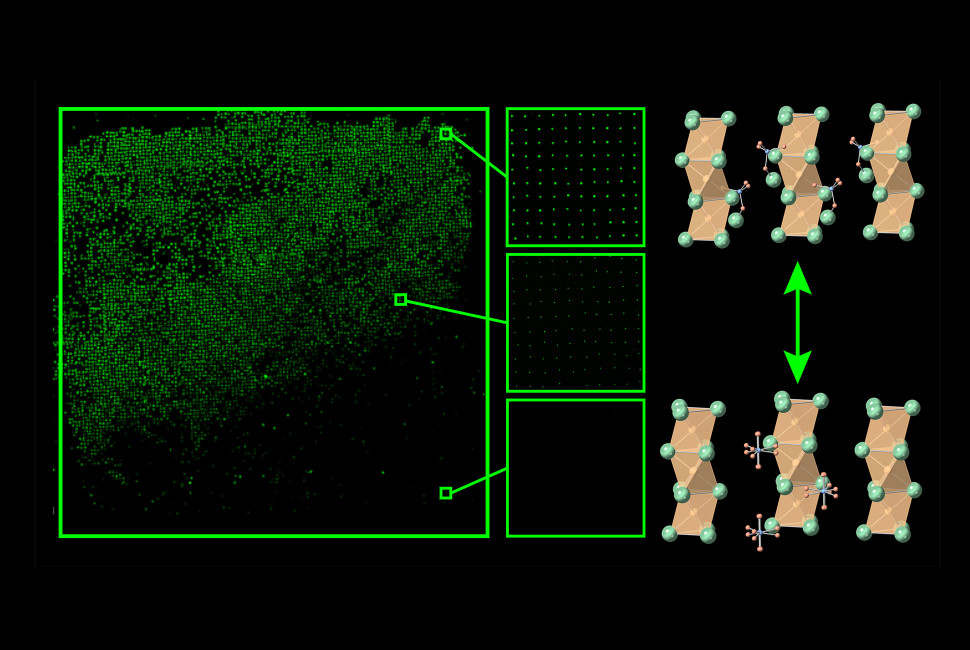
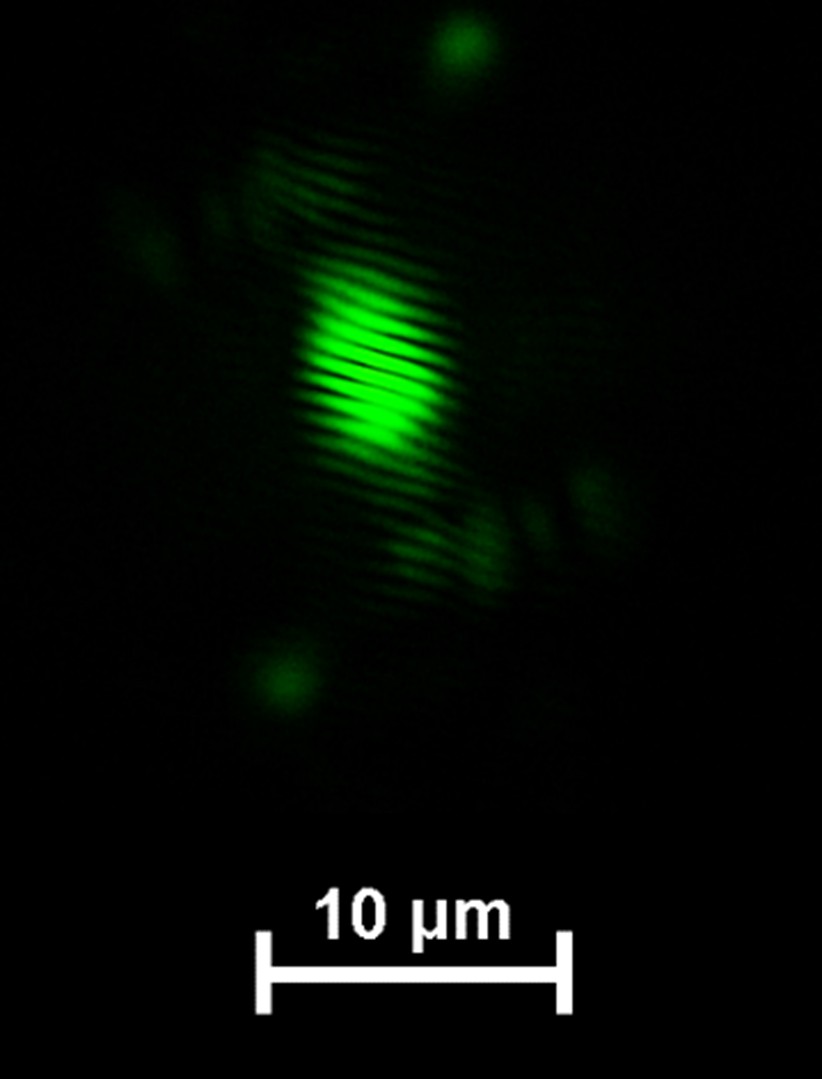
A new Northwestern study using a megalibrary platform points toward a future where scientists can move beyond the traditionally slow trial-and-error approach to rapidly designing, synthesizing and testing materials with tailored properties.
<関連情報>
- https://news.northwestern.edu/stories/2026/05/megalibraries-in-pole-position-for-autonomous-discovery-over-self-driving-labs
- https://www.science.org/doi/10.1126/sciadv.aee1359
メガライブラリー合成と迅速非線形光学スクリーニングにより発見された高エントロピー1次元ハロゲン化物ペロブスカイト圧電材料 High-entropy 1D halide perovskite piezoelectrics found by megalibrary synthesis and rapid nonlinear optical screening
Jun Li, Jarod Beights, Tong Cai, Yichen Li, […] , and Chad A. Mirkin
Science Advances Published:22 May 2026
DOI:https://doi.org/10.1126/sciadv.aee1359
Abstract
Piezoelectric molecular crystals offer excellent compositional and structural tunability and sustainable processability. However, their discovery is slow, primarily due to the serial synthesis and screening processes used. Here, we report an approach that combines massively parallel megalibrary synthesis with scanning second harmonic generation (SHG) microscopy for rapid screening of piezoelectric molecular crystals. Megalibraries consisting of more than 1,000,000 compositionally distinct but positionally encoded TMCMxTMA(1–x)CdyPb(1–y)ClzBr(3–z) (TMCM: trimethylchloromethylammonium, TMA: tetramethylammonium; 0 ≤ x ≤ 1, 0 ≤ y ≤ 1, 0 ≤ z ≤ 3) nanocrystals were synthesized. The megalibraries were rapidly screened by SHG microscopy to identify notable noncentrosymmetric structures, which were then tested for piezoelectricity, facilitating discovery of a high-entropy noncentrosymmetric material with a large d33 (TMCM0.75TMA0.25Cd0.75Pb0.25Cl1.5Br1.5, 42.8 picocoulombs per newton). Furthermore, this approach enabled systematic investigation of the Curie temperature (TC)–composition relationship in the TMCMCdClzBr(3–z) system, facilitating reverse design of materials with targeted TC. Our work establishes a powerful approach to accelerate the discovery and design of unusual piezoelectrics for next-generation electronics and optics.