2026-04-23 インペリアル・カレッジ・ロンドン(ICL)
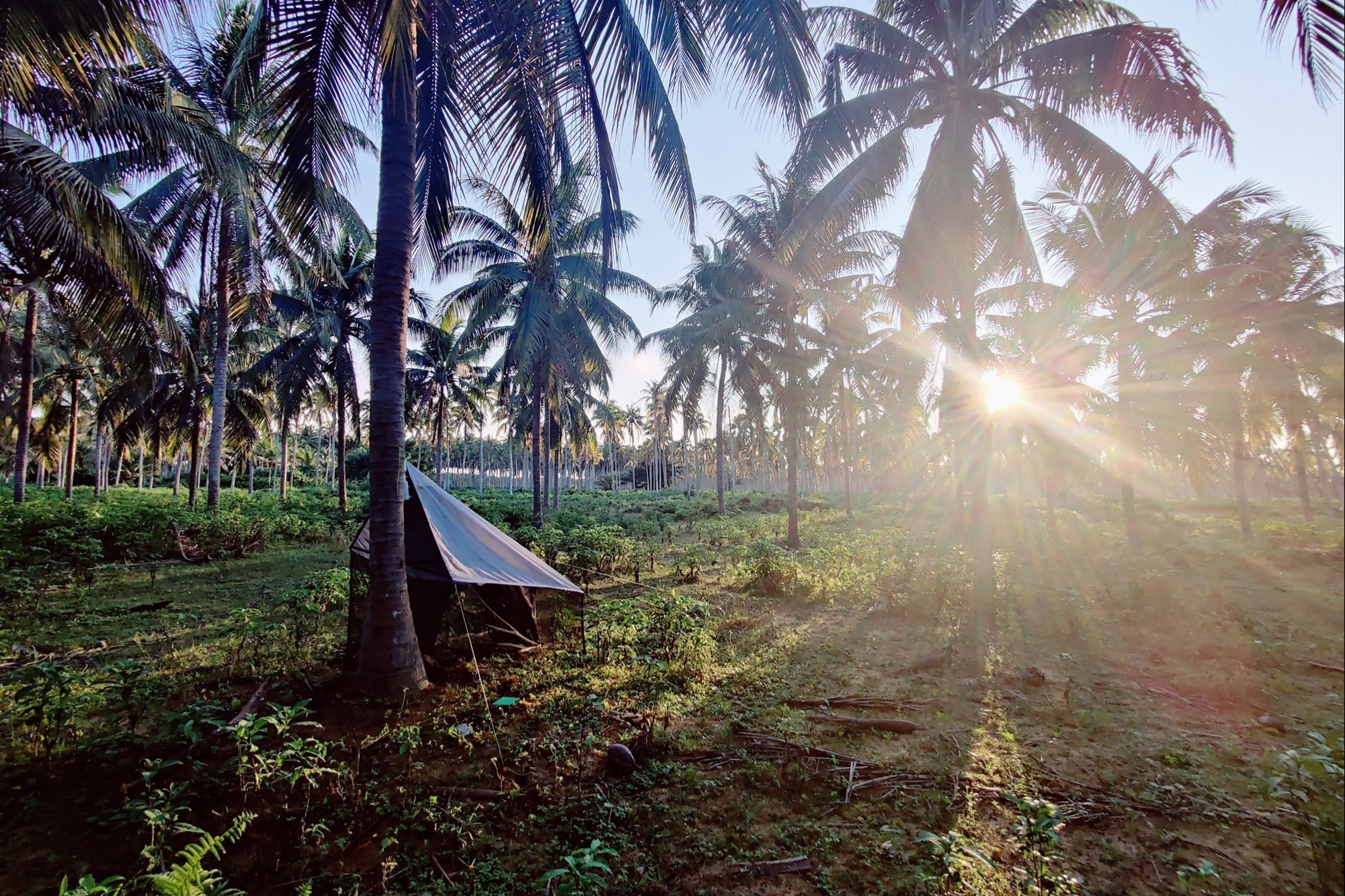 Setting malaise traps to catch and genetically sequence flying insects. Photo credit: Ben Roberts
<関連情報>
- https://www.imperial.ac.uk/news/articles/natural-sciences/life-sciences/2026/lower-intensity-coconut-farming-boosts-yields-and-soil-health-in-west-africa/
- https://nph.onlinelibrary.wiley.com/doi/10.1002/ppp3.70208
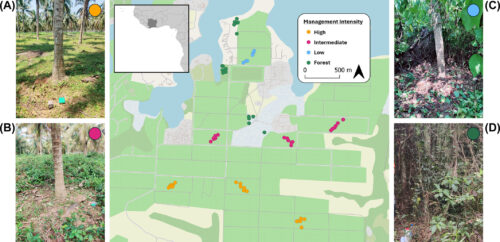
集約化の再考:生物多様性を考慮した管理がココナッツの収穫量を維持する Rethinking intensification: Biodiversity-inclusive management sustains coconut yields
Benjamin J. Roberts, C. M. ( Tilly) Collins, Konan Engueran Djaha, Hamish Duncalf-Youngson, Konan Jean Louis, Hala N’klo, Emma Ransome, Doubi Bi Tra Serges, …
Plants People Planets Published: 22 April 2026
DOI:https://doi.org/10.1002/ppp3.70208
Abstract
Societal Impact Statement
Coconut palm expansion in West Africa will shape rural livelihoods and ecosystems. Our findings show that intensive practices reduce beneficial soil fungi and increase pathogens, threatening long-term productivity. Lower-intensity management that retains ground vegetation can sustain or boost yields while improving soil health. With typical planting densities and prices, these practices could generate an additional USD 800–1,200 per hectare annually, strengthening farmer income. Promoting biodiversity-friendly management and intercropping can enhance resilience, support food security and reduce pressure on natural habitats, offering a practical pathway to align agricultural development with environmental sustainability.
Graphical Abstract
Coconut palm expansion in West Africa will shape rural livelihoods and ecosystems. Our findings show that intensive practices reduce beneficial soil fungi and increase pathogens, threatening long-term productivity. Lower-intensity management that retains ground vegetation can sustain or boost yields while improving soil health. With typical planting densities and prices, these practices could generate an additional USD 800–1,200 per hectare annually, strengthening farmer income. Promoting biodiversity-friendly management and intercropping can enhance resilience, support food security and reduce pressure on natural habitats, offering a practical pathway to align agricultural development with environmental sustainability.