2026-04-13 ハーバード大学
<関連情報>
- https://seas.harvard.edu/news/ship-wakes-soft-tissues-exploring-fluid-and-solid-surface-wave-physics
- https://journals.aps.org/prl/abstract/10.1103/lvvp-8pll
超軟質固体表面の航跡 Surface Wakes on Ultrasoft Solids
Aditi Chakrabarti, Divya Jaganathan, Robert Haussman, and L. Mahadevan
Physical Review Letters Published 2 April, 2026
DOI: https://doi.org/10.1103/lvvp-8pll
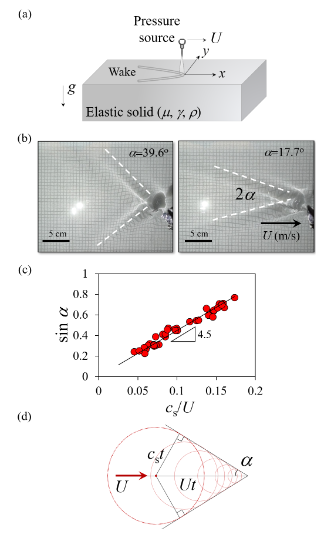
FIG. 1. (a) Schematic of the experimental setup, where a
pressure source of compressed air moving at speed U impinges
on the surface of an elastic solid,
Abstract
We explore the dynamical response of the free surface of an ultrasoft solid driven by a localized moving pressure disturbance. Experiments reveal a steady V-shaped wake analogous to a surface Mach wedge. A simple geometric argument provides a qualitative explanation consistent with observations. A theoretical framework combining elastodynamic, capillary, and gravitational effects yields a generalized dispersion relation that smoothly interpolates between Kelvin’s theory of liquid interface wakes and Rayleigh’s theory of elastic surface waves. Our analysis explains the observed Mach-like behavior quantitatively while also emphasizing how elastodynamic effects can generate effective damping through radiative leakage. Together, our experiments and theory reveal the existence of a new regime that bridges fluid and solid surface-wave physics, offering new routes for probing the dynamics of soft interfaces.