2026-11-06 北海道大学
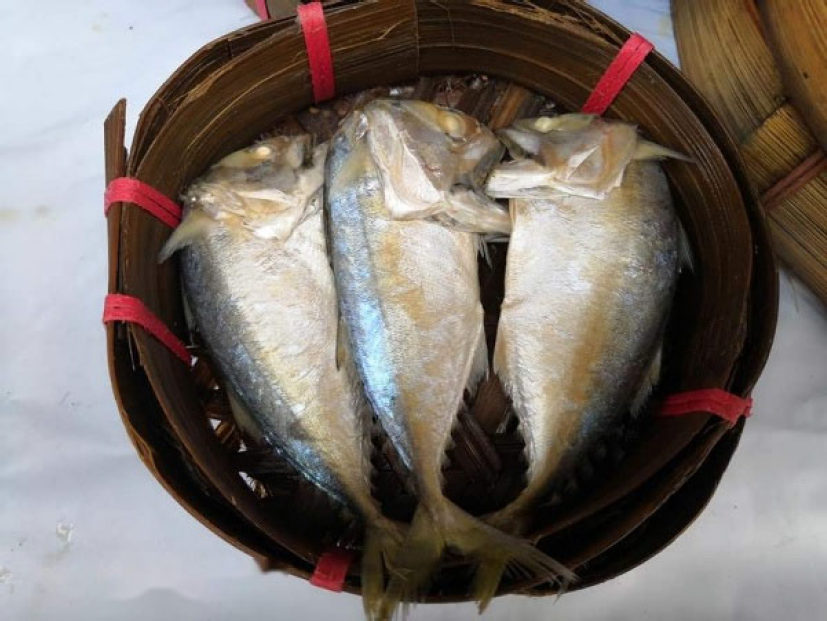
蒸して売られるプラートゥー(Rastrelliger brachysoma、タイ・メークローンの市場)写真:松石隆
<関連情報>
- https://www.hokudai.ac.jp/news/2026/11/post-2493.html
- https://link.springer.com/article/10.1007/s12562-026-02038-w
タイ湾のプラートゥー漁業のリアルタイム禁漁の管理戦略評価 Management strategy evaluation for real-time closures in the short mackerel fishery in the Gulf of Thailand
Chonlada Meeanan, Pavarot Noranarttragoon, Piyachoke Sinanun, Wirat Sanitmajjaro, Takahashi Yuki, Methee Kaewnern & Matsuishi Takashi Fritz
Fisheries Science Published:20 October 2026
DOI:https://doi.org/10.1007/s12562-026-02038-w
Abstract
Area and time restrictions are widely used in fisheries management for their simplicity and conservation benefits. Static closures (STCs) often fail to protect migratory fish; therefore, real-time closures (RTCs) are increasingly being adopted. However, RTCs require extensive and rapid data collection and analysis. Vessel monitoring systems and daily landing reports provide near real-time data on fishing activities and fish abundance. We conducted a management strategy evaluation of RTCs and STCs in the short mackerel fishery in the Gulf of Thailand to assess the effectiveness of RTCs in reducing fishing mortality using surveillance data. Overall, the RTC scenarios demonstrated greater management efficiency than STCs by reducing fishing mortality with smaller closure areas and shorter closure durations, increasing post-closure revenue, identifying a threshold of four standard deviations (4SD) of catch per unit effort (CPUE) as the most efficient trigger for adaptive closures, and showing that monthly CPUE data are sufficient for real-time hotspot detection. Based on these findings, we recommend defining closure units using the highest CPUE threshold and reopening the fishery only after all units have reached the threshold level. Our results validate the efficacy of RTCs for reducing fishing mortality of a migratory species and mitigating uncertainty in its migratory patterns under fluctuating environmental conditions.