2026-09-07 京都大学
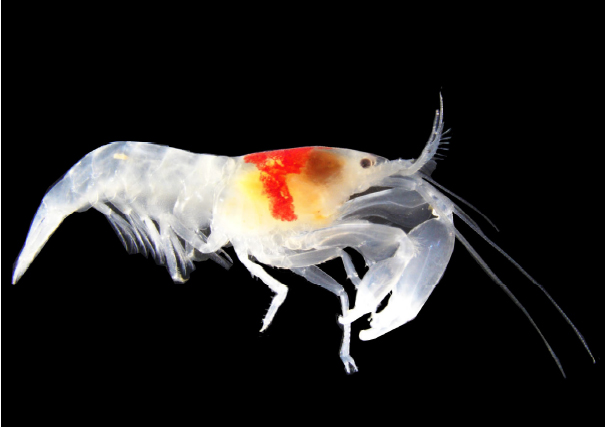
再発見されたムラサキエビモドキAthanopsis dentipes(撮影者:花岡朋哉)
<関連情報>
- https://www.kyoto-u.ac.jp/ja/research-news/2026-09-07
- https://bioone.org/journals/zoological-science/volume-43/issue-5/zs250106/Rediscovery-of-the-Red-And-White-Commensal-Shrimp-Athanopsis-dentipes/10.2108/zs250106.full
紅白色の体色を持つ、ユムシ共生性テッポウエビ類エビムラサキエビモドキの再発見と宿主範囲の拡張 Rediscovery of the Red-And-White Commensal Shrimp Athanopsis dentipes (Alpheidae), Revealing an Expanded Host Range Among Spoon Worms (Annelida: Thalassematidae)
Tomoya Hanaoka, Isao Hirabayashi, Takahiro Sugiyama, Keiichi Nomura, Gyo Itani, Michitaka Shimomura, Ryutaro Goto
Zoological Science Published:5 August 2026
DOI:https://doi.org/10.2108/zs250106
Abstract
The commensal shrimp genus Athanopsis Coutière, 1897 (Alpheidae) includes nine species worldwide. Almost all congeners have been confirmed to be associated with spoon worms (Annelida: Thalassematidae). Athanopsis dentipes Miya, 1980 was originally described about 45 years ago based only on the male specimens collected along with the thalassematid spoon worm Anelassorhynchus cf. mucosus (Ikeda, 1904) in Kyushu Island, western Japan. However, it has never been collected since its original description. In this study, we rediscovered this species in the intertidal zone of the southern Kii Peninsula, Wakayama Prefecture, central Japan, and redescribed it based on both male and female specimens. Morphologically, this species is distinguished from its closest relative, Athanopsis australis Banner and Banner, 1982, by its ventrally straight rostrum, a large tooth at the cutting edge on the dactylus of major chela, and a small subacute tooth at the ventrolateral distal angle on the merus of third pereopod. All of the specimens were associated with thalassematid hosts, including two genera and four species of Thalassematini—i.e., Listriolobus cf. sorbillans (Lampert, 1883) and three species of Anelassorhynchus Annandale, 1922—substantially expanding the known host range of this shrimp species. The shrimps were observed to scuttle over the body surface of the host in the aquaria. One male–female pair was collected from the same host in February, and two ovigerous females were collected in February and April.