2026-08-05 東京科学大学
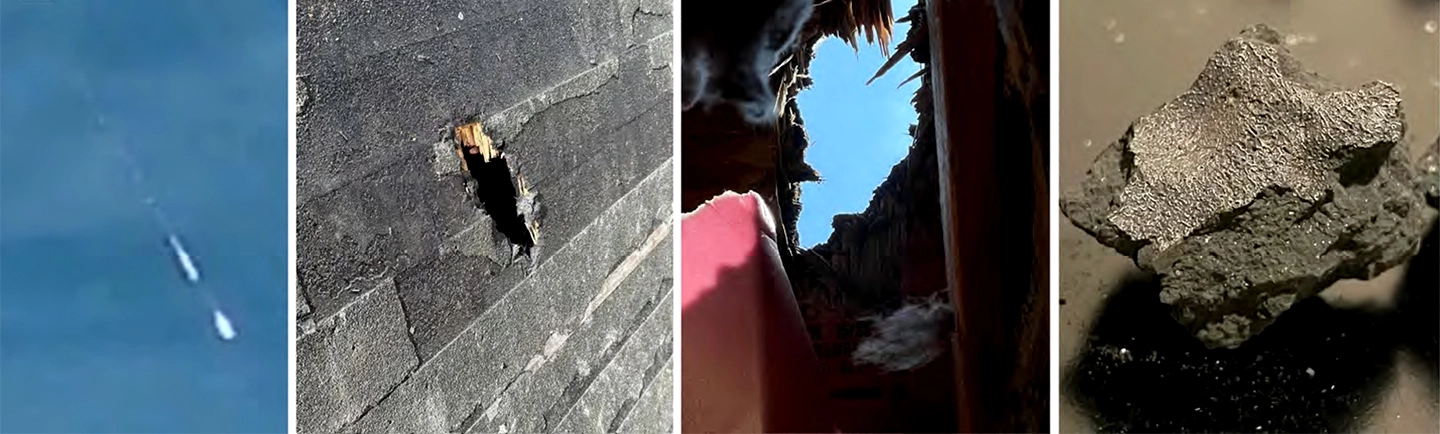
図1. 左から、昼間に観測された火球、落下地点の様子(壊された住宅の屋根をそれぞれ外と内から見ている)、およびヒルズボロ隕石の破片。出典:Peter Jenniskens et al. (2026)(CC BY 4.0 に基づき改変して作成)
<関連情報>
ニューヨーク上空に流星:原始的なCM小惑星に含まれる塩水 Meteor over New York City: Brines in a primitive CM asteroid
Peter Jenniskens, Michael E. Zolensky, Austin Gordon, Jamie Gordon, […] , and Denton S. Ebel
Science Advances Published:15 Jul 2026
DOI:https://doi.org/10.1126/sciadv.aea2105
Abstract
The CI (Ivuna-type) carbonaceous material returned from asteroids Ryugu and Bennu contain mobilized sodium from the evaporation or freezing of liquid water into brines, shedding light on the internal structure of ice-rich CI-type worlds and the formation of prebiotic organic compounds. The formation of brines has not been demonstrated in CM (Mighei-type) carbonaceous chondrites, which also supplied organic matter to the early Earth. Here, we announce the fall of a primitive meteorite from a daytime fireball over the New York metropolitan area in July 2024. It is a CM2 breccia that contains unique CM1 clasts rich in water and sodium. The meteorite contains abundant amino acids and other products of organic chemistry in brines that reveal subsurface processes on CM-type asteroid parent bodies.