
2026-06-01 カリフォルニア大学リバーサイド校(UCR)
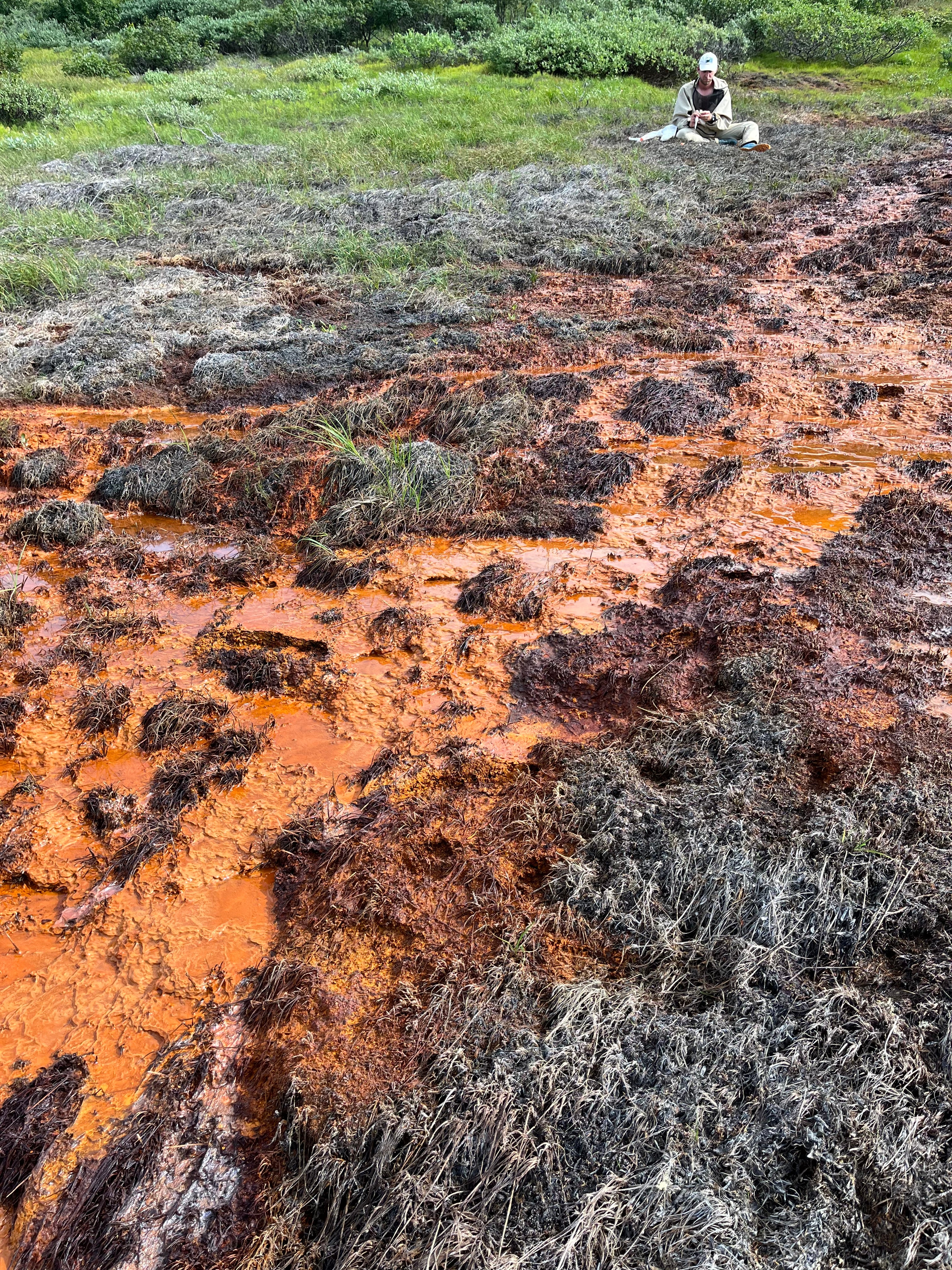
Unmistakable rusty hue in Alaskan waters. (Tim Lyons/UCR)
<関連情報>
- https://news.ucr.edu/articles/2026/06/01/why-arctics-rivers-are-rusting
- https://www.nature.com/articles/s43247-026-03450-x
- https://tiisys.com/blog/2025/09/09/post-175128/
永久凍土の融解は、湿地や硫化物を含む岩石から北極圏の河川や小川への鉄の流入を制御する Permafrost thaw controls iron flux from wetlands and sulfide-bearing rocks to Arctic rivers and streams
Roman J. Dial,Caitlynn T. Hanna,Patrick F. Sullivan,David J. Cooper,Christopher J. Tino,Daniel D. Gregory,Charles Diamond,Michael Rieser,Dmitry J. Nicolsky,Kenneth Hill,Go Iwahana,Joshua C. Koch,Michael P. Carey,Lance Miller & Timothy W. Lyons
Communications Earth & Environment Published:06 April 2026
DOI:https://doi.org/10.1038/s43247-026-03450-x
Abstract
Recent warming has caused widespread iron mobilization into Arctic waterbodies that degrades ecosystems and threatens natural resources. Yet, understanding where and when iron flux occurs remains limited. Here, we investigate iron loading across regional to local scales in Arctic Alaska using climate, water chemistry, and borehole data together with mapped geology and permafrost presence. We show that both anoxic microbial iron reduction and acid rock drainage from iron-sulfide oxidation mobilize iron. Iron influx is strongly associated with lowland wetlands, sulfide-rich upland bedrock, and near-surface permafrost. Acid rock drainage chemistry correlates very strongly with the depth of seasonal thaw above permafrost from the previous year, indicating a one-year lag. These findings clarify the spatial and temporal dynamics of Arctic river rusting, provide a mechanistic understanding of the phenomenon, and may allow anticipation of its occurrence and assessment of its implications for aquatic ecosystem health and subsistence resources under ongoing climate change.

