2026-03-19 琉球大学
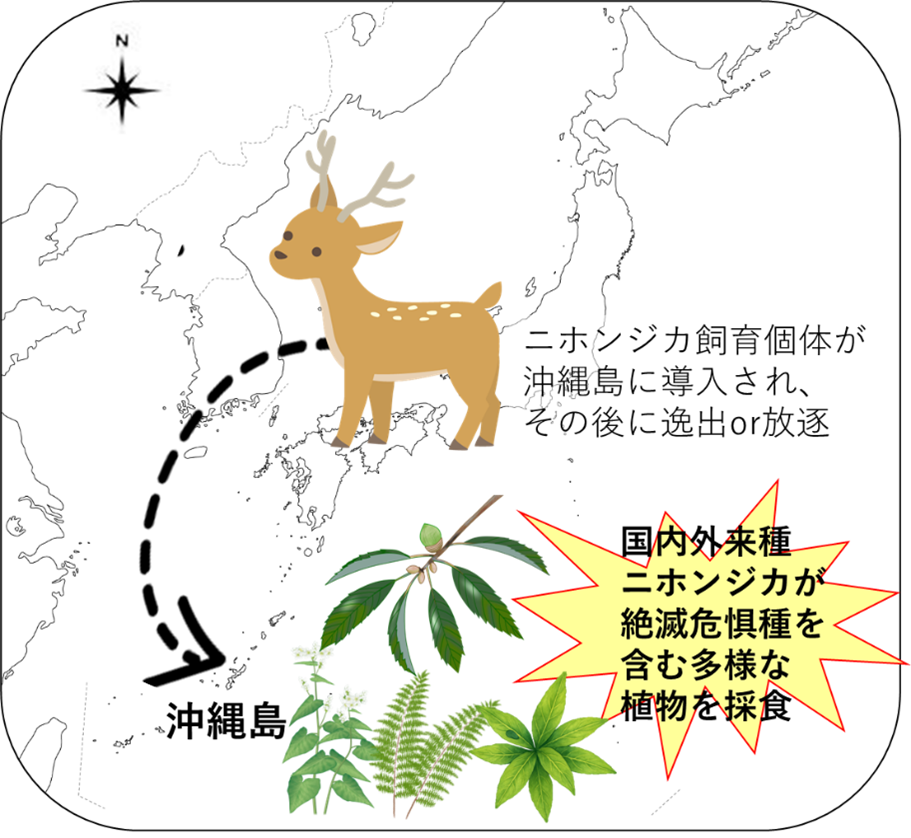
本研究のイメージ図
<関連情報>
- https://www.u-ryukyu.ac.jp/news/76539/
- https://bioone.org/journals/mammal-study/volume-51/issue-2/ms2025-0049/Foraging-of-Endangered-and-Endemic-Plant-Species-by-a-Non/10.3106/ms2025-0049.full
沖縄島北部において発見された国内外来種ニホンジカによる絶滅危惧種および固有種の採食: 糞DNAメタバーコーディング解析による証拠 Foraging of Endangered and Endemic Plant Species by a Non-Native Sika Deer Found in the Northern Part of Okinawa-Jima Island, Japan: Evidence from Fecal DNA Metabarcoding Analysis
Shun Kobayashi, Hitomi Asato, Katsushi Nakata, Junco Nagata, Yuya Watari
Mammal Study Published:13 March 2026
DOI:https://doi.org/10.3106/ms2025-0049
Abstract
In the northern part of Okinawa-jima Island, a Natural World Heritage site inhabited by many endangered and endemic species, a non-native sika deer Cervus nippon was sighted on October 21, 2024. Two days later, a sika deer fecal pellet was collected from the forest floor near the first observed location. In this study, DNA metabarcoding analysis was performed on feces to identify the plant species consumed by sighted individuals to consider the potential impacts of sika deer when established in this ecosystem. Analysis of five fecal samples of a single fecal pellet revealed the presence of 24 angiosperm species across 18 families, and four fern species across three families. Among these, two species are endemic to the Ryukyu Archipelago, including one classified as Critically Endangered (CR) on the Red List of Ministry of the Environment, Japan. These results indicate that establishment of sika deer populations in this region may have a significant impact on the survival of endangered species and ecosystems. Therefore, it is desirable to promptly remove sighted individuals and establish a system to prevent further invasions.