2026-10-05 東京科学大学
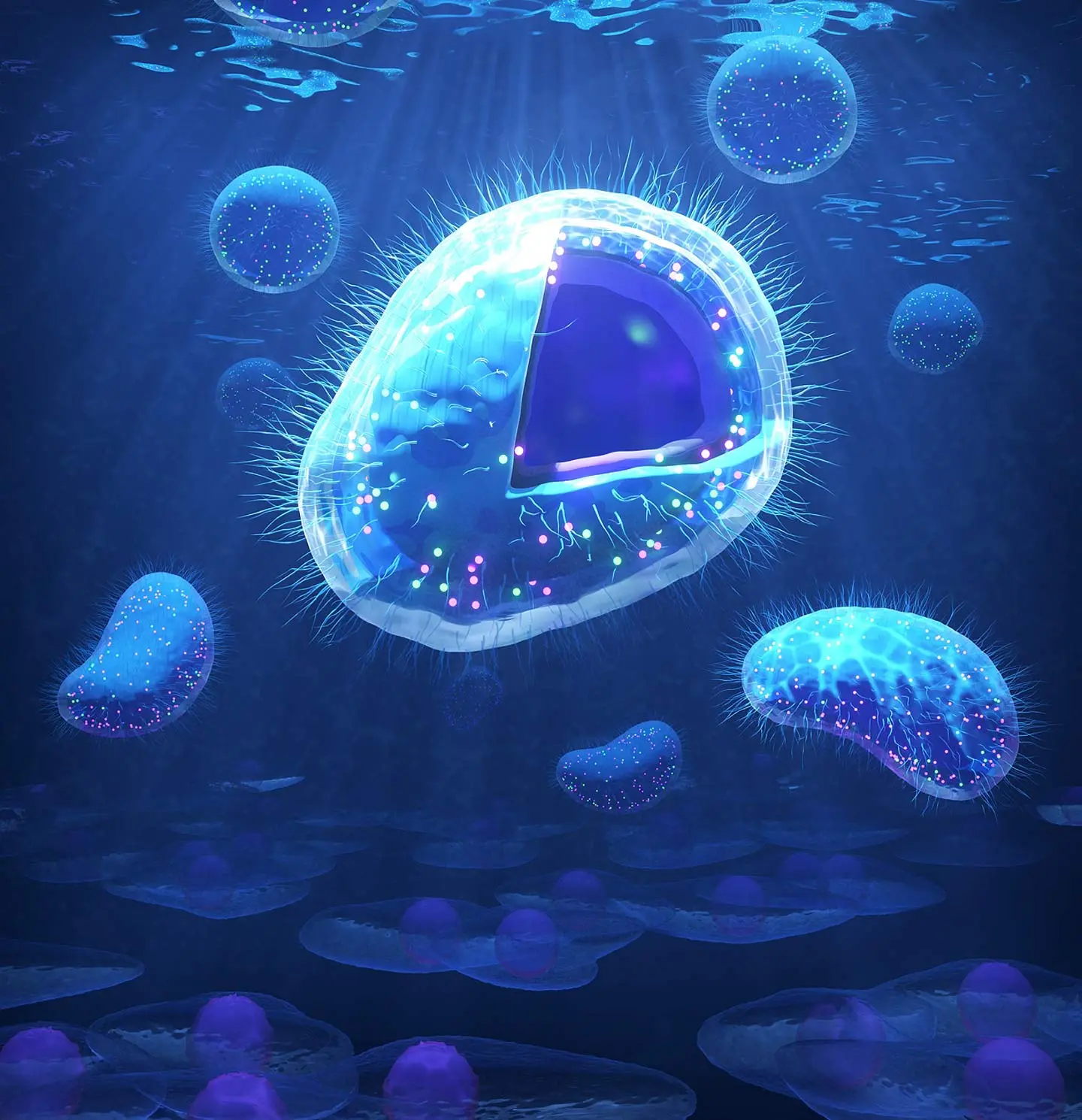
図1. 静水圧により蛍光が変化する「硬さ」の異なるナノ粒子
“Reproduced with permission from ACS Applied Nano Materials. Copyright: 2026 American Chemical Society.”
DOI:10.1021/acsanm.6c02728
<関連情報>
- https://www.isct.ac.jp/ja/news/j6wqm758dukl
- https://pubs.acs.org/aanmf6/article/9/36/17020/5259319/A-Programmable-Nanovesicle-Platform-for-Megapascal
メガパスカル圧力センシングのためのプログラム可能なナノベシクルプラットフォーム A Programmable Nanovesicle Platform for Megapascal Pressure Sensing
Hayato L. Mizuno;Jumpei Norimatsu;Tomokazu Kinoshita;Yuki Takechi-Haraya;Kumiko Sakai-Kato;Yuki Akagi;Gaku Fukuhara;Yasutaka Anraku
ACS Applied Nano Materials Published:August 15, 2026
DOI:https://doi.org/10.1021/acsanm.6c02728
Abstract
Hydrostatic pressure (HP) is a subtle yet pervasive force that shapes chemistry and biology from the ocean floor to living cells─yet real-time HP sensing at the microscale remains elusive. Here, we report pyrene-modified polyionic complex vesicles (Pyr-PICsomes) as a class of programmable smart materials that translate HP changes into ratiometric and lifetime-modulated fluorescence. By engineering the mechanical stiffness of the vesicular membrane, we demonstrate a unique platform where material mechanics directly dictate photophysical outcomes. Specifically, we show that tuning the membrane’s elastic modulus allows for the precise control of pressure-sensitive excimer emission within the 0.1–50 MPa range. While softer membranes enhance excimer formation and signal responsiveness, stiffer architectures offer distinct lifetime modulation─enabling dual-mode sensing for both intensity-based and fluorescence lifetime imaging microscopy (FLIM) applications. This modular platform uniquely bridges mechanical design and photophysical control, unlocking a robust paradigm for probing pressure dynamics in biological, marine, and space-relevant environments.