2026-09-09 ペンシルベニア州立大学(Penn State)
<関連情報>
- https://www.psu.edu/news/research/story/could-plant-scientists-breed-heavy-metal-contamination-out-cacao
- https://link.springer.com/article/10.1007/s11104-026-08980-z
2つのテオブロマカカオL.遺伝子型の実生におけるカドミウム反応の分子および生理学的メカニズム Molecular and physiological mechanisms of the cadmium response in seedlings of two Theobroma cacao L. genotypes
P. Delgadillo-Durán,F. M. Menéndez-Burns,C. Rodríguez-Medina,A. C. Montenegro,A. Istvan,M. J. Guiltinan,R. Yockteng & S. N. Maximova
Plant and Soil Published:08 September 2026
DOI:https://doi.org/10.1007/s11104-026-08980-z
Abstract
Aims
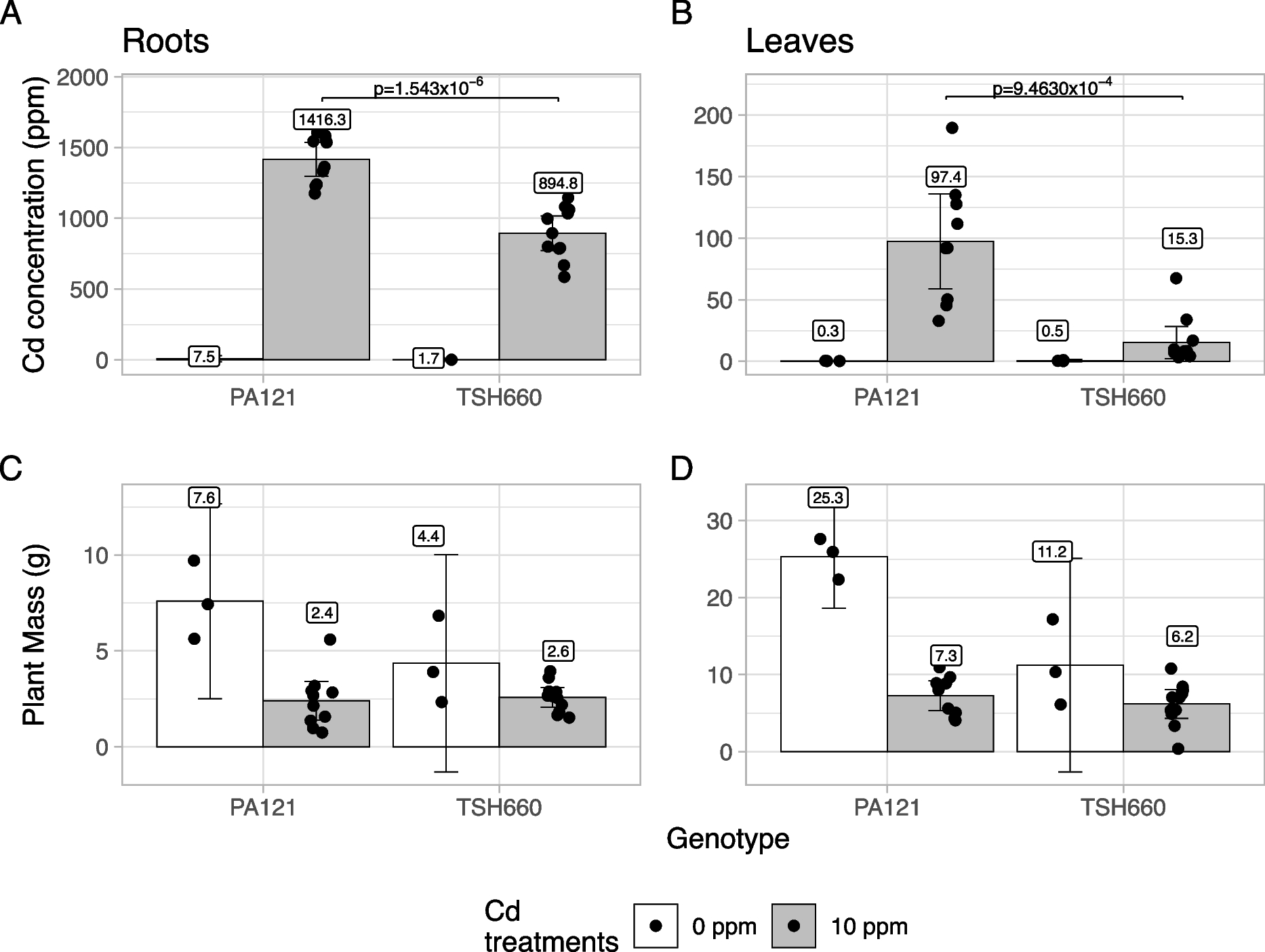
Understanding the mechanisms of cadmium (Cd) accumulation in cacao plants is critical to mitigating health risks associated with Cd exposure through chocolate consumption. A general and genotype-specific molecular and physiological responses were characterized.
Methods
Seedlings of cacao genotypes PA121 and TSH660 were exposed to 0 and 10 ppm Cd in hydroponic conditions. Samples were collected at 0, 24, and 48 h (RNAseq) and at 60 days post-treatment (ICP-OES). Gene expression profiles were compared using differential gene expression (DEG) and gene ontology analyses. Gas exchange (Gs) and abscisic acid (ABA) measurements were conducted on greenhouse-grown PA121 seedlings.
Results
Both shared and genotype-specific changes were observed in genes associated with detoxification, ROS, and hormone metabolism, notably ABA-related genes. In leaves, the low-accumulator exhibited fewer DEGs than the high-accumulator, whereas in roots, both genotypes displayed similar expression profiles. The high-accumulating genotype exhibited fewer statistically significant expression changes in key hormone biosynthesis genes. In roots, Cd transport family genes, including ZIP/IRT and NRAMP, were downregulated. The high-accumulator genotype exhibited significant downregulation of one ZIP and one HMA5 ortholog, whereas the response of the low-accumulator genotype included upregulation of a different HMA5 ortholog. Additionally, high-accumulator seedlings exposed to 12 ppm Cd reduced Gs without significant changes in photosynthesis, while ABA concentrations increased in roots at 36 h after Cd exposure.
Conclusions
Together, these results support a model in which Cd induces ABA-mediated root signaling that reduces stomatal conductance and transpiration-driven mass flow, while suppressing the expression of active Cd transporters, thereby limiting Cd uptake.